Best Content Agency for SaaS: 5 Picks for SEO (2026)
,
October 26, 2026
Many SaaS companies publish content for months without seeing more demos, trials, or sales calls. The problem often starts with topics that attract readers rather than potential buyers.
A SaaS content agency can help find stronger search opportunities, create pages for specific customer needs, and connect content work to a qualified pipeline. Services can also include technical SEO, link acquisition, and conversion tracking.
In this article, you’ll learn about five of the best content agencies for SaaS and what kind of content they can create.
TL;DR
Here are the five picks for the best content agency for SaaS in 2026:
- ABHMedia
- Grow and Convert
- Omniscient Digital
- Animalz
- Siege Media
Top 5 Content Agencies for B2B SaaS Companies in 2026
These are the top five content agencies that can help you drive long-term SaaS growth:
1. ABHMedia
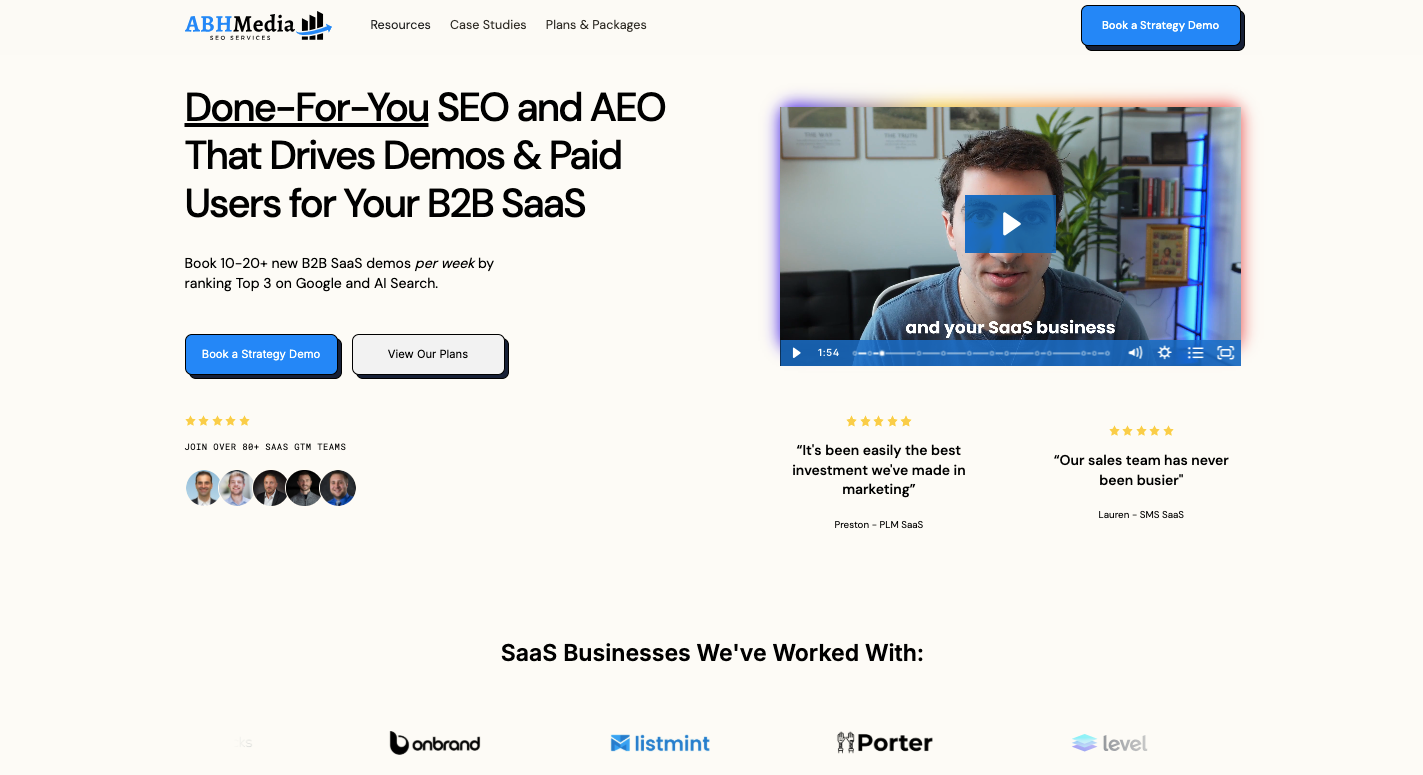
ABHMedia is a B2B SaaS SEO agency for software companies that want search to generate demos, trials, qualified leads, and paid users. Its process starts with the company’s ideal customer profile and the searches those buyers use when they are actively researching solutions.
From there, ABHMedia builds a custom strategy that can cover technical SEO, buyer-focused content, link building, programmatic pages, and conversion improvements. Backlinks support specific pages with ranking potential instead of going mainly to the homepage.
ABHMedia manages the work on a done-for-you basis, from planning and writing to technical fixes and reporting. SaaS teams keep ownership of every asset created during the engagement. Search campaigns cover Google and AI platforms such as ChatGPT, Google AI Overviews, and Perplexity.
Key Services
- Technical SEO - Audits the website for problems that can limit crawling, indexing, rankings, and conversions.
- Keyword strategy - Finds commercial and transactional searches used by buyers who are actively looking for relevant software.
- SEO content - Creates and updates articles based on search intent, buyer needs, and the amount of detail each topic requires.
- Link building - Earns relevant backlinks for pages with strong ranking and customer acquisition potential.
- Programmatic SEO - Plans and builds repeatable page systems when a SaaS company has many valuable search variations to target.
- Primary pages - Creates important commercial pages that explain the product and target searches close to a purchase decision.
- Content clustering - Builds related groups of pages for larger SaaS sites that need to cover a market in greater depth.
- UI/UX optimization - Improves page layouts and user paths to help visitors understand the offer and reach conversion points.
- Conversion rate optimization - Tests and improves pages to turn more relevant search visitors into trials, demos, or paid users.
- Analytics and reporting - Tracks rankings, conversions, and search performance through ongoing reports and live dashboards.
2. Grow and Convert
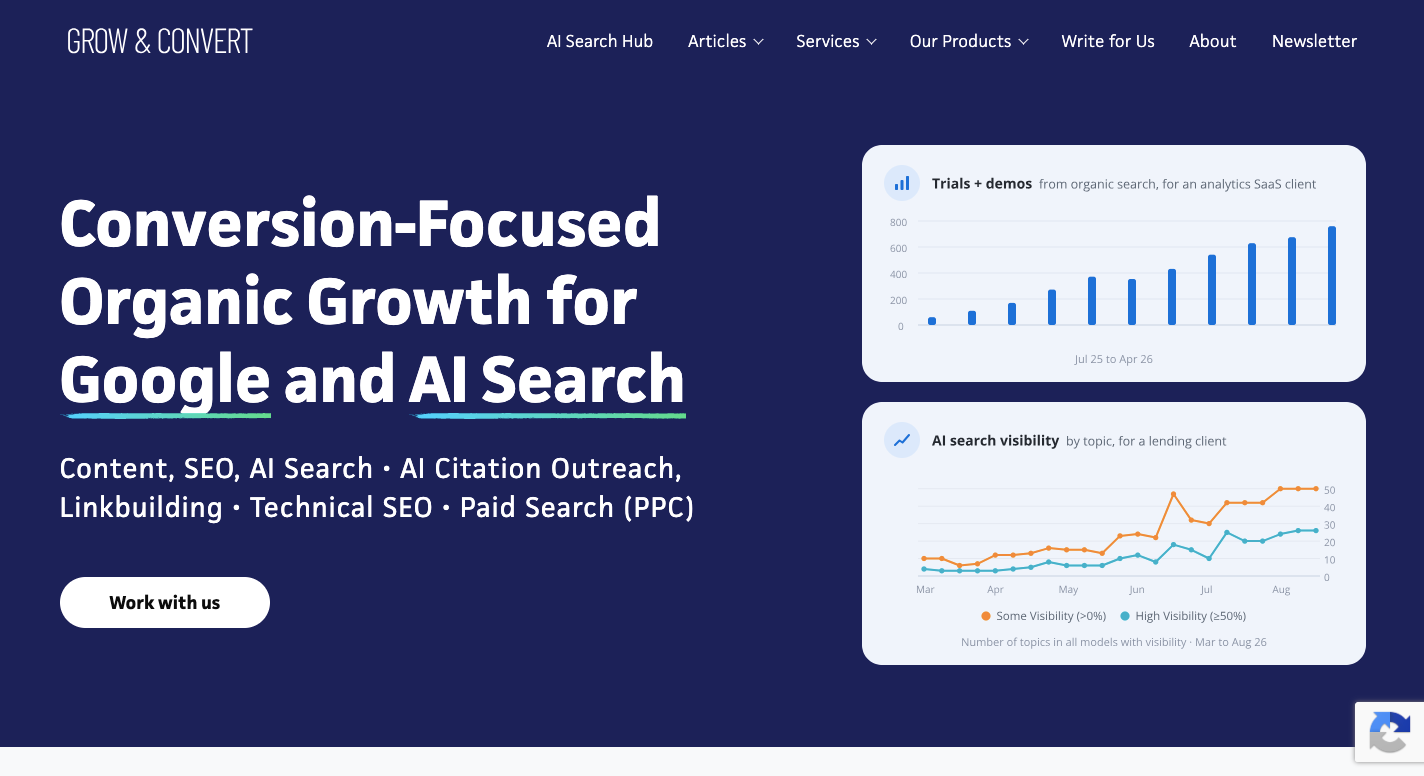
Grow and Convert creates content for SaaS companies that want search to bring customers. Their SaaS SEO method starts with Pain Point SEO, a framework that focuses on real buyer intent.
Rather than chase broad terms that bring vanity traffic, they look for searches such as “[Competitor] alternatives,” product comparisons, and software categories.
Its writers learn about the product through 60- to 90-minute interviews with product managers, sales reps, or customer success teams. Those insights add depth to articles about features, use cases, and customer problems.
After publication, Grow and Convert builds links and tracks signups or demo requests. Their work can extend to AI search visibility when clients want their brand to appear in tools such as ChatGPT and Perplexity.
Key Services
- Pain Point SEO - Finds bottom-of-funnel searches that show someone may be looking for a product to buy.
- SEO content strategy - Chooses topics based on customer problems, product use cases, and buying intent.
- SaaS content writing - Uses interviews with your team to explain technical products with clear examples.
- Content production - Covers research, interviews, writing, editing, optimization, and publishing.
- Generative engine optimization - Helps brands improve their chances of appearing in AI search results.
- AI search tracking - Uses Traqer.ai to track brand mentions and citations in AI-generated answers.
- Link building - Builds high-quality backlinks to commercial pages and articles that can bring customers.
- Paid search management - Runs Google Ads around terms used by people who are already looking for software.
- Conversion tracking - Tracks trials, signups, qualified leads, and other actions that come from content.
- Revenue attribution - Connects conversion and CRM data when the client’s setup supports deeper sales tracking.
3. Omniscient Digital
Omniscient Digital helps B2B software companies grow through SEO, content, links, and AI search. Its approach differs from many SEO agencies because the team treats content more like an investment portfolio.
Most resources go toward product-led topics with clear search demand, then a smaller share goes toward original research, opinions, and other ideas that can earn attention.
Its Barbell Content Strategy gives SaaS brands a way to balance safer search topics with higher-risk ideas as part of one growth strategy. From there, Omniscient plans the content architecture and creates pages for different points in the buying process.
Content plans aim to produce a qualified pipeline for complex software rather than stop at traffic or rankings. Reporting can connect marketing results with recurring revenue to show whether organic growth contributes to the business.
Key Services
- Organic growth strategy - Combines buyer research, product positioning, keyword data, and the Barbell framework to decide what content deserves investment.
- Content production - Creates long-form articles, comparison pages, product-led content, and thought leadership for B2B software buyers.
- SEO strategy - Researches search demand, reviews site health, and maps topics to buyer needs and product use cases.
- Content planning - Organizes related topics and pages into clear groups that help build authority around subjects tied to the product.
- Link building - Earns links from relevant sites to support important product and search pages.
- Digital PR - Uses research, expert ideas, and newsworthy stories to earn coverage and brand mentions.
- Programmatic SEO - Builds page systems for companies that need many useful pages based on repeatable search patterns.
- Technical SEO - Finds site problems that can stop pages from getting crawled, indexed, or ranked.
- Marketing analytics - Sets up GA4, tag management, conversion tracking, and dashboards to connect marketing activity with business results.
4. Animalz
Animalz creates research-heavy content for SaaS and tech companies that need more than basic SEO articles. Its team works with company leaders and subject matter experts to develop ideas grounded in firsthand experience.
Writers turn those interviews into thought leadership, technical guides, reports, case studies, and product content. Animalz can speak to different people involved in a software purchase too.
For high-growth SaaS clients, Animalz can act as an external writing and content strategy team. Its work can support demand generation by giving buyers useful information at different points in a long B2B sales process.
Key Services
- Thought leadership - Turns expert knowledge and original ideas into articles, reports, white papers, and other research-led content.
- SEO and AEO - Researches search topics, updates older pages, and structures useful answers for Google and AI search tools.
- Executive content - Interviews company leaders and turns their ideas into LinkedIn posts written in their own voice.
- Demand generation content - Creates guides, reports, landing pages, and other assets that support lead generation.
- Product marketing content - Writes product guides and feature content that explain how the software solves specific problems.
- Sales content - Produces case studies and other assets sales teams can share with potential customers during the buying process.
- Content strategy - Plans topics around buyer needs, company expertise, search demand, and business goals.
- Content refreshes - Updates older articles when information, search results, or customer needs change.
- Content operations - Helps with publishing, reporting, performance tracking, and other work needed to run a content program.
5. Siege Media
Siege Media combines SEO content with an in-house design team that creates custom graphics, illustrations, interactive tools, and other visual assets. That mix helps it stand out among SaaS SEO agencies that focus mainly on written articles.
For larger content programs, Siege Media uses dedicated teams to handle strategy, writing, design, and outreach. Its pod model supports continuous content production without asking the client’s team to manage each part separately.
Search growth goes beyond publishing new articles. Siege earns links from relevant sites and publications to build website authority and support organic traffic. Its team works on GEO too, with content structured to improve the chance of citations in AI search results.
Key Services
- Content marketing - Researches, writes, edits, and publishes articles, guides, landing pages, and resource hubs.
- SEO strategy - Finds search opportunities and plans content around topics relevant to the client’s product and buyers.
- Graphic design - Creates custom illustrations, infographics, maps, graphics, and other branded assets for content.
- Interactive content - Builds calculators, tools, and other useful resources that give readers a reason to visit and share a page.
- Digital PR - Pitches useful content and original data to journalists, publishers, and relevant industry sites.
- Link building - Uses link acquisition to earn high-quality backlinks from relevant publications, with attention to placement quality rather than link counts alone.
- Generative engine optimization - Works on content structure and brand signals that may help companies appear in AI search results.
- Technical SEO - Reviews site problems that can affect crawling, indexing, internal links, and search performance.
- Content refreshes - Updates older pages with new information, stronger copy, and fresh visuals when rankings start to fall.
- Content distribution - Promotes published assets through outreach and other channels to help them reach more relevant readers.
Why Hire a SaaS Content Agency?
A SaaS content agency understands how software gets researched, compared, approved, and purchased, so it can build an organic search strategy around your product, ICP, buyer intent, and revenue instead of chasing traffic alone.
SaaS Content Requires Product Knowledge
SaaS content requires more than Googling a topic and rewriting the pages that already rank. Writers need to understand how your product works, why customers buy it, and where competing tools fall short.
General writers may say, “Automation saves your team time.” A SaaS specialist can explain exactly how a feature replaces a manual task and show the steps with product screenshots. That level of detail matches the technical complexity business buyers expect.
Some agencies will interview your internal team to learn those details. They can also audit the site when technical fixes affect how useful pages perform.
SaaS Content Needs to Reach the Right ICP
ICP means ideal customer profile. For SaaS, it describes the companies most likely to need your product, afford it, and stay long enough to become valuable customers.
A general agency may target “how to manage projects” for its search volume. A SaaS specialist might choose “project management software for construction companies” to help enterprise SaaS brands reach more relevant buyers.
Strong ICP research accounts for multiple stakeholders and long sales cycles too. Agencies can map topics to SaaS buying cycles and adjust the message as your product-market fit develops.
SaaS Search Strategies Need Buyer-Intent Content
Buyer intent tells you why someone searched. “What is CRM software?” may come from someone learning the basics, while “Salesforce alternatives for small sales teams” comes from a person comparing products and possibly preparing to buy.
A SaaS agency looks for those buying signals instead of choosing topics only because they have large search volumes. Comparison pages, articles about software alternatives, category lists, and use-case guides put your product directly into that research process.
Similar questions now appear in AI-powered search systems too. Targeting them gives SaaS teams a better chance of turning smaller amounts of relevant traffic into demos, trials, and sales-qualified leads.
SaaS Content Needs to Generate More Than Rankings
Getting a page to rank means little when nobody who visits becomes a customer. General agencies can make reports look impressive with traffic, impressions, and other vanity metrics, yet your sales team may still receive few qualified leads.
Conversion tracking helps connect content visits with leads, giving the company a better way to measure success. CRM data can then link those leads to revenue outcomes.
Conversion optimization can improve the path further by testing calls to action, forms, and landing pages. Search engines bring the visitor in, but revenue shows whether the strategy worked.
SaaS Content Needs to Work With AI Search
Buyers no longer research software only through Google. Someone can ask an AI search tool, “What are the best HubSpot alternatives for a 20-person sales team?” and receive several recommendations without opening a traditional result.
Generative engine optimization helps make your product easier for these systems to understand and cite. Answer engine optimization supports that work by giving direct, useful answers to specific questions.
A SaaS agency can monitor search visibility, review AI-generated answers, and identify citation gaps where competitors appear but your brand does not. That broader approach protects search visibility as more software research becomes search-powered.
What Types of Content Should a SaaS Content Agency Create?
A SaaS SEO partner should create content for each stage of the buying process, from early educational searches to product comparisons that help prospects make a final decision.
Bottom-of-Funnel SaaS Content
Bottom-of-funnel content targets buyers who already know they need software and are comparing their options. Searches such as “Asana alternatives” or “best CRM for construction companies” show far more purchase intent than broad educational queries.
A SaaS agency can meet that demand with alternative articles, comparison pages, software lists, pricing guides, and product-led tutorials. Detailed comparisons should cover features, limitations, use cases, and transparent pricing.
Since these pages can generate demos and trials, continuous optimization keeps the information accurate as products, competitors, and search results change.
Middle-of-Funnel SaaS Content
Middle-of-funnel content reaches people who understand their problem but haven’t chosen how to solve it. Agencies can publish use-case guides, templates, industry pages, and connected resource clusters to build topical authority around problems related to the product.
Original research can help buyers compare approaches and justify a purchase internally. Practical guides can explain implementation requirements, expected costs, and team responsibilities.
Focusing on safe link acquisition rather than inflated link counts can earn high-quality backlinks from trusted websites. Relevant links can strengthen domain authority when they come from software sites with a genuine connection to the topic.
Top-of-Funnel SaaS Content
Top-of-funnel content reaches potential customers before they start shopping for software. Educational guides, original research, free tools, and thought leadership can increase brand visibility by helping people with broader problems related to the market.
Interesting research and strong opinions can earn brand mentions, referral traffic, and coverage from industry publications through digital PR. Search insights can support paid media too, since customer questions reveal useful angles for ad creative and Google Ads landing pages.
Better audience knowledge can reduce wasted paid advertising and make paid acquisition more focused, helping companies get more value from existing ad spend. Lifecycle marketing can then nurture interested readers after their first visit.
Turn SaaS Content Into Leads With ABHMedia
ABHMedia builds done-for-you SEO programs for B2B SaaS companies that want search traffic to turn into demos, trials, qualified leads, and paid users.
Rather than picking topics because they have the highest search volume, we start with your ICP and find the commercial searches your buyers use when looking for a product like yours.
Our team handles keyword strategy, content creation, technical SEO, link building, programmatic SEO, reporting, and conversion tracking. We can also optimize your content for visibility in Google and AI search platforms such as ChatGPT and Perplexity.
You don’t need to coordinate separate writers, SEO specialists, and outreach experts. Every asset we create remains yours.
FAQs About the Best Content Agency for SaaS
What is the rule of 40 in SaaS?
The Rule of 40 says a SaaS company’s revenue growth rate plus its profit margin should equal or exceed 40%. Investors often use it as a quick way to assess the balance between growth and profitability.
What is replacing SaaS?
SaaS isn’t being replaced outright. AI-native software, AI agents, and usage-based products are changing how software gets built, priced, and used, but subscription SaaS remains a major delivery model.
Who are the top 10 SaaS providers?
Major SaaS providers include Microsoft, Salesforce, Adobe, Oracle, SAP, ServiceNow, Google, Intuit, Shopify, and Workday. The exact top 10 changes depending on whether you rank companies by SaaS revenue, market value, customers, or another metric.
How do I get clients for my SaaS?
Define your ICP and the problems that lead buyers to seek a solution. Reach them through SEO, product-led content, outbound sales, partnerships, paid acquisition, and customer referrals. Build landing pages and demos around the problems your software solves.