


A Complete Guide to SaaS Content Production in 2026
,
September 28, 2026
SaaS companies need content that reaches people who could become customers. Producing it takes more than finding a keyword and writing a blog post.
You need to understand the buyer, study search intent, choose useful topics, gather product knowledge, create a clear brief, and check each draft before publication.
In this article, you’ll learn what SaaS content production involves, how the process works, and how to build a team.
TL;DR
- SaaS content production turns customer questions and product knowledge into useful content for different buying stages.
- A strong process covers ICP research, buyer-intent keywords, SERP analysis, writing, SEO, publishing, measurement, and updates.
- Content should match search intent, provide accurate product information, and lead qualified visitors toward a relevant conversion.
- SaaS companies can use employees, freelancers, or an agency based on their workload and available resources.
- ABHMedia provides done-for-you SaaS content and SEO focused on buyer-intent keywords, qualified leads, demos, trial sign-ups, and paid users.
What Is SaaS Content Production?
When we talk about SaaS content production, we mean turning customer questions and product knowledge into useful blogs, videos, guides, comparison pages, and tutorials.
Software isn’t something buyers can pick up from a shelf before paying for it. Content needs to show how a SaaS product works, what problem it solves, and why someone may want to use it.
Producing SaaS content usually starts with learning what customers need and planning topics for different buying stages. Writers then research the product, create the piece, add useful examples or screenshots, check facts, and prepare it for search.
A great content marketing strategy connects those pieces, and SaaS content marketing helps get them in front of potential customers.
What Types of Content Should SaaS Businesses Produce?
SaaS marketing needs different types of content for people who are learning about a problem, comparing solutions, choosing software, or learning how to use a product they already pay for.
Bottom-of-Funnel Content
People near a buying decision often narrow their options to two or three products. They may search “Slack vs Teams” or look for alternatives to software they no longer want to use.
A comparison page lets you explain differences in features, pricing, support, and use cases from your point of view.
Software buyers may still worry about paying for a tool that doesn’t deliver. Case studies and customer testimonials can show how real users solved a problem and what results they achieved.
Then through product walkthroughs, buyers can see the interface and learn how key features work before paying or booking a demo.
Middle-of-Funnel Content
People in the middle of the marketing funnel know they have a problem and have started looking for ways to solve it. Someone might search “how to track monthly recurring revenue” before deciding what software to use.
Detailed how-to guides can teach the process step by step and show where your product can help. Templates and calculators give visitors something useful right away, such as valuable insights based on numbers they enter.
A webinar can also show a process through a live demo and answer common questions. Use-case pages can then explain how your software fits a certain job, team, or industry.
Top-of-Funnel Content
People at the awareness stage often search for help with a problem before they know what type of software could solve it. An HR manager might search “how to reduce employee burnout” without looking for a specific platform.
Educational content can answer those early questions through detailed articles and beginner guides. Companies with useful product data may turn anonymous user patterns into reports about industry trends.
Each piece introduces your brand through helpful information rather than an early sales pitch.
Product and Customer Content
Someone who signs up for new software can open the dashboard and have no idea where to begin. Onboarding tutorials can help existing customers complete their first useful task before confusion leads them to stop using the product.
More experienced users need different help. Advanced tutorials can explain less obvious features, new workflows, and customer examples that show how other teams complete specific jobs.
Training courses can help users build more advanced skills over several lessons. Help centers handle quicker questions by giving people searchable instructions for errors, settings, exports, and common tasks.
Quick access to those answers can help users keep working in the SaaS product without waiting for a support reply.
What Does the SaaS Content Production Process Look Like?
A SaaS content creation process usually follows these steps:
1. Define Your ICP and Business Goal
An ideal customer profile (ICP) describes the type of company and person most likely to need your software and pay for it. Before choosing topics, get specific about your target audience:
- Company: What industry are they in, and how large is the business?
- Reader: Who will read the content, and what role do they have?
- Problem: What task costs them time, money, or customers?
- Need: What are they trying to fix with software?
For example, an inventory app may target independent restaurant owners with one to three locations who want to reduce food waste. That ICP points you toward inventory problems instead of broad restaurant topics.
Next, choose a business goal, such as demos, trials, or qualified leads. Demand generation focused on trials may lead you toward comparison and use-case content where buyers already show interest in software.
2. Research Buyer Intent Keywords
With your ICP clear, researching buyer intent keywords means finding the phrases your ideal customers use when they look for information, compare software, or prepare to buy. Four common intent types help you sort them:
- Informational: “What is project management?” The searcher wants to learn.
- Commercial: “Best accounting software for small business.” Someone is comparing options.
- Transactional: “Zoom pricing.” A buyer may be ready to sign up.
- Navigational: “Slack login.” Someone wants a specific site or page.
To conduct keyword research, start with problems and features related to your product. An invoicing app might begin with “invoicing,” “billing,” and “expense tracking.”
Keyword research tools such as Semrush or Ahrefs can expand those terms and show intent data. Check Google afterward to confirm that the results fit your target customers and the article you plan to create.
3. Analyze the SERP and Competing Content
Once you have a keyword, search Google before deciding what the article should look like. Search results tell you whether people expect a list, guide, comparison, definition, or product page.
Suppose most results for “best remote HR software” are lists of tools. Creating a single-product review would miss the content format people are finding for that query. Your article should fit the intent first, then give readers a reason to choose it over competing web pages.
Open several top results and look for weak points. One article may use old screenshots, another might skip pricing, and a third may explain features without showing them.
Those gaps give you room to add current examples, expert input, clearer steps, or useful product visuals.
4. Create a Detailed SaaS Content Brief
SERP research gives you enough information to build instructions for the writer. In SaaS marketing, handing someone a keyword and saying “write an article” often leaves them to decide the audience, angle, product details, sources, and conversion path on their own.
A useful brief should cover:
- Primary keyword and search intent
- ICP and business goal
- H2 and H3 structure
- Questions the article should answer
- Competitor gaps
- Product details and expert input
- Internal links and sources
- Conversion points and CTA
Your SaaS content marketing strategy explains where the article fits in the larger plan. A SaaS content strategy then helps connect that goal to the topic, buyer stage, product, and related pages.
From there, the brief gives the writer clear instructions for the draft.
5. Write the SaaS Content
When you create blog posts, start by showing readers that the article addresses the problem they searched for.
Product examples should appear when they help explain a step. For an article about organizing team tasks, you could show readers how to create a task board with your software and include the exact buttons they need to click.
That approach makes the product part of the writing process without turning the guide into a sales pitch. When you create content about software tasks, screenshots or short clips can show each action and give readers a quick look at how the product works.
6. Edit and Fact-Check the Draft
Software changes quickly, and a tutorial written last month may already show an old button, menu, or workflow. Content marketers should open the live software and follow every product step in the draft to confirm that the instructions still work.
Check feature names, navigation steps, and screenshots against the current product. Writers can make the same mistake with research when they copy numbers from another blog.
Review every statistic, percentage, and factual claim, then link to the primary source whenever possible to support the accuracy of your content marketing efforts. Finish by checking whether product mentions fit the problem naturally and whether each CTA matches the reader’s buying stage.
7. Optimize SaaS Content for SEO
SEO optimization helps search engines understand your article and connect it with people searching for that topic. Start with search intent, then use SEO tools to check whether the primary keyword appears naturally in useful places:
- Title: Include the main phrase where it clearly describes the page.
- URL: Keep it short and descriptive.
- Introduction: Mention the topic early without forcing the wording.
- Headings: Use relevant keyword variations where they help explain a section.
Search Google for the keyword and review useful People Also Ask questions that fit the article. Answer important questions directly under clear headings, then use lists for steps or options.
Short summaries can make complex sections easier to understand and may help Google AI Overviews or other AI search systems interpret the page. Compress screenshots and add descriptive alt text as part of mobile optimization.
8. Add Internal Links and Conversion Points
Internal links connect one page on your website to another, which gives readers a path from one topic to the next. A beginner article can point to a detailed how-to guide, then that guide can send interested readers to a comparison or product page.
Whenever you mention a task your software handles, link relevant text to the feature page that explains it. After publishing a new article, review older related posts and add links back to it where those references genuinely help readers.
Aside from that, connect your value proposition to what someone needs at that point in the article, then offer a suitable next step such as a template, demo, or trial.
9. Publish and Distribute the Content
Before you publish content, load the final draft into your CMS and check how the finished page works on desktop and mobile. Click every internal link, test each form or subscription button, review the images, and confirm that analytics tracking works before sending visitors to the page.
Distribution begins once those checks are complete, though it helps to choose your content distribution channels before you begin creating content. Email marketing can start with a short summary that explains the problem and gives subscribers a reason to read the full article.
Turn useful lessons into standalone social media posts for the social media platforms your buyers use. You can also find relevant questions in online communities and write a helpful answer before linking to your guide when it provides deeper instructions.
10. Measure SaaS Content Performance
Publishing gives you something to measure, and those numbers should tell you whether the page attracts the right people and moves them toward your product. Use Google Analytics for engagement and conversion data, then use Search Console to track impressions and clicks from organic search.
Look beyond raw visits when judging results because a large audience has little business value when none of those readers fit your ICP.
User behavior data such as engagement time and scroll depth can show how visitors use the page, though those signals need context before you draw conclusions.
Connect those findings with trial sign-ups, demo requests, leads, and paid customers to judge website performance. Comparing traffic with conversions gives you actionable insights about which topics contribute to real business results.
11. Update and Optimize Existing SaaS Content
Software changes, competitors improve their pages, and search intent can shift over time, which means existing content needs regular checks.
You need to check your articles that have lost rankings, contain outdated product information, or rank close to page one and could benefit from a useful update.
Open the product and verify every tutorial step, then replace old screenshots, feature names, statistics, broken links, and outdated sources. Search your target keyword again because the current SERP may cover questions or subtopics that weren’t common when you first published the page.
Content creation doesn’t always require a completely new article when an older page already serves the same intent.
Updating useful pages can help recover website traffic, but a refresh alone doesn’t guarantee better rankings or higher domain authority.
How Do You Create SaaS Content That Ranks and Converts?
SaaS content needs to attract the right buyers, match what they expect to find in search, and give them a useful next step when they are ready to act.
Write for Qualified Traffic Instead of Traffic Alone
Many SaaS companies chase large traffic numbers without asking who those visitors are. An accounting platform for construction firms could attract thousands of readers with a broad money-saving article, yet few of those people may ever need the software.
Focus on searches that come from people your product can actually help. Look for specific pain points tied to the work your target buyers already do.
A phrase such as “how to manage subcontractor invoices” may have less volume than “accounting tips,” but the searcher has a clearer reason to need accounting software.
Qualified visits can therefore be worth more than raw organic traffic because those readers have a stronger connection to the problem your product solves.
Match the Content to Search Intent
Search intent explains why someone typed a query into Google and what they expect to find after clicking a result. Search engines try to return pages that answer that need, which makes the current results a useful starting point for planning your page.
Run a Google search for your keyword and look at three things:
- Content type: Are people getting blog articles, product pages, or landing pages?
- Content format: Do top pages use lists, tutorials, comparison tables, or another structure?
- Content angle: Are results written for beginners, small teams, enterprises, or another group?
Those patterns show where the searcher may be in the customer journey.
Match the dominant expectation first, then give readers clearer explanations, stronger examples, or useful product knowledge that competing pages missed.
Connect Content to a Relevant Conversion
Once someone finds your article, give them a next step that fits how close they are to buying. Asking a person reading a beginner definition to book a sales demo can feel too early, whereas someone comparing software may already want to see the product.
Match the offer to the reader:
- Top of funnel: Offer a newsletter, checklist, or useful template.
- Middle of funnel: Offer a calculator, webinar, detailed resource, or product example.
- Bottom of funnel: Offer a trial, demo, or direct path to the product.
Relevant offers make blog posts more useful because the CTA continues what the reader was already trying to do. Matching that commitment level can make your SaaS content marketing efforts more focused on useful actions.
How Do You Build a SaaS Content Production Team?
You can build a SaaS content team with employees, freelancers, or an agency based on your budget, workload, and how much work you want to handle yourself.
In-House SaaS Content Production
An in-house team works with your software every day, which helps them learn the product and understand the people who use it. Writers can talk directly with developers, sales reps, and support staff to collect customer insights for new articles.
A SaaS content team may include:
- Content manager: Chooses topics, creates briefs, and manages deadlines.
- Writer: Creates website content about your product and the problems it solves.
- Editor: Checks facts, product details, and writing quality.
- SEO specialist: Researches keywords and improves pages for search.
- Outreach specialist: Finds websites that may link to your pages.
You can add these roles as your content needs grow rather than hiring everyone at once.
Freelance SaaS Content Production
Freelance writers can help you produce more content without adding several full-time employees. You can hire people who know your software niche, then use freelance editors or designers when you need them.
Give each freelancer a brief, product information, brand rules, deadlines, and a test account when they need to use your software.
A simple system makes it easier to see who is writing, editing, or designing each piece. You can use the same setup to organize blog work and social media management.
SaaS Content Production Agency
A SaaS content production agency can take care of the work your team doesn’t have the time or staff to do.
Services may include finding keywords your buyers search for, choosing article topics, writing and improving pages, fixing SEO problems, getting links from other websites, and tracking sign-ups or leads.
ABHMedia provides those services specifically for B2B SaaS companies. Its SaaS content marketing work starts with learning about your software and the customers you want to reach.
From there, ABHMedia finds buyer-intent keywords, writes and improves content, checks technical SEO problems, builds targeted backlinks, and reports on traffic and conversions each month.
Let ABHMedia Create and Optimize Your SaaS Content Calendar
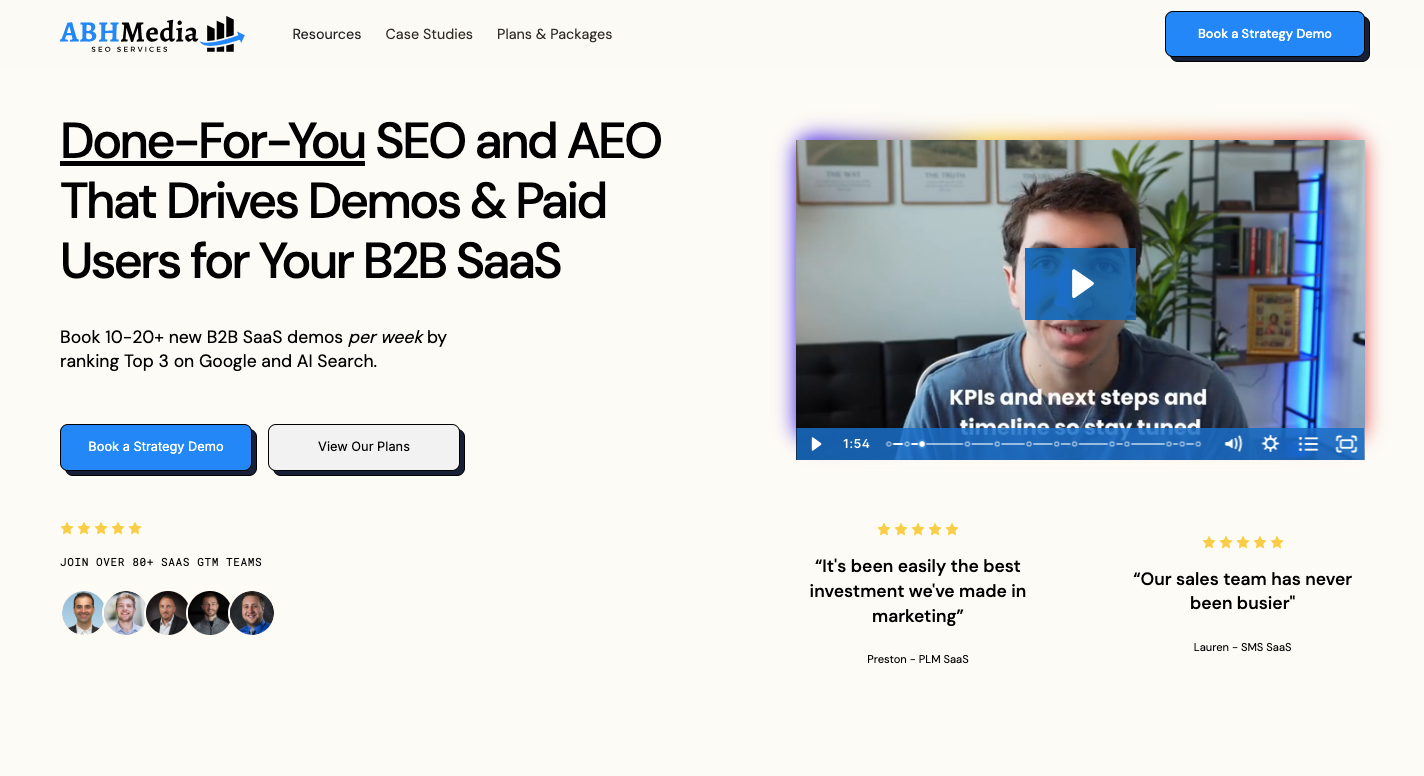
SaaS content production requires more than publishing articles every month. Keyword research, content planning, writing, technical SEO, link building, and conversion tracking all need to work together to bring in people who may actually buy the software.
ABHMedia provides a done-for-you SEO service built specifically for B2B SaaS companies.
Each campaign starts with a strategy session to learn about the software, ICP, and business goals. ABHMedia then builds a keyword and content plan focused on buyer intent.
Depending on the selected plan, services can include:
- Keyword and content strategy
- SEO blog articles and page rewrites
- Technical SEO audits
- Targeted link building
- Programmatic SEO
- Primary page creation
- Conversion tracking
- Monthly analytics and conversion reporting
Every content and SEO asset created by ABHMedia belongs to the client, with full access throughout the engagement.
FAQs About SaaS Content Production
What is the 3-3-2-2-2 rule of SaaS?
The 3-3-2-2-2 rule of SaaS is a growth benchmark where annual recurring revenue triples for two years, then doubles for the next three. It’s commonly known as the T2D3 growth pattern.
Is SaaS being replaced by AI?
No. AI is changing SaaS by adding new features and creating AI-native competitors, but SaaS isn’t being replaced as a business model. Many established software companies are adding AI to their existing products.
How do SaaS companies make money?
SaaS companies mainly make money by charging customers recurring subscription fees. Some use tiered plans, freemium upgrades, usage-based pricing, or a mix of these models.
What are the top five SaaS companies?
There’s no official top-five ranking because results depend on revenue, market value, growth, or customer base. Microsoft, Salesforce, Adobe, ServiceNow, and Shopify are five major SaaS and cloud software companies in 2026.




.png)

.png)