SEO Services Pricing: How Much Does SEO Cost?
,
November 9, 2026
Search engine optimization (SEO) services pricing varies a lot, since one agency may quote a few hundred dollars per month while another asks for several thousand for what looks like the same work.
The price gap mostly comes from how much effort an SEO campaign takes to compete in your industry, and that depends on what you want to achieve and how big your business is.
This SEO pricing guide breaks down how much SEO costs and what drives the final price, with common pricing models and example SEO packages so you can see what each budget actually buys.
Make SEO your most profitable acquisition channel. Book a strategy demo with ABHMedia now!
TL;DR
- SEO services pricing typically ranges from $1,000–$2,500 per month, $100–$149 per hour, and $1,000–$5,000 for most projects.
- The exact cost of SEO depends on several factors, with the pricing model and your business size at the top, followed by how competitive your industry is and how well your website performs today.
- Basic SEO packages often focus on local SEO, with on-page optimization for only a few pages and a basic analytics setup.
- Enterprise SEO plans build on in-depth keyword research and large-scale content production, and they often add conversion rate optimization and monthly SEO strategy discussions on top.
- If you own a B2B SaaS company, ABHMedia turns SEO into your most profitable acquisition channel.
How Much Do SEO Services Cost?
The average monthly cost of SEO services is $1,000–$2,500, according to Backlinko’s SEO pricing survey.
Clutch reports that most SEO agencies listed on its platform charge between $100 and $149 per hour.
Keep in mind that these figures are only averages. You can pay less than $500 per month, or you could invest more than $5,000 every month, because pricing looks very different from one business to another.
No SEO cost calculator can give you an exact number, but the tables below show average SEO costs based on common pricing models and business size.
SEO Costs by Pricing Model
SEO professionals and agencies charge clients in different ways. The pricing model you choose affects how you’re billed and what type of work is included.
SEO Costs by Business Size
SEO pricing also depends on the size of your business.
Key Factors Affecting the Cost of SEO Services
Several key cost factors determine SEO pricing. Let’s discuss them below:
SEO Pricing Model
You can pay for SEO services per month, hour, project, or based on performance. Each pricing model works in its own way and fits a different kind of goal, so the model you pick has a big effect on your total SEO investment.
Before you decide, look at your SEO budget and the services you need, then check them against the four models below.
Monthly Retainer Model
Retainers are the most common way businesses pay for monthly SEO services. SEO is a long-term marketing strategy, and rankings only hold up with ongoing optimization, so a fixed monthly arrangement fits the way the work actually runs.
You pay the same fee every month for the agreed work, which usually centers on content creation and link building, so you always know your monthly SEO costs upfront.
Monthly plans can look very different from one agency to another. Some agencies sell “fixed” packages built around a set number of blog posts or backlinks per month.
These packages look clear and structured on the surface, but they focus on output instead of results, and the agency may care more about the quota than about your search engine rankings or revenue.
That is why it pays to pick an SEO agency that shapes its monthly plan around your business goals and works toward compounding growth, not just a checklist of deliverables.
Hourly Rates
With hourly pricing, you pay for the time an SEO expert spends on specific services. The table below lists average hourly rates for common SEO services.
Hourly rates give you flexibility, since you can get support when you need it without a commitment to monthly services.
The catch is that the costs climb quickly once the work turns into a regular thing, so this model works better for short-term support than for long-term SEO campaigns.
Project-Based Pricing
With project-based pricing, you pay for one defined task that has a clear start and end, such as a comprehensive SEO audit or a Google Business Profile setup from an SEO specialist or agency.
Basic SEO projects, such as simple site audits, cost less than $1,000. Standard projects that include keyword research or content creation packages range from $1,000 to $5,000, while premium projects with extensive technical overhauls cost more than $5,000.
Since you agree on the price and deliverables before the project begins, you know what to expect from the start. Still, SEO needs continuous work to bring the best results, so many businesses find out after the project ends that they still need monthly support.
Performance-Based Fees
Performance-based SEO services pricing ties your payment to results, which means you pay based on traffic growth, leads, or sales. This sounds appealing since you only pay for outcomes, but it comes with risk.
Organic search rankings depend on many factors outside an agency’s control, and some SEO providers chase quick wins at the expense of long-term growth. Always review the terms carefully before choosing this pricing model.
Business Size
The size of your business can directly affect SEO services pricing.
Larger companies often run websites with hundreds or even thousands of pages, and they need a steady flow of new content and strong link building to hold their place on search engine results pages (SERPs).
They also tend to have bigger marketing budgets, so they can afford to invest more in SEO and push harder for top positions.
Small businesses usually spend much less, since a simple website with only a few pages needs less content and has fewer technical problems to fix.
For many of them, local SEO services are enough to reach customers nearby, which is common for home services companies such as plumbers or roofers that get most of their work from one city or region.
SEO Goals
Your goals shape the amount of work an SEO campaign needs, since a plan built for more traffic looks very different from one built for online sales.
If you only want to rank for a few branded keywords, the investment may stay low. Better keyword rankings for high-intent industry terms are a different story, since they call for deeper keyword research and a steady plan for creating high-quality content.
A SaaS company that wants more demos, for example, may need comparison pages and landing pages built around buyer-focused keywords.
Share clear goals with every SEO agency you evaluate, so each one can give you an accurate quote and you can set the right SEO budget.
Scale and Scope of the SEO Project
Scale describes how large your SEO effort is, while scope defines the specific tasks in the plan. The larger the scale and the broader the scope, the higher the SEO investment.
Say you want to rank for a large number of keywords and grow organic traffic over time. In that case, you will probably need comprehensive SEO services that run every month and take care of both the technical side and a steady stream of new content.
A one-time audit from an SEO consultant is a much smaller job, so it costs less at the start.
Industry Competition
Ranking is easy in some markets and very hard in others, and that gap shows up directly in SEO services pricing.
If you work in highly competitive industries such as SaaS or finance, you are usually up against large companies that already have a strong presence online. They spend a lot on content and backlinks to stay at the top of search results, so you need more resources and a stronger SEO strategy just to keep pace, and your SEO costs go up with it.
In less competitive niches, you can often rank with fewer backlinks and less content, and the overall investment stays lower.
Geographic Targeting
The area where you want to rank also affects SEO services pricing, since a campaign for one city looks very different from a campaign for an entire country.
A local business may only need local SEO campaigns. Local SEO focuses on your Google Business Profile and location-based keywords that put you in local search results, and the cost is often lower because the competition is limited to a specific area.
National or global rankings require a broader SEO strategy and a bigger budget, because you will need separate landing pages for each location and stronger backlinks to compete in every market.
Current SEO Performance
Your current SEO performance also affects how much you will pay for search optimization.
If your site already gets steady organic traffic and ranks for some keywords, the work can focus on what already performs well and expand from there, which usually costs less than starting from scratch.
A site with technical issues or thin content needs much more effort, since the SEO agency may have to fix errors and build authority from the ground up.
SEO Agency Experience and Location
An experienced SEO agency with a strong track record often charges higher fees, because you pay for proven strategies and a team that knows how to rank in competitive markets.
Agencies that have worked with many clients over several years know what to avoid, and that experience can save you time and money in the long run.
Experience in your specific niche counts even more, since search behavior and buying cycles differ from one industry to another.
A B2B SaaS company, for example, needs in-depth content around keywords with buyer intent, because the goal is more demos and paid users rather than traffic alone.
Local SEO campaigns focus on location-based keywords and Google Business Profile optimization instead. An agency with proven experience in your niche may cost more, but it often brings stronger results.
Location also influences SEO agency pricing. SEO companies in major U.S. cities often charge more due to higher living costs and demand, while some agencies outside the U.S. promote cheap SEO services at prices that look appealing at first.
Many cheap SEO providers lack industry knowledge, and some rely on black hat SEO practices that can harm your organic search rankings, so review an agency’s past work and ask for case studies and customer testimonials before you decide.
Example SEO Plans and Packages
Many agencies offer different SEO plans, and the services included in each plan can vary a lot.
Below are sample SEO packages that show the difference between a basic SEO plan and an enterprise-level campaign.
Basic SEO Plan
Basic SEO packages are designed for small businesses just starting organic search optimization.
Below are the typical SEO services included:
- Google Analytics setup and configuration
- Google Business Profile optimization (if local)
- Monthly blog articles targeting limited keywords
- On-page optimization for a few pages
- Internal link building
- Basic technical SEO audit
- Monthly performance report
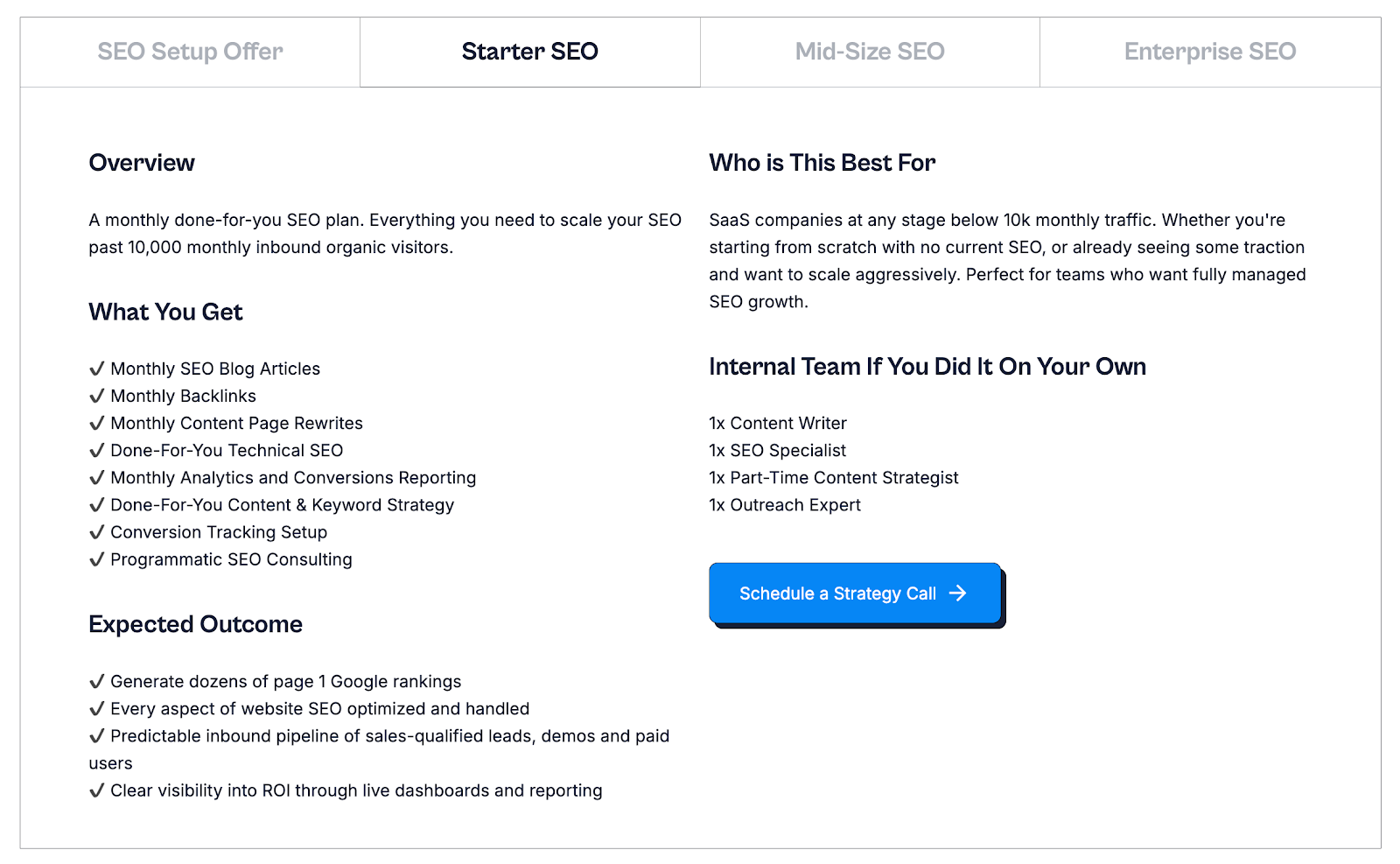
ABHMedia calls it the Starter plan. It works best for SaaS companies with fewer than 10,000 monthly organic visitors, whether they start from scratch with no SEO or already see traction and want to scale.
Mid-Size SEO Plan
A mid-size SEO plan suits growing businesses that want more website traffic and lead growth.
Here are the usual inclusions:
- In-depth keyword research
- Content creation and editing
- On-page optimization for all articles
- Ongoing technical SEO improvements
- Internal link building
- Strategic backlink outreach and digital PR
- Comprehensive website audits
- Competitor analysis
- Ongoing monthly SEO reporting with strategy calls
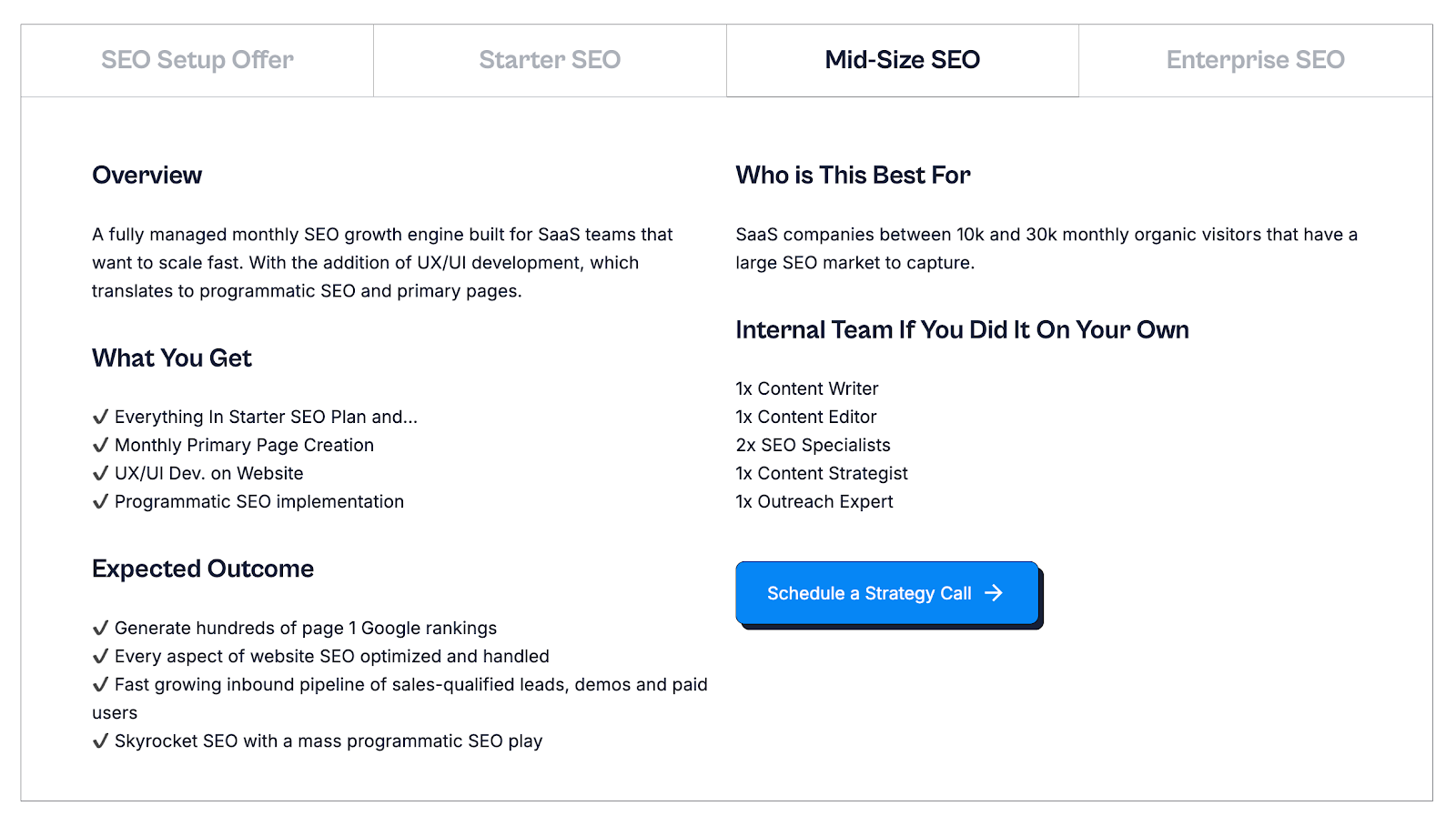
ABHMedia’s mid-size SEO plan targets SaaS companies with 10,000 to 30,000 monthly organic visitors and a large SEO market still left to capture.
Enterprise SEO Plan
Enterprise SEO packages are built for large companies in competitive markets.
Here's what you typically get from an enterprise SEO plan:
- Advanced keyword research and mapping
- Large-scale content production
- Technical SEO for complex site structures
- International or multi-location SEO
- High-authority link building and digital PR
- Dedicated account manager
- Monthly SEO strategy discussions
- Conversion rate optimization
- A/B testing
- UX/UI improvements
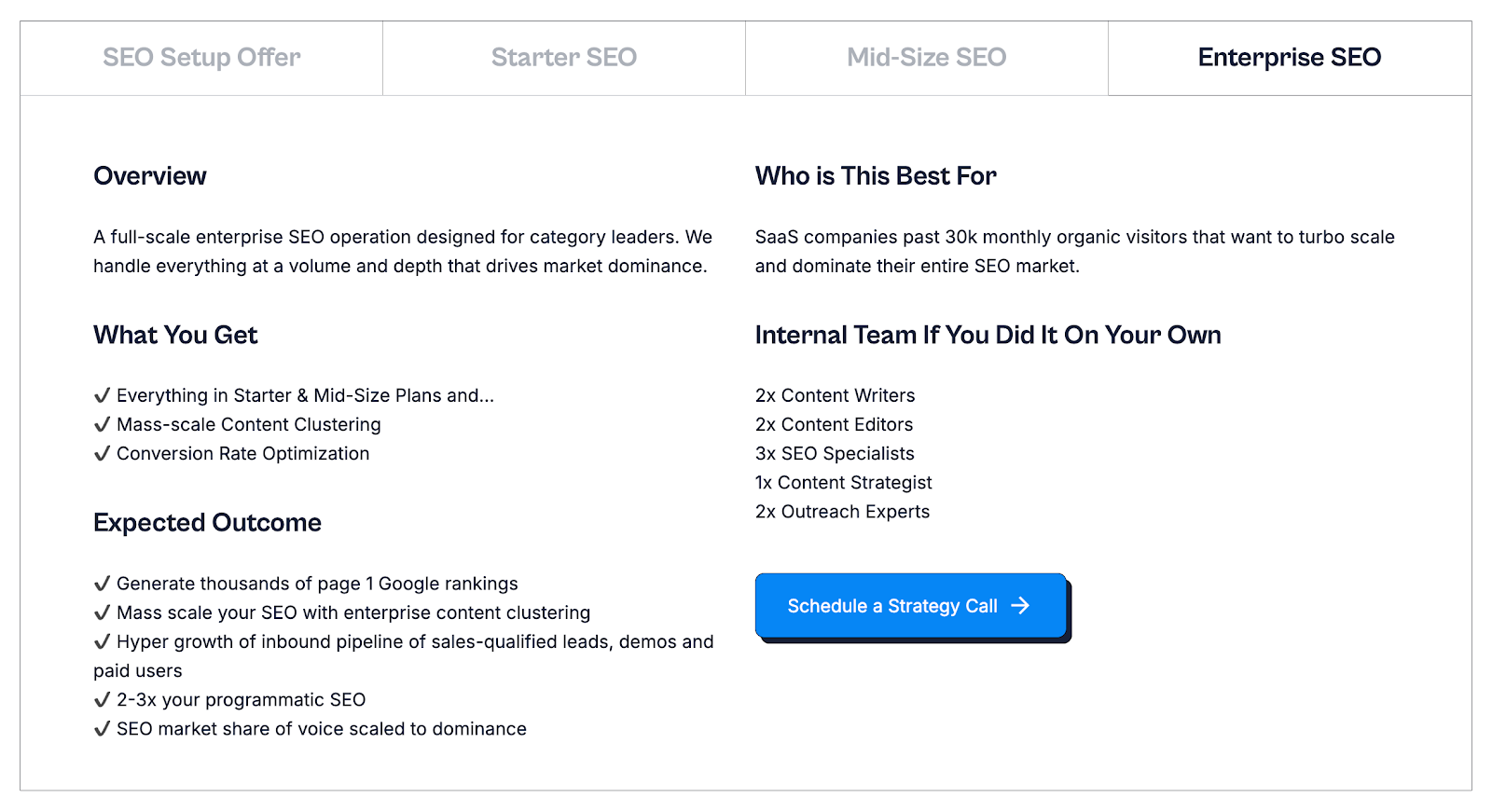
ABHMedia offers a full-scale enterprise SEO plan for SaaS companies with more than 30,000 monthly organic visitors that want to scale aggressively and dominate their entire SEO market.
Book a strategy demo today and choose the plan that fits your needs best.
Why Is SEO So Expensive?
Search optimization is a significant financial commitment, and many businesses feel the impact right away. Several factors drive up the price of SEO services.
First, SEO requires considerable upfront effort. Before any results show, an SEO agency has to audit your site and plan a content strategy around the right keywords, which takes both time and skill.
The work does not stop after the initial setup. Modern SEO needs regular content updates as search algorithms and competition change, and this continuous work adds to the total cost.
Operating costs push the price up as well, since agencies pay for advanced SEO tools and often need a whole team of specialists, from writers to outreach experts who promote your content on other websites and social media platforms.
What to Check in an SEO Quote
Two quotes with the same monthly fee can cover very different amounts of work. Read each proposal line by line before you sign, and ask the agency to put its answers in writing. The points below show where most of the real differences hide.
Included Work
A quote should explain the planned deliverables, how they support your goals, and how priorities may change. Ask what ongoing optimization includes and which tasks fall outside the agreed scope.
Ask what a typical month looks like in practice and which tasks fall outside the agreed scope.
Who Implements Technical Fixes
Many agencies audit a site and hand over a list of issues but never touch the code themselves. In that case, your developers have to find time for the fixes, and the recommendations may sit in a backlog for months.
Ask whether the agency makes the changes directly or only sends recommendations to your team. If your developers will do the work, count their hours as part of the real cost of the campaign.
Setup Fees and Extra Charges
The monthly fee is not always the full price. Some agencies charge a one-time setup fee, while others bill development work and extra content separately.
Ask for a written list of every cost outside the retainer, so you can compare quotes on equal terms and avoid surprise invoices later.
Reports That Connect SEO to Revenue
A useful report ties SEO activity to leads, demos, and customers, so the agency needs access to your conversion data from the start.
Ask for a sample report showing leads, demos, and customers alongside rankings and traffic. Confirm which conversion data the agency needs and who will provide it.
Content and Account Ownership
Find out who owns the work once the agreement ends. You should keep full rights to all content the agency produces, and your analytics accounts should stay under your company’s name.
Some agencies set up these accounts on their side or license content only for the length of the contract, which can cut you off from your own data if you switch providers.
Contract Length and Exit Terms
Check the minimum term and the notice period before you commit. A fair contract lets you leave after a reasonable period if results do not show, and it spells out what the agency hands over when the partnership ends.
Is It Worth Paying for SEO?
Yes, SEO is worth the investment if you want consistent, long-term organic search growth.
SEO improves your visibility in search results. When your website ranks well, you attract qualified traffic without paying for every click, which is how paid advertising works.
Strong organic search rankings can keep bringing in leads over time and move you closer to your marketing objectives. In fact, according to Conductor’s State of SEO survey, 91% of respondents said that SEO positively impacted their website performance and marketing goals.
Over time, SEO also builds online authority, since every useful article you publish and every quality backlink you earn shows search engines and users that your site is a trusted source. This trust makes it easier to compete for high-value keywords and lead your industry.
How to Tell If SEO Pays Off for Your Business
More traffic looks good in a report, but it does not show whether SEO brings in business. A better test tracks the number of qualified leads and demo requests that come from organic search each month, and how many of them become paying customers.
Connect Google Analytics to your CRM so you can follow a visitor from the first page they open to a closed deal. Once you know the average value of a new customer, you can compare the revenue from organic search with your monthly SEO spend.
In B2B, buyers rarely convert on their first visit. A prospect may read several of your articles over a few weeks and then book a demo after they click a paid ad or type your address into the browser.
Last-click reporting can overlook SEO’s earlier role. Check Google Analytics attribution reports for organic search visits before conversions, and add “How did you hear about us?” to your demo form.
The agency fee is not the full cost either, since your team will spend time on SEO every month. Someone on your side has to review content for accuracy, and your developers often need to make the technical fixes the agency recommends.
Results also take time, as Google’s own guidance notes that most businesses need four months to a year before they see the benefits. Add your team’s hours to the budget and judge the investment over a full year, not after the first few months.
Make SEO Your Most Profitable Acquisition Channel With ABHMedia
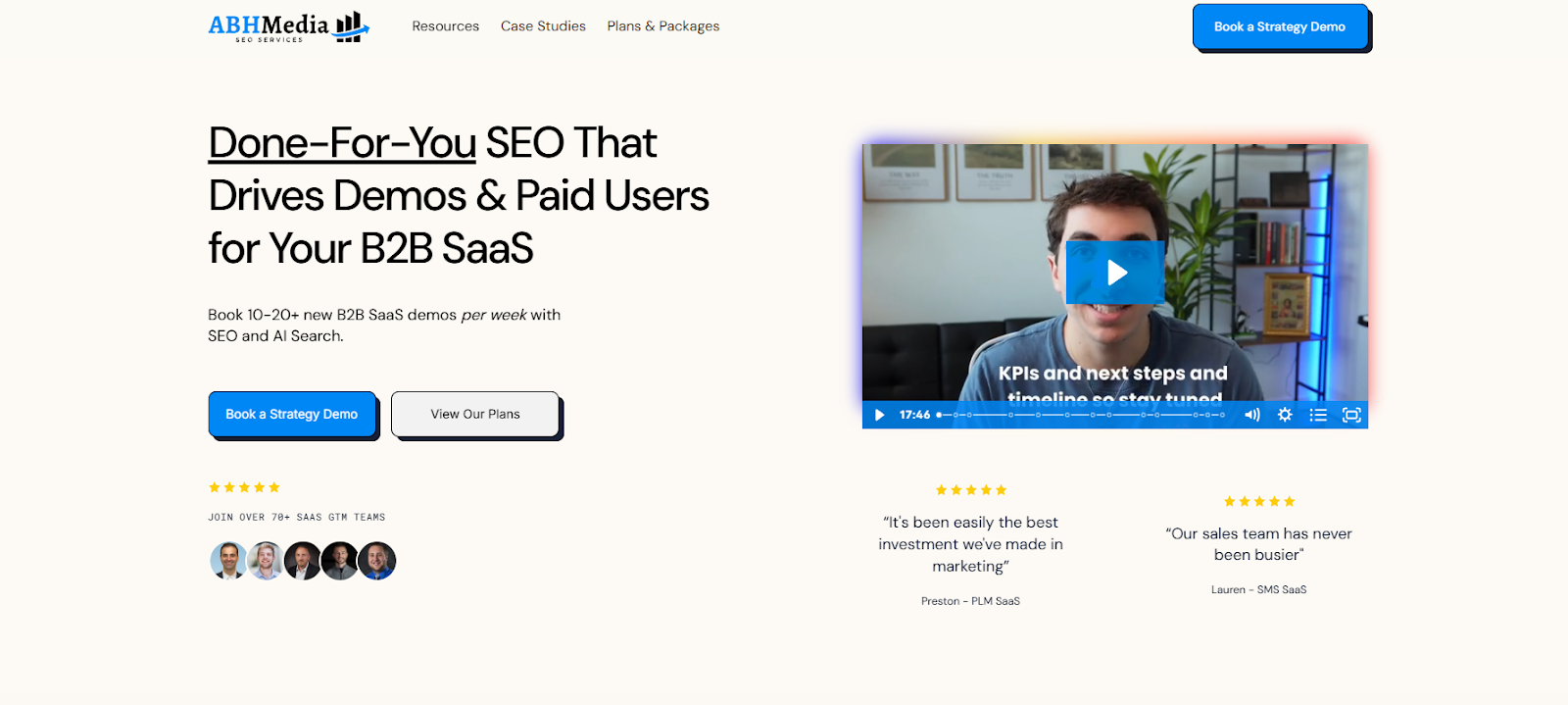
ABHMedia is a SaaS-focused SEO agency that turns search into an organic acquisition machine. It works with B2B SaaS companies that want to outrank their competitors on conversion-driving keywords and turn organic search into a steady source of demos.
The strategy starts with content that reaches buyers at every stage of their decision. ABHMedia also fixes the technical foundations of your site, so your pages can rank on Google and appear in AI search engines.
Backlinks go to the low-hanging fruit keywords you want to rank for, rather than to your homepage, which builds domain authority exactly where it moves rankings the most.
In the end, you get qualified traffic that turns into qualified leads and paying customers.
FAQs About SEO Services Pricing
What is the 80/20 rule for SEO?
The 80/20 rule for SEO means that roughly 80% of your results often come from 20% of your efforts.
For example, a few high-intent keywords may generate the majority of website traffic and conversions. You should focus on writing content around these keywords to maximize return on investment (ROI).
How much does SEO normally cost?
SEO typically costs anywhere from a few hundred dollars to several thousand dollars per month.
Basic SEO packages for small businesses usually fall between $500 and $1,000 per month, and mid-size companies often invest $1,000 to $5,000. Enterprise campaigns cost the most, at $5,000 to $20,000 or more every month.
How do I choose between SEO companies?
Start with your business goals, then ask each service provider to explain its SEO strategies and present case studies with real growth in organic search. A good agency or SEO specialist ties the work to leads and revenue, not only to traffic.
Is link building included in SEO packages?
It depends on the plan. Basic packages often cover only internal link building, while mid-size and enterprise plans add backlink outreach and digital PR, which builds authority faster in competitive markets.