B2B SaaS Content: 6 Ways to Improve Your Strategy
,
October 23, 2026
Many SaaS companies publish blog posts to attract more visitors from Google. However, high traffic doesn’t always lead to demo requests or free trials. People might read an article and leave because the topic has little to do with the software you’re selling.
A better B2B SaaS content strategy focuses on the problems your target customers want to solve and the questions they ask before buying.
In this guide, we’ll cover six ways to improve your B2B SaaS content strategy and attract potential customers who are more likely to request a demo or start a trial.
TL;DR
These are the six B2B SaaS content strategies:
- Define your ideal customer profile and content goals
- Prioritize B2B SaaS keywords with buying intent through ABHMedia’s buyer-focused SEO strategy
- Match your SaaS content to the buyer’s journey
- Create product-led content
- Improve on-page SEO and internal linking
- Update and repurpose existing SaaS content
6 Ways to Improve Your B2B SaaS Content Marketing Strategy
To turn your content into a growth engine that brings in qualified buyers, start with these six steps.
1. Define Your Ideal Customer Profile and Content Goals
If you want to produce content that brings in customers rather than empty traffic, start by defining your ideal customer profile (ICP) and setting clear business objectives.
An ICP describes the companies most likely to benefit from your software. Unlike buyer personas, it focuses on the whole organization rather than one employee.
Build your profile around four areas:
- Company details: Define your target market by industry, employee count, and annual revenue.
- Existing tools: Identify software your ideal customers already use.
- Pain points: Find urgent problems, such as manual reporting or data security concerns.
- Buying committee: Identify users, managers, and executives involved in purchasing decisions.
Once you know your target audience, set strategic objectives for building brand awareness, lead generation, and customer retention.
Track relevant traffic, demo requests, trial conversions, and cancellations to measure results.
2. Prioritize B2B SaaS Keywords With Buying Intent
Many SaaS companies chase high-volume keywords because they promise more traffic. However, someone searching for “what is project management” may have no plans to purchase software.
Focus on terms that suggest buyers are comparing products or preparing to purchase. Searches like “HubSpot alternatives” and “Salesforce vs. HubSpot” show interest in specific options. A phrase such as “best CRM for real estate agents” reveals an industry need.
Before choosing a target keyword, enter it into Google Search. Product pages, comparison articles, and software lists often suggest commercial intent.
You can check Google Ads bidding costs for another clue. Advertisers may pay $10 to $50 or more per click for some software terms, but expensive bids don’t guarantee sales.
Relevant searches help you reach buyers considering a switch and compete for market share.
For SaaS teams that need help with keyword research, ABHMedia offers done-for-you SEO services focused on attracting qualified traffic. Its process starts with an ICP strategy session, followed by a custom keyword and content plan that prioritizes commercial and transactional intent.
ABHMedia then handles content creation, technical SEO, and targeted link building to help SaaS companies attract potential customers who may request demos, sign up for trials, or purchase their software.
3. Match Your SaaS Content to the Buyer’s Journey
B2B software purchases often involve several people who need different information before approving a product. Your content should answer their questions at different stages of the customer journey.
During the awareness stage, buyers may only know they’re wasting time on manual tasks. Help them understand the problem through educational articles and practical guides.
At the consideration stage, readers start comparing possible solutions. For example, an accounting software company could explain the costs of hiring a bookkeeper versus using an automated tool.
By the decision stage, potential customers want pricing, product demos, security details, and proof that your software works.
Use relevant screenshots, case studies, and clear product information to address objections and convince prospects that your solution fits their needs.
4. Create Product-Led Content
Product-led content shows readers how your software solves the problem they’re researching. Before choosing topics, use a simple 0 to 3 score: 3 means your product directly solves the problem, 2 means it helps, 1 means it has limited value, and 0 means it doesn’t fit.
Focus on high-scoring topics and use real-world examples to show your SaaS solution at work. Add screenshots near the start when relevant, then explain each step. Clear demonstrations may help improve conversion rates.
Ask your in-house industry experts about common customer problems and share their answers in your guides.
Your sales team can use these articles to answer product questions. Readers can follow the instructions themselves and sign up for free trials when they’re ready.
5. Improve On-Page SEO and Internal Linking
On-page SEO helps search engines understand your articles and makes information easier for readers to find.
Place your main keyword naturally in the title, introduction, and relevant headings. Use clear subheadings, descriptive image names, and short URLs. Well-organized guides may keep readers on your site longer because they can find answers without searching elsewhere.
Next, improve your internal links to support your SEO efforts. Connect related articles into a content hub and use descriptive anchor text that explains where each link leads.
For instance, a blog about email automation could link to your product’s automation features and pricing landing pages.
Internal links help visitors and search engines reach related pages. Separately, original research and useful data studies can attract links from other websites.
6. Update and Repurpose Existing SaaS Content
Publishing new articles isn’t always necessary. Start by checking Google Search Console for existing content that has lost clicks or rankings.
Review each article’s search intent, outdated statistics, product screenshots, and broken links. Update inaccurate details and compare the page’s organic traffic before and after your changes.
Once you’ve refreshed an article, turn useful sections into other formats. A product tutorial, for example, could become a two-minute video content guide, while original research could support several LinkedIn posts.
Add these materials to your content calendar and schedule content promotion on channels your customers use.
To maintain consistency, plan when each post, video, or guide goes live. You can reuse strong research without repeating the same information in every format.
What Types of B2B SaaS Content Should You Create?
Educational blogs, software comparisons, and product tutorials can each serve as a powerful tool for helping buyers understand their problems, compare solutions, and choose software.
Educational Blog Posts
Educational blog posts help people solve work problems without pushing them to buy your software right away. Since AI tools can answer basic questions in seconds, your articles need to offer more than general advice.
Begin with the pain points your sales and support teams hear from customers. For example, a project management company could explain how remote teams can track deadlines and assign tasks without missing updates.
To create high-quality content, include actionable insights, screenshots, and examples that readers can follow. Use product data or industry trends when they add useful information that other content marketers haven’t covered.
Organize related guides by topic rather than publication date. SaaS companies can then help readers find answers to connected problems and introduce relevant product features when they fit.
Software Comparison and Alternative Pages
When buyers search for “[Competitor] alternatives” or “[Brand] vs. [Competitor],” they’re usually comparing products before making a purchase. Comparison pages help you reach these qualified leads when they’re already interested in software.
Don’t give your product every advantage or hide a competitor’s strengths. Your target customers need honest details about features, pricing, integrations, and support.
Explain your competitive advantage through specific differences, such as automated reports versus manual exports. Include clear costs to address objections from managers who control the budget.
Switching software can mean transferring customer records, rebuilding workflows, and training employees. Show how migration works and share verified examples to help convert customers who currently use another provider.
Product Use Case and Tutorial Content
A product use case explains how your software helps someone with a specific job or business problem.
Create separate pages for industries or roles with different needs. Add customer success stories with real results to show how people use your product.
Tutorials explain the steps readers need to complete a task. Show where to click, what details to enter, and how to check whether the process worked.
Use screenshots or short recordings to create engaging content that readers can follow. Organize your guides by role or feature to deliver content that answers common questions.
You can create content for difficult setup tasks to help new users learn without contacting support.
What B2B SaaS Content Mistakes Should You Avoid?
Many SaaS brands publish articles about product features without explaining how those tools solve customer problems. So, don’t just describe automated reporting. Show how it replaces manual spreadsheet updates and helps managers prepare weekly reports.
Another mistake is chasing search volume without considering buying intent. A keyword with 100 monthly searches could attract more buyers than a broad topic with 50,000 searches if those visitors need your software.
Aside from that, using AI to produce content without expert review can lead to generic advice. Ask product developers for specific examples that provide valuable content.
Finally, track demo requests and paid conversions to measure your content marketing efforts. Create tutorials for loyal customers to support customer retention and build customer loyalty through better product knowledge.
Get a Custom B2B SaaS Content Strategy With ABHMedia
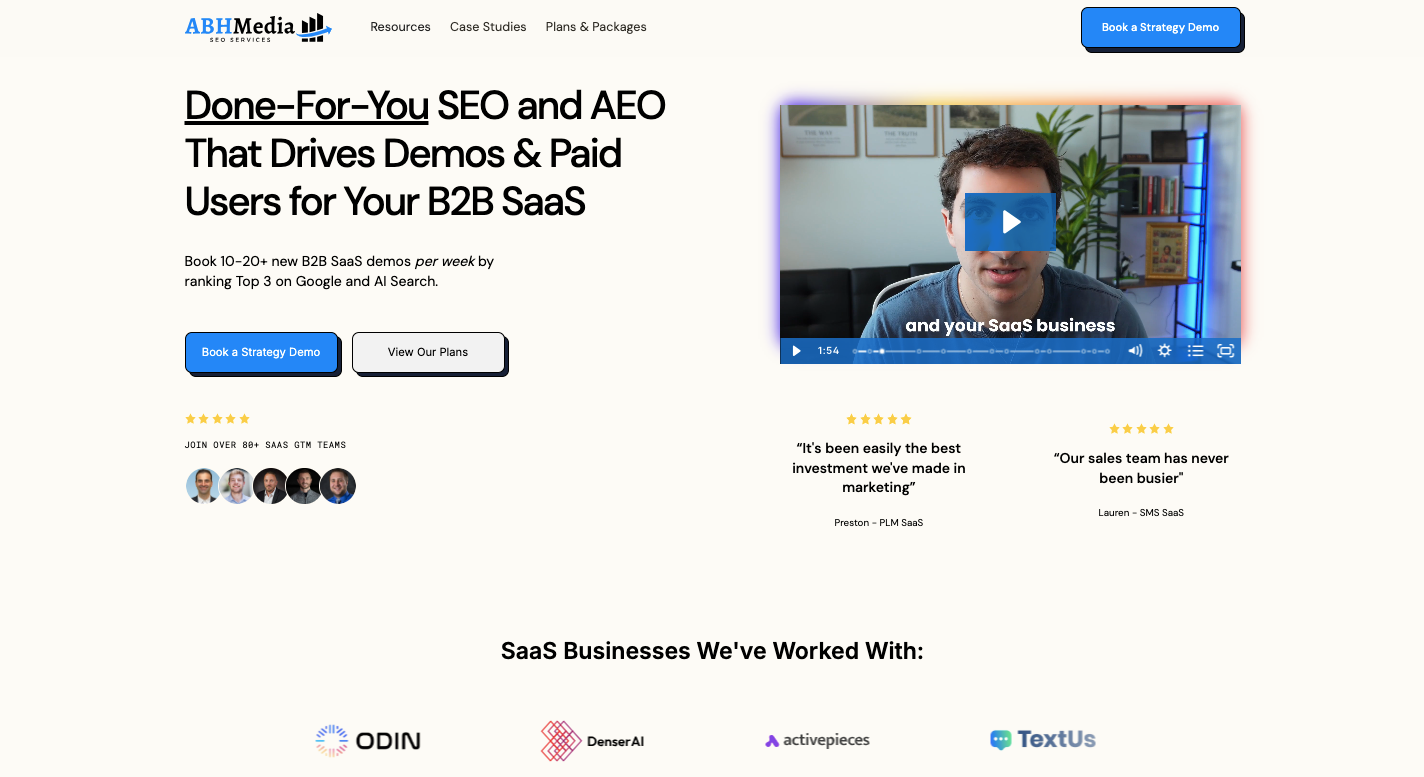
Publishing more articles won’t help your SaaS business grow if those posts attract people who aren’t interested in your software. You need a strategy that reaches the right audience and turns relevant searches into demo requests, trial signups, and qualified leads.
ABHMedia offers done-for-you SEO services specifically for B2B SaaS companies, with packages that cover everything from initial strategy development to ongoing content and technical optimization.
Get a Custom Keyword Strategy and Content Roadmap
ABHMedia begins with a strategy session to understand your ideal customer profile, product, and business goals. Its team then identifies commercial and transactional keywords that potential customers use when researching software.
The one-time SEO Setup Offer includes 12 core blog articles, a three-month content roadmap with a keyword calendar, and a SaaS writing guide. You’ll have a clear plan for the topics your website should target.
Get SEO Content, Technical Audits, and Backlinks
ABHMedia handles content creation and the technical work needed to support your rankings.
The SEO Setup Offer includes four backlinks from high-authority websites and a technical audit with recommended fixes. Monthly plans provide ongoing blog articles, backlinks, content rewrites, technical SEO, and keyword strategy development.
Higher-tier packages add primary page development, UI/UX work, programmatic SEO implementation, and large-scale content clustering.
Measure Your SEO Results With Conversion Reporting
ABHMedia’s monthly SEO plans include analytics and conversion reporting to help you track organic traffic, demo requests, trial signups, and other customer acquisition results.
You’ll have access to reporting dashboards and retain ownership of the content and assets its team creates.
FAQs About B2B SaaS Content
What does SaaS marketing mean?
SaaS marketing means promoting subscription-based software to attract potential customers, encourage free trials or demo requests, and convert users into paying subscribers. Common strategies include SEO, content marketing, email campaigns, and paid advertising.
Is B2B business still good in 2026?
Yes. B2B businesses remain viable in 2026 because companies continue to purchase software and services that solve specific operational problems. However, success depends on customer demand, pricing, competition, and the ability to retain profitable accounts.
What does B2B content mean?
B2B content refers to articles, case studies, product comparisons, and other resources that help companies research problems and evaluate business solutions.
Is ChatGPT considered SaaS?
Yes. ChatGPT is generally considered a SaaS product because users access the software through an online platform rather than installing and maintaining the underlying AI infrastructure. OpenAI offers free access and paid subscription plans for individuals and businesses.