


7 Best SaaS Content Marketing Agency Picks for 2026
,
June 15, 2026
AI has made it easier to create content, but it has also made average content easier to spot.
That is one reason many SaaS companies need help from content agencies to grow their online presence. A draft can be written quickly, but understanding the product and knowing what the buyer needs to hear takes more experience.
If you’re looking for a SaaS content marketing agency, this guide compares the seven best picks based on what they offer.
TL;DR
These are the seven best SaaS content marketing agency picks for 2026 based on their SaaS focus and content expertise:
- ABHMedia — Best for B2B SaaS SEO strategy
- Animalz — Best for editorial SaaS content
- Column Five — Best for SaaS brand story and creative content systems
- Campfire Labs — Best for narrative-led SaaS content
- Kalungi — Best for outsourced B2B SaaS marketing teams
- Codeless — Best for long-form SaaS content production
- Foundation Marketing — Best for B2B SaaS content distribution
Why SaaS Content Marketing Still Matters
Content is still one of the clearest ways for a SaaS company to showcase its expertise and attract new customers.
Most software products need explanation and proof of work before buyers feel ready to take the next step. A content strategy gives you a way to answer those questions early and explain your product clearly.
That is where SaaS content marketing comes in. It helps you build trust before a sales conversation even starts by sharing the knowledge in your content.
What Changed in SaaS Content Marketing
The value of content hasn't gone away, but today, teams are creating it differently.
For many marketing teams, AI has become an essential part of the content creation process. According to Ahrefs, 87% of marketers use AI either to create content or to support parts of their process.
The truth is, AI can speed up parts of content creation, but it cannot completely replace human labor. Content production still needs an expert-led strategy.
AI Overviews and other search experiences with AI-generated answers are also becoming more visible in Google. Still, according to Datos, more users in the U.S. relied on traditional search at 10.55%, compared with 0.55% who preferred AI tools.
This shows that while AI is changing content and search, Google is still where many buyers begin their research. That’s why the agency you choose should know how to build content for both traditional search and AI search visibility.
Top 7 Content Marketing Agencies for SaaS Companies in 2026
These SaaS content agencies were selected based on their SaaS focus and content expertise. Use this list to compare your options and choose one that fits the kind of content support you need.
1. ABHMedia — Best for B2B SaaS SEO Strategy
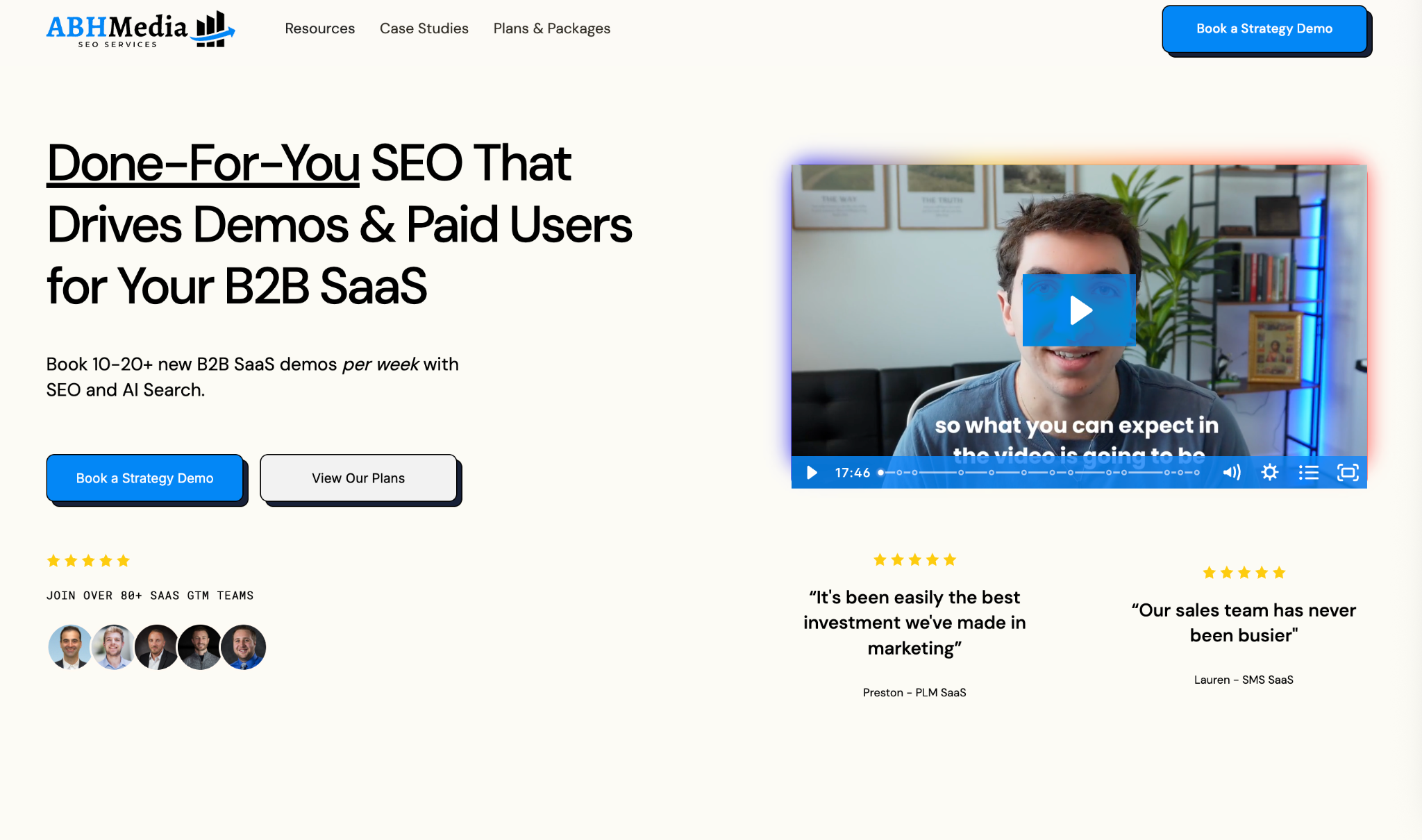
ABHMedia is a B2B SaaS organic growth agency that builds done-for-you SEO systems for software companies.
The agency works with SaaS go-to-market (GTM) teams that want content to support organic search growth and revenue. ABHMedia has served over 80 GTM teams and SaaS leaders.
Its case study library features more than 20 SaaS and software SEO campaigns tied to content performance. One of them is Odin AI, a leading AI workspace and productivity platform, for which ABHMedia created a content sprint to help double their SEO organic traffic in just six months.
Content Expertise
ABHMedia is best for B2B SaaS SEO strategy because its content process starts with a full content map built around buyer intent and search visibility.
The 7-Figure Organic SEO Process uses keyword research to identify search opportunities that attract buyers with genuine intent. The team uses those opportunities to plan core SEO pages and supporting articles that work together.
This structure fits SaaS because one blog post rarely covers the full buyer journey. A buyer usually identifies a problem early and compares software options later.
ABHMedia builds SEO content around those stages, giving each page a specific role in the broader strategy.
They also avoid using the same content formula for every page. Each article is shaped around the client’s SEO roadmap, with internal links or targeted backlinks added to give priority pages a better chance of ranking over time.
2. Animalz — Best for Editorial SaaS Content
Animalz is a content marketing agency focused on B2B SaaS and technology companies. The agency has spent nearly a decade building content programs for software brands ranging from growth-stage startups to established enterprise SaaS companies.
Animalz provides services in thought leadership and editorial production. The agency is especially known for long-form editorial content designed to support brand authority and organic growth.
The company works primarily with Series A+ SaaS businesses and category-leading tech brands. Its SaaS clients include companies such as Airtable and Intercom.
Content Expertise
Animalz is suitable for editorial SaaS content because its work leans heavily on unique company perspectives and insights.
Its approach to thought leadership starts with the company’s own perspective. Animalz describes thought leadership as content rooted in a brand’s experience and expertise, which means the writing needs to sound like it could only come from that company.
Animalz also has a clear point of view on content refreshes. Through its Revive tool and refresh guidance, the agency looks at older content that is losing traffic and identifies which articles need attention.
This makes Animalz a solid fit for SaaS companies that already have ideas, experts, or older content worth optimizing. Their work is less about quick content output and more about turning company knowledge into content with genuine editorial quality.
3. Column Five — Best for SaaS Brand Story and Creative Content Systems
Column Five is a B2B content marketing agency for SaaS and AI companies.
The agency helps B2B brands build content systems and campaigns. Its work spans SaaS and enterprise tech, with case studies covering brand development and content creation.
Some of the clients they've worked with include Fortune 500 brands and startups.
Content Expertise
Column Five is suited for SaaS companies that want their content to communicate a more defined brand perspective.
SaaS messaging can get crowded fast, especially in competitive SaaS categories where many companies address the same topics.
Column Five’s work focuses on helping a company identify what makes its perspective, product, or customer experience different. They turn those strengths into content that feels more recognizable and aligned with the company’s brand.
Instead of focusing only on written articles, Column Five helps shape campaigns, paid ads, and other brand-led assets that make the brand’s point of view easier to recognize.
4. Campfire Labs — Best for Narrative-Led SaaS Content
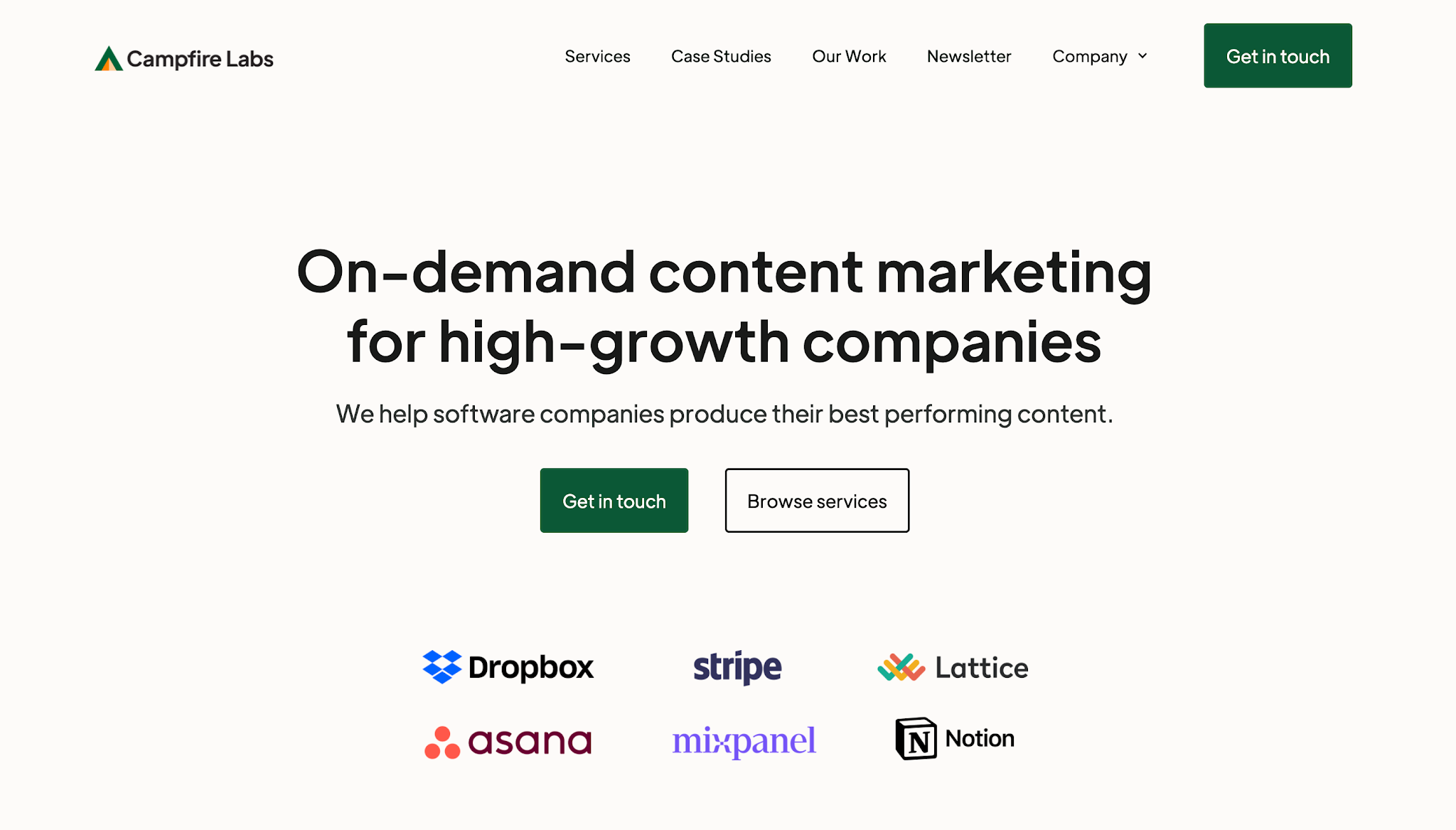
Campfire Labs is an on-demand content marketing agency for high-growth software companies.
The company describes its mission as telling stories that inspire action and impact. They also invest part of their profits into climate action projects, with more than $500K given to climate causes.
Content Expertise
Campfire Labs is suited for software companies that want content built around expert insight and stronger storytelling.
Their process leans on interviews and research rather than surface-level topic coverage. Campfire Labs publishes narrative eBooks, research reports, and thought-leadership pieces, which gives their work a premium editorial content feel.
This works well for SaaS teams with internal expertise or original research, but no clear way to turn those ideas into content that feels fresh.
5. Kalungi — Best for Outsourced B2B SaaS Marketing Teams
Kalungi is a B2B SaaS marketing agency built around a go-to-market-as-a-service model.
The agency functions as an outsourced marketing department for SaaS companies that need senior marketing leadership and execution support without hiring a full internal team. Kalungi has supported more than 150 B2B SaaS teams and works with companies at various stages of growth.
Its team includes SaaS marketing specialists and fractional CMOs. Kalungi also runs the T2D3 playbook and B2B Marketing Snacks podcast, which gives the agency a wider presence in the SaaS go-to-market space.
Content Expertise
Kalungi is for SaaS companies that need content as part of a larger marketing function.
Its content work usually sits inside a broader go-to-market engagement. That means content is one part of a larger marketing setup, alongside positioning and sales enablement.
This works well for SaaS teams that need stronger marketing capabilities but do not have a full internal team yet. The content is planned with the wider growth strategy in mind, so it can support lead generation instead of becoming a separate publishing task.
6. Codeless — Best for Long-Form SaaS Content Production
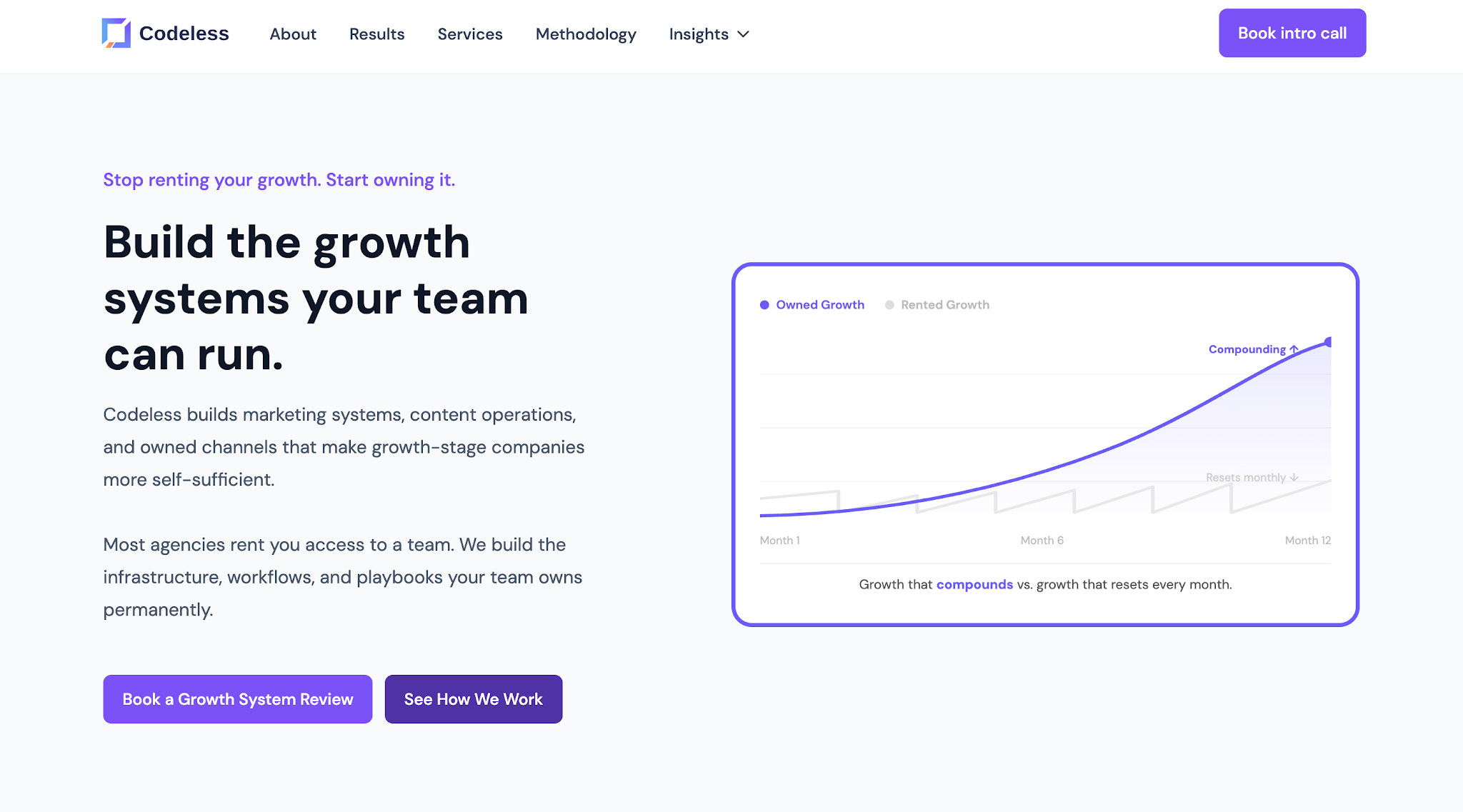
Codeless is a content operations partner for growth-stage SaaS companies. The agency works with SaaS brands that need consistent publishing without adding more internal work.
Content Expertise
Codeless is suited for SaaS companies that need to produce content at scale but want a better way to manage production.
Its Content Engine model is built around workflows and dedicated teams. The goal is to create a more organized and repeatable process for producing SEO-focused content, especially for companies that need a steady volume of long-form articles.
This is different from hiring a few freelance writers and trying to manage everything internally. Codeless builds the production process around briefs and performance reporting, so content can keep moving without becoming chaotic.
They fit SaaS teams that need a higher content volume and want an outside partner to manage the operational side of production.
7. Foundation Marketing — Best for B2B SaaS Content Distribution
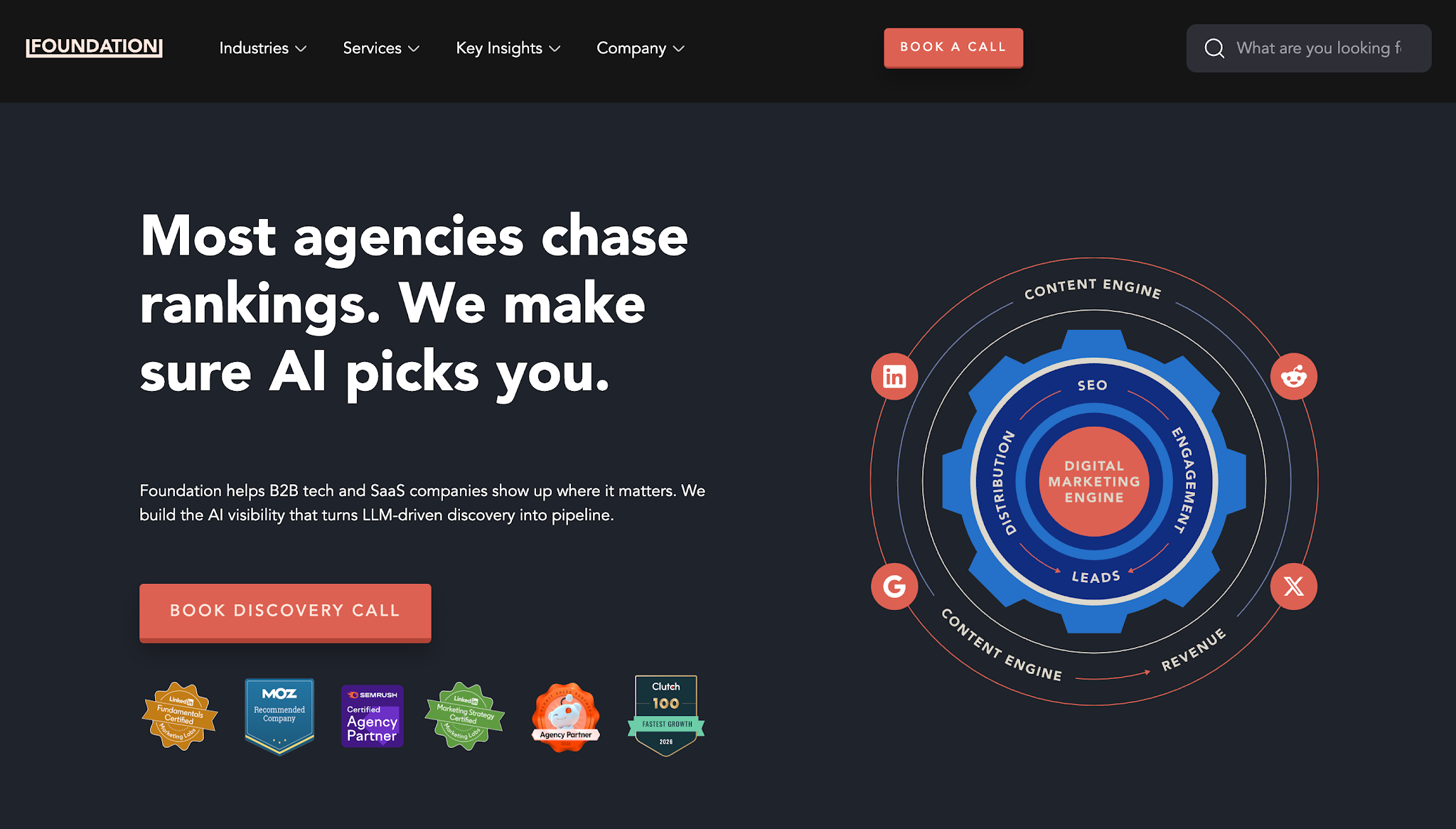
Foundation Marketing is an AI search optimization agency for B2B tech and SaaS companies. It works with ambitious B2B SaaS companies and publishes research on AI visibility and industry trends.
Content Expertise
Foundation Marketing is for SaaS companies that need help getting more value from their existing content.
Their work is built around distribution and repurposing. Instead of treating content as finished once it is published, Foundation focuses on helping B2B SaaS brands get that content in front of more buyers through the right marketing channels.
This works well when a company already has strong content but is not getting enough mileage from it. Foundation Marketing’s work is more about repackaging and distributing existing ideas than building a search-driven content strategy from scratch.
What Makes a SaaS Content Marketing Agency Worth Hiring
The right agency depends on what your team needs most right now. Once you understand the kind of results you want from content, it becomes easier to evaluate which agency can help you move beyond vanity metrics.
Below are the main things to look at before you choose a SaaS content marketing agency.
Strategy vs. Production
Start by figuring out whether your team needs strategy or production, as those are different problems.
Strategy is about deciding what content deserves time and budget, while production is about turning those decisions into finished content.
According to the Content Marketing Institute’s 2026 B2B Content and Marketing Trends report, 61% of marketers said their content strategy became more effective this year. The biggest reason was strategy refinement, as cited by 74% of the surveyed marketers.
When you have a clear picture of what your team needs, it’s easier to know where to put your time and budget. It also helps you avoid choosing generalist content agencies whose services sound valuable but don’t match the real gap in your content process.
Content Prioritization
Content prioritization is the process of deciding which content to create first and how that order supports your product’s visibility and credibility in the market.
Your chosen agency should be able to explain why one topic comes before another. The order shouldn't be based only on what is easy to write or what has the highest search volume.
Their role is to assess the search intent and business value of each topic before adding it to the content plan.
Without that step, content can quickly turn into a long list of ideas with no clear order. You might publish useful articles, but the pages your buyers need most could still be missing.
Prioritization also shows whether an agency is creating content with a strategy behind it. The pages they create should connect through internal links, with the highest-value pages planned for link acquisition after publishing.
Product and Buyer Understanding
The agency should also know how to pull the right context or information from your team before writing starts.
In SaaS content, that context usually comes from two places: how your product is positioned and what buyers ask during sales conversations.
Those details help the agency create content that addresses real buyer questions while reflecting your company's perspective, rather than producing something that could belong to any brand in the category.
This is where the first few meetings matter. Pay attention to whether the agency asks about real buyer questions and the parts of your offer that are hardest to explain.
The right agency shouldn't rely only on a keyword and a brief before they start writing. They should know how to gather the right inputs upfront so your content feels aligned with your brand and speaks to your target audience.
Content Success Metrics
Traffic numbers are easy to track, but they rarely tell the full story of content performance.
A page can bring in visitors and still fail to generate qualified leads, demo requests, or other meaningful sales opportunities. For that reason, the metrics should match the purpose of the content.
An article built for early research will not be judged the same way as a comparison page built for buyers evaluating options. One may be doing their job by bringing in the right audience. The other needs to help readers move closer to a decision.
When you compare agencies, look at how they report performance. The right SEO KPIs should help you understand whether your content marketing efforts are supporting your goals behind each page, other than bringing your traffic up.
Pricing and Scope
Understanding SEO services pricing starts with knowing what services and responsibilities the agency will handle for your business.
A lower-cost package works well if you only need a few finished articles. A larger engagement may be a better fit if you need a content marketing agency to manage a broader scope of work, like content planning and ongoing optimization.
The key is to compare each agency’s service offerings and pricing tiers. Most agencies can charge similar rates while doing very different work behind the scenes.
Before choosing, ask for a detailed breakdown of deliverables and responsibilities. The goal is to understand what the price is really buying, whether that means strategy, content volume, digital PR, or a mix of those things.
A package that looks expensive can make more sense if it includes a deeper strategy and experienced review. On the other hand, a cheaper package can become costly if it only gives you content output without enough direction behind it.
Make SEO Your Most Profitable Acquisition Channel With ABHMedia
Content remains one of the core drivers of SaaS growth, even as AI continues to change how it is created and distributed.
It's how buyers find answers, compare options, and decide which companies can help them achieve their goals. The companies that show up with relevant and helpful content at the right time are often the ones buyers remember when they are ready to take the next step.
The problem is that many SaaS teams still treat content like a publishing task. They create articles, but the content isn't always tied to search demand or revenue goals.
ABHMedia helps B2B SaaS companies create content with a clearer purpose. Every topic is planned around the questions and buying decisions your audience is actively researching, so your content has a better chance of being found and remembered.
FAQs About Saas Content Marketing Agency
How do you choose a content marketing agency for SaaS?
Choose a SaaS content marketing agency based on its SaaS experience, track record, and service fit. The agency needs proof that it understands software buyers and can create content for your market.
Once the agency passes that basic credibility check, look at its process. Ask how they plan content and create measurable results tied to your goals.
Do SaaS content marketing agencies also handle SEO?
Some SaaS content marketing agencies include SEO, but not all of them treat it as a core part of the process. If organic search is your priority, choose an agency that makes search intent and link building a core part of its content marketing strategy, such as ABHMedia.
ABHMedia is a B2B SaaS SEO agency that helps SaaS companies attract high-quality leads through search-driven content and SEO-focused growth programs.
How much does a SaaS content marketing agency cost?
SaaS content marketing agency pricing depends on the scope of work. A smaller project can cost less than a project that covers ongoing strategy and production. The price usually depends on content volume, strategy depth, and extra support needed.
Should SaaS companies hire a content agency or build an in-house content team?
It depends on your team’s capacity. If your team knows what content it needs but does not have enough time to create it, a content agency can help you move faster.
An in-house team is a better fit if content needs frequent input from product or sales teams.
Many SaaS companies use both as they grow, but hiring a content agency is often more cost-efficient because you get access to a team that already has experience in strategy, writing, and production.
What makes SaaS content marketing different from regular content marketing?
SaaS content marketing has to connect the product to the buyer’s problem. It often needs to address use cases and comparison points before a buyer is ready to talk to sales.
Regular content marketing, on the other hand, can be broader. It may focus more on brand awareness or general education without needing to explain a complex product or buying process.






.png)