


SEO Consulting Services: A Guide for SaaS Companies
,
May 25, 2026
Search engine optimization (SEO) has remained one of the most reliable long-term growth channels for SaaS companies.
HubSpot’s 2026 State of Marketing data found that website, blog, and SEO remain the #1 ROI-generating channel according to marketers, which explains why organic search still gets serious attention from B2B teams.
SaaS companies use SEO to get found by buyers who are already searching for problems, tools, comparisons, and solutions related to their product.
Most SaaS teams already know SEO matters. The harder part is knowing what deserves attention, what is holding performance back, and where growth opportunities actually exist.
Your team might already have content, rankings, and organic traffic. But when the SEO strategy is unclear, it becomes harder to tell what deserves attention first.
SEO consulting services help solve that problem by giving teams a clearer view of what is holding search engine performance back and where to focus next.
In this guide, we’ll look at what professional SEO consulting services include, how they apply to SaaS companies, and how to choose the right provider for your goals.
TL;DR
- SEO consulting services help SaaS teams understand what is limiting search performance and what needs to be prioritized next.
- A consulting engagement usually starts with an audit and uses those findings to create a clearer plan to increase organic traffic and support business objectives.
- SaaS SEO consulting needs a different lens because software buyers often research problems before comparing options or speaking with sales.
- Pricing depends on the consultant’s experience and the level of support the website needs.
- ABHMedia is built for B2B SaaS companies that need SEO direction tied to buyer intent and revenue-focused organic growth.
What Are SEO Consulting Services?
SEO consulting services are expert-led recommendations that help improve how a website performs in search results.
They look at where your SEO performance stands today and where it can improve. To do this, SEO experts review key areas of your website, such as keyword rankings, technical health, and content quality.
Their goal is to find what is holding your website back and create a clearer SEO strategy for improving your online visibility.
What Do SEO Consulting Services Include?
SEO consulting services can cover several areas of your website and search strategy.
The reason for that is that search engine optimization does not stop with one task. It affects how your website is built and how easily the right buyers can find your pages through search results.
Since every product or service supports different business objectives, the exact scope of SEO services can vary.
Here are the main areas most SEO consulting agency engagements cover.
SEO Audit
An SEO audit gives you a clearer look at your website's performance in search.
It helps uncover the issues that prevent your site from having better search engine rankings or attracting qualified leads. This involves your site structure, technical setup, and content quality.
What’s especially useful about an audit is not the number of problems it finds. It is what those findings reveal beneath the surface of your website. They can show why important pages are not being found or why search engines are not understanding your content clearly.
In other words, an SEO audit acts as the first layer of diagnosis. It helps your team understand what is happening behind the scenes and how those problems are affecting search performance, user experience, and business goals.
Keyword Research
Keyword research helps you understand how people search before they find your website.
It looks at the words and phrases your target audience uses when learning about a product or service or seeking a specific solution.
This is important because not every keyword has the same value.
A broad keyword can bring more traffic, but that doesn't always mean it brings the right visitors. A more specific keyword can have lower search volume and still matter more because the person searching has a clearer intent.
Keyword research also shows which searches are worth targeting and which ones could distract your team from better opportunities.
When this research is done well, your SEO strategy becomes more focused. Your team can build content around the searches that match your audience and support the way your SEO services are meant to drive growth.
Content Strategy
Content marketing strategy determines what your website needs to update or improve. It also shows where content creation can support new search opportunities.
It starts by looking at your existing site content and how well it supports search demand. This reveals where the site is outdated and where important questions are not fully answered.
These insights give your content strategy clearer direction by connecting search demand with the questions buyers need answered before choosing a product.
Instead of publishing random topic ideas, your team can focus on content that supports different stages of the buying journey while strengthening topical authority around your product.
Technical SEO Consulting
Technical SEO consulting looks at whether search engines can properly access and understand your website.
Even useful content can struggle if the technical foundation is weak. Technical issues can reveal why certain pages are not being indexed, why rankings are unstable, or why search engines are spending time on parts of the site that do not matter as much.
This is especially important as a website grows.
More pages can create more opportunities, but they can also create more technical problems. Without a clear structure, search engines can miss important pages or spend too much time on content that adds little value to your SEO strategy.
On-Page SEO Recommendations
On-page SEO recommendations focus on improving individual pages so they match the intent of your target audience and have a better chance of appearing in search results.
A page also needs a clear purpose. Readers should understand why they landed there, while search engines should understand what the page is trying to answer.
Without that alignment, a page can struggle to stand out in the search engine results pages (SERPs) even when the topic is relevant.
On-page recommendations identify those gaps so the page can better match the search and guide the reader more clearly. This can involve improving the page structure or making the next step easier for the reader to understand.
When each page of your website does its job better, your company has a stronger chance of earning qualified organic traffic tied to revenue growth.
Competitor Analysis
Competitor analysis helps you understand why other companies are gaining website visibility in your industry.
It looks at what competitors rank for and how their pages are positioned in search results. The goal is to understand where they have built stronger signals and where your website has room to improve.
By seeing these gaps more clearly, your team can make better decisions about which topics need stronger positioning and where your SEO strategy can help you get ahead of competitors.
That could mean building stronger authority around a topic or developing pages that better match the buyer’s intent.
SEO Reporting and Performance Tracking
SEO reporting shows whether your strategy is moving in the right direction.
Rankings and website traffic are part of that picture, but they don't explain everything on their own. A page can bring in more visitors without attracting the right audience. Another page can bring fewer visitors but create more qualified leads.
Reporting also needs context. An SEO consultant helps explain what changed and where your team should focus next.
Are SEO Consulting Services Different for SaaS Companies?
Yes, and this is what many companies overlook.
SEO consulting services can apply to different industries, but they are not built the same way for every business model. SaaS companies need different digital marketing strategies because their products, buyer journeys, and conversion paths are more complex than those of typical service-based websites.
SaaS buyers usually research problems, compare solutions, and evaluate alternatives before speaking with sales.
Because of that, SaaS SEO consulting needs to focus less on raw traffic and more on search intent, product understanding, and conversion-focused pages that support longer buying journeys.
According to Forrester, 64% of business buyers at the manager level and above are Millennials or Gen Z.
These buyers rely more on self-guided research and have less patience for generic outreach. That makes your website and search presence more important before a buyer speaks with sales.
SEO fundamentals still matter, but SaaS companies need them tied more closely to product positioning and buyer intent.
How Do I Know if I Need SEO Consulting Services?
Many companies do not realize they need SEO consulting services right away because the signs usually show up as smaller problems first.
These issues can happen whether you already have a team working on SEO or you are still figuring out where your SEO strategy should start.
In both cases, the issue is the same: you need a clearer view of what is holding search performance back and which actions need to be prioritized.
Many SaaS companies notice the problem when organic traffic grows, but lead quality does not improve, rankings become disconnected from business goals, or content efforts start feeling scattered without a clear SEO direction.
Some of the common signs include:
- Competitors are showing up for comparison or alternative searches before you do.
- Your SEO reports show rankings and traffic, but not what those numbers mean.
- Your SEO campaigns are active, but they are not producing the results you expected.
- Technical issues keep coming up, but your team does not know which ones deserve priority.
- You are publishing content regularly, but the strategy feels disconnected from sales or product goals.
If these problems sound familiar, it's probably time to bring in SEO consultants before your team spends more resources on work that's not moving the needle for your business.
How Much Do SEO Consulting Services Cost?
According to Clutch’s 2026 SEO agency pricing data, most SEO projects reviewed on its platform cost less than $10,000. The most common hourly rate for SEO agencies is also found to be between $100 and $149 per hour.
While this data gives you a useful benchmark, it doesn't mean that every SEO consulting project fits into that range.
SEO services pricing usually depends on the consultant’s experience and the level of support your website needs.
A focused audit usually costs less than a longer consulting engagement. If the project requires deeper research or ongoing guidance, the cost will usually be higher.
Scope is also an important factor. If your website has complex technical issues or needs a more detailed strategy, the project will require more time.
The same is true when recommendations need to be reviewed with writers, developers, or internal stakeholders before they can be implemented.
The best way to understand the cost is to speak with a good SEO consultant about your current search performance and business goals. From there, they can give you a clearer estimate based on the work your site needs.
What Should You Prepare Before Working With an SEO Consultant?
SEO consulting works better when the consultant has enough context to understand your business, not just your website.
Before the engagement starts, it helps to gather the information that explains where your company is today and what you want your SEO strategy to support.
Sharing these details early makes it easier for the SEO consultant and your team to build a stronger strategy from the start.
A simple checklist can include:
- Access to your Google Analytics and Google Search Console
- A clear description of your target customers
- Your targeted SEO goals for the next 6 to 12 months
- A list of competitors your buyers compare you against
- Known website issues your team has already noticed
- Product positioning or sales insights that explain how buyers understand your offer
If you’ve already had SEO work done on your website, share those as well, including what was tried and what changed after. This gives your SEO consultant a clearer picture of what has already been tested and where new opportunities might still exist.
The more context you provide upfront, the easier it becomes to turn consulting work into custom solutions your team can act on.
How to Choose an SEO Consulting Provider
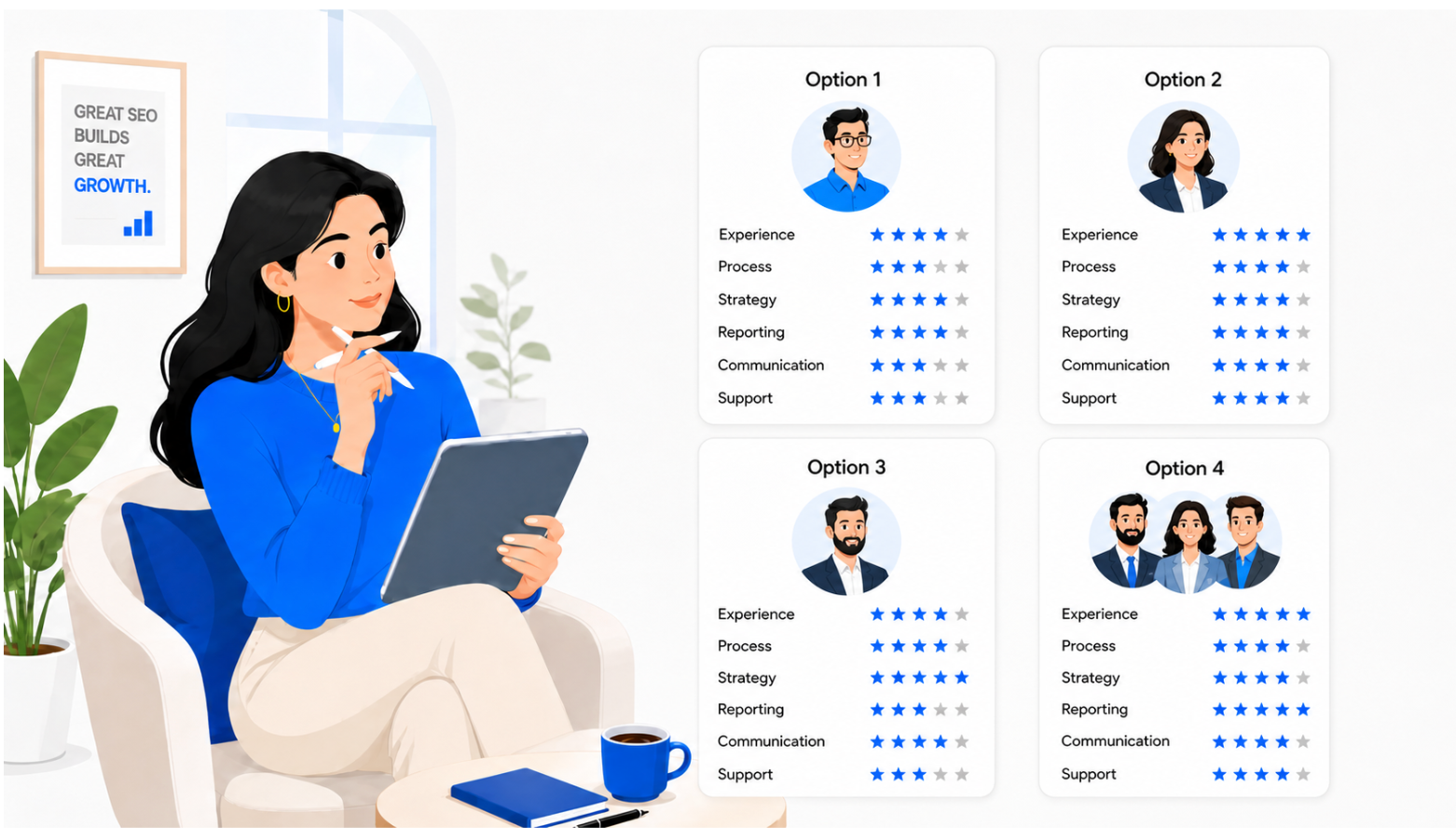
The right SEO consultants should help your team make clearer SEO decisions with more confidence.
Whether you choose a solo consultant or an SEO consulting company, their job is to turn what they find on your website into a focused SEO roadmap your team can use right away.
To find that kind of partner, here are the qualities worth looking for.
Look for Relevant Experience
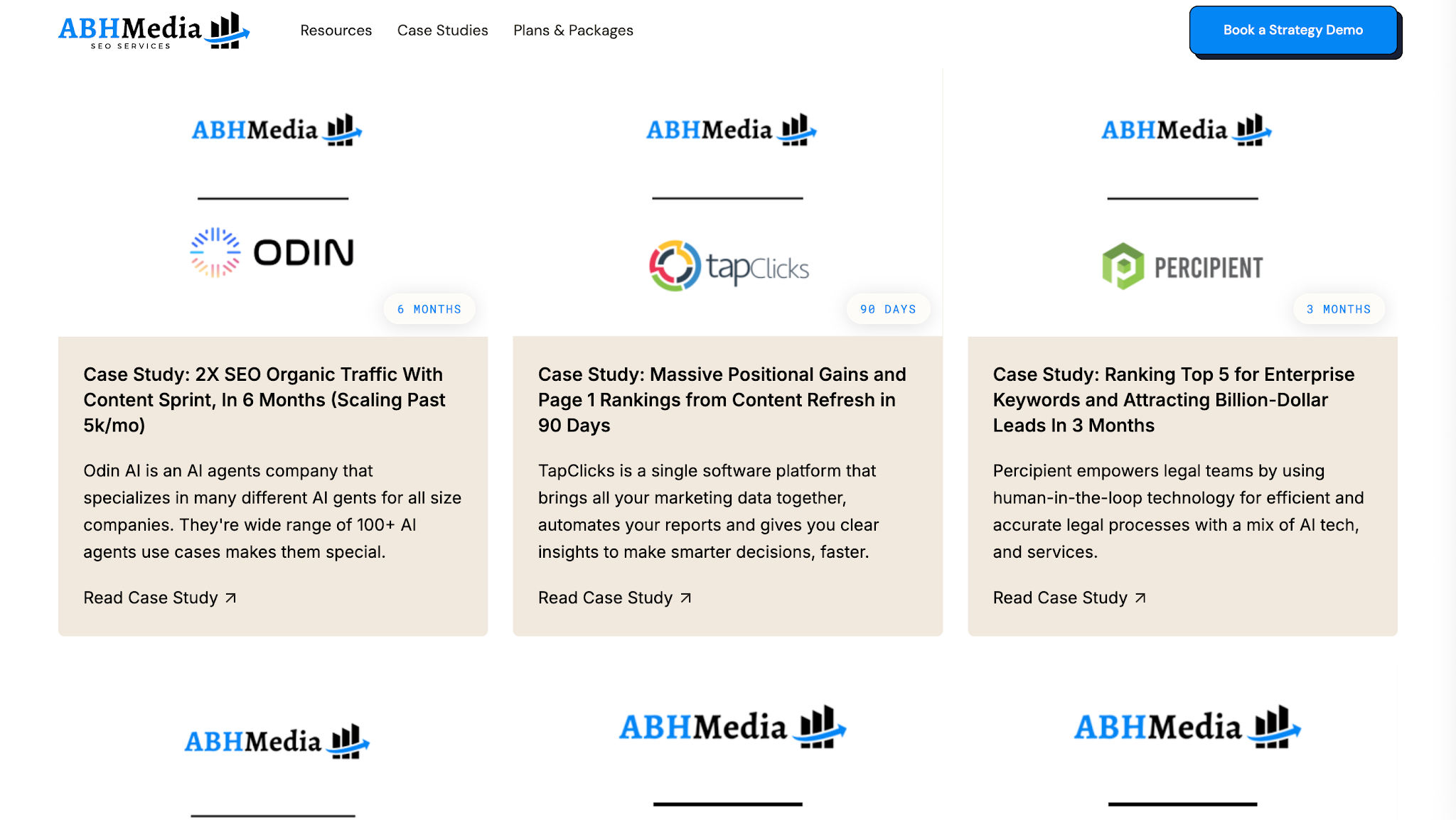
One of the first things to check when working with an SEO consultant is the type of experience they have.
Years in SEO can matter, but relevant experience matters more. A consultant who understands your business model will ask better questions and avoid giving advice that only works for a different type of website.
This is especially important when SEO needs to support a longer buying journey, like in the SaaS industry. The consultant should understand how your audience searches before they are ready to talk to sales and how your website can support that process.
They should also be able to keep up with SEO trends that affect how buyers find and evaluate information, especially as search behavior changes over time.
Look for someone who can explain how they approach situations similar to yours. If an SEO consulting firm gives the same answer for every business, that is usually a sign that their strategy will be too broad.
Review Their Process
A clear process tells you how the engagement will work.
Before you choose a provider, pay attention to how clearly they explain their SEO efforts. You should be able to understand how they move from reviewing your website to giving out recommendations.
A reliable SEO consultant should be able to explain what happens first and why. They should also make it clear what SEO services your team will receive at the end of the engagement.
If the process sounds vague, the output will likely feel vague too. That can leave your team with advice that sounds reasonable but is hard to act on.
Ask How They Build the Strategy
SEO consulting works best when the recommendations connect to a larger plan.
Experienced SEO consultants should understand your current search position before giving advice. That means they need to look at what is already working and where your competitors have created an advantage.
With those insights in place, the strategy should show how SEO can support your broader business goals while helping increase organic traffic.
This is where many consulting engagements fall short. They give the team a list of tasks without explaining how each one supports the larger SEO strategy.
Strong SEO consulting connects recommendations to clear business outcomes so teams understand why the work matters.
Check How They Prioritize the Work
Most websites have more SEO opportunities than one team can handle at once.
The real value is knowing which recommendations deserve attention first. An SEO consultant should be able to explain what needs immediate action and why it matters now.
This keeps your team from spending too much time on low-impact fixes or relying on SEO tools without expert context. It also helps you understand where SEO work can create the most meaningful progress.
Prioritization is one of the clearest signs of expertise. Anyone can find issues, but a reliable consultant knows which issues are worth solving first.
Understand the Level of Support They Provide
SEO consulting can be strategic, hands-on, or somewhere in between.
Before choosing a provider, make sure you understand how much support is included. Are they only giving your team recommendations, or will they also help apply those recommendations to your website?
This matters because SEO rarely improves from strategy alone. The work needs to be implemented and reviewed as performance changes.
Ask How They Measure Success
Another thing to consider is how an SEO consultant measures progress.
Rankings and traffic are useful, but they do not fully capture the value of search engine optimization. You also need to understand whether the traffic is relevant and whether important pages are supporting business goals.
Your consultant should be able to explain which SEO metrics they track and how the data gathered shapes your future priorities.
Avoid One-Size-Fits-All Strategies
Be careful with SEO agencies or consultants that recommend a plan before they dive deeper into your website.
SEO needs to reflect your current position. A site with technical issues needs a different plan from a site with weak content. In the same way, a business entering a competitive market needs a different approach from one that already has authority but lacks conversion-focused pages.
The right provider will always take time to understand the situation before recommending a path forward.
This helps you avoid paying for a generic SEO plan that looks complete on paper but does not fit what your business needs.
Get a Revenue-Focused SEO Direction With ABHMedia
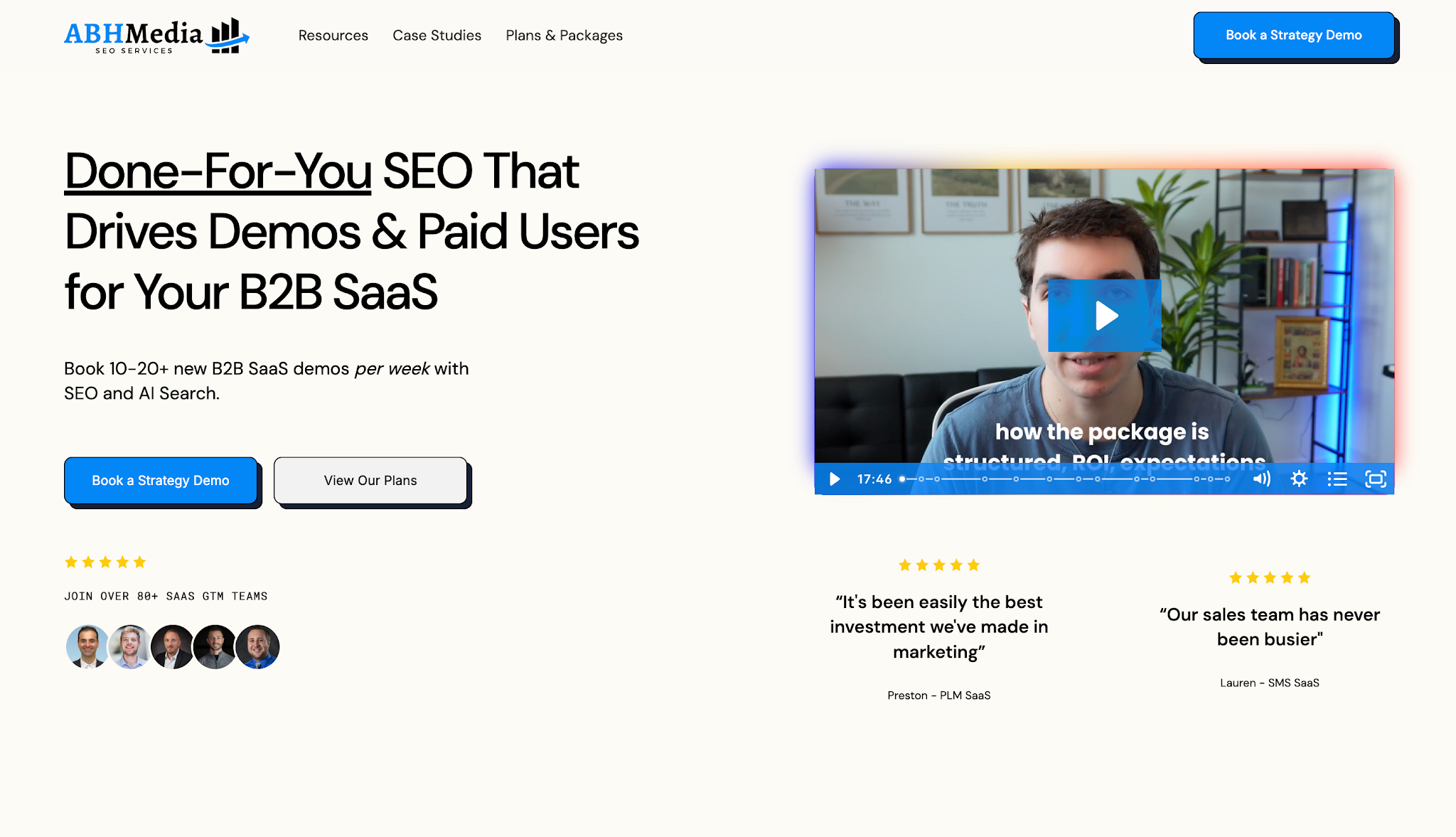
SEO consulting is only useful when it gives your team a clearer direction.
If your current SEO work still feels scattered because priorities are unclear and search performance is not tied to revenue, your time and budget are only getting wasted.
At ABHMedia, we help prevent that by giving B2B SaaS companies a more focused organic growth direction. We look at where your website is losing search opportunities and what needs improvement so organic traffic can continue to attract better-fit buyers.
FAQs About SEO Consulting Services
What does an SEO consultant do?
An SEO consultant reviews your website to find what is limiting search performance.
These findings are then used to create a clear plan for what needs to improve and how those changes can support better business outcomes.
How much should an SEO consultant charge?
Pricing depends on experience, scope, and the level of support required.
According to Clutch, many SEO projects cost under $10,000, with common hourly rates ranging from $100 to $149 per hour. Larger consulting engagements or ongoing SEO support usually cost more than focused audits or shorter strategy projects.
What are the four types of SEO?
The four common types are on-page, off-page, technical, and local SEO.
On-page SEO improves page content and structure, while off-page SEO focuses on authority signals like backlinks and mentions. Technical SEO improves crawlability and indexing, while local SEO helps businesses appear in location-based searches.
How long does it take to see results from SEO efforts?
SEO results usually take time because search engines need to crawl, process, and evaluate website changes.
Technical fixes may show impact sooner, while larger gains from content strategy and competitive keywords often take several months.
Are SEO services different from SEO consulting services?
Yes. SEO consulting services usually focus on expert guidance, strategy, audits, and recommendations.
SEO services often include implementation. Some providers offer both, while others only provide advice and direction.
At ABHMedia, we provide everything from SEO consulting and strategy to execution support for B2B SaaS companies. With this approach, you get the same team guiding your plan from start to finish, helping carry it into implementation with more context and consistency.






.png)