SEO for AI Companies: Top 10 Agencies in 2026
,
November 6, 2026
Plenty of AI startups launch into a category nobody had a name for a year ago. Their buyers know the problem they have but not the type of tool that fixes it, and a growing share of them ask ChatGPT or Perplexity for a suggestion before they search on Google at all.
SEO for AI companies covers both places: the Google results and the answers those AI tools write.
The work is harder than standard SaaS SEO because product features change with every model release, competitors publish new comparison pages each week, and technical buyers lose interest the moment a page reads as hype.
Almost every agency now claims it knows AI search. Far fewer have actually worked on AI products, or with founders who ship changes to the product all the time.
Below are the top ten agencies that handle SEO for AI companies, along with the services an AI startup should expect from a partner and the questions to ask before you sign a contract.
TL;DR
These are the ten best agencies for SEO for AI companies in 2026:
- ABHMedia
- SimpleTiger
- Omniscient Digital
- iPullRank
- Siege Media
- NoGood
- Flow Agency
- Position Digital
- Omnius
- Xponent21
What Is SEO for AI Companies?
SEO for AI companies is search engine optimization for brands that sell AI products and services, such as AI SaaS platforms and AI agents. The goal is to put the brand in front of buyers at the moment they look for a solution, whether that search happens on Google or inside an AI tool.
In practice, the work covers the same ground as any solid SEO program, from site structure to high-quality content and links.
The difference lies in the details, because AI companies often need content for a category that buyers barely know by name and a clear plan for the way large language models describe the brand.
SEO vs GEO for AI Startups
SEO aims to place pages at the top of Google search results so buyers click through to the site. Generative engine optimization (GEO) aims to get the brand cited or recommended inside AI-generated answers from tools such as ChatGPT and Gemini.
Answer engine optimization (AEO) is close to GEO and focuses on content that answer engines can pull out and quote with little effort.
For an AI startup, the two do not compete with each other. AI tools pull from many kinds of sources, and pages that already perform well in search are often among them, so a strong SEO base gives a brand a better chance at AI search visibility.
GEO then adds work that classic SEO does not always cover, such as consistent brand facts across the web and mentions on third-party sites that AI models trust.
A startup that only chases a top spot on Google may still lose deals when a buyer asks ChatGPT for the best tool in its category and the answer names three competitors.
A startup that only chases AI mentions misses the buyers who still compare tools through Google, so the best results come when one plan covers both.
What Makes SEO for AI Companies Different
Many AI startups sell into categories that are only a few years old, so search volume for the product type can be low while the market is still young.
Buyers skip the category name and type the problem itself, such as “summarize sales calls automatically” or “write SQL from plain English.” Good content for an AI company starts with searches such as those.
A new model release can change what your product does within weeks, and a features or integrations page from last spring may describe a tool that no longer works that way. Without a regular update schedule, those old pages keep sending buyers the wrong message.
One product can pull in a developer who wants API docs and a team lead who only wants to know whether it saves time, and the two of them search in very different ways.
Most of them have read enough AI hype to be skeptical. They want real use cases and straight answers about security, and a page that sounds vague or promises too much loses them in seconds.
Broad terms such as “AI writing tool” are crowded with big, well-known brands, so a startup usually gets further with narrow topics where its team knows more than anyone else.
Top 10 Agencies for SEO for AI Companies in 2026
Every agency on this list has experience with AI or SaaS brands and works on search visibility in Google as well as in AI tools. The reviews below look at what each team focuses on and how it approaches AI search, so you can see which one fits the stage and goals of your startup.
1. ABHMedia
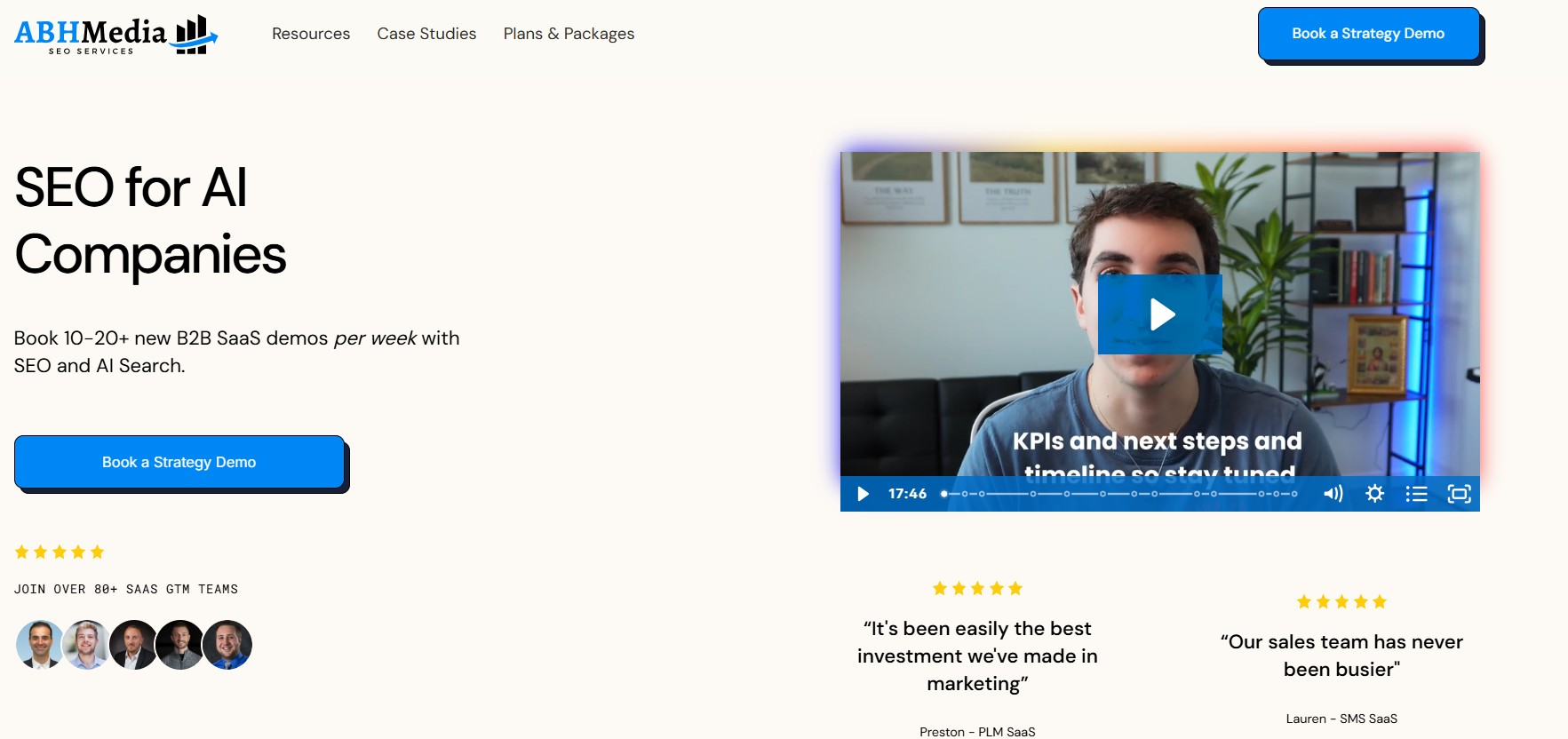
ABHMedia is a B2B SaaS SEO agency that works with software and AI startups and judges each campaign by the demos and paid users it brings in.
Its approach to SEO for AI companies treats Google search results and AI search visibility as one program, so your product can show up in classic search as well as in the answers that ChatGPT and Google AI Overviews generate.
Work begins with a strategy session about your product and the buyers you want to reach. The team then runs a technical SEO audit of your site, since AI products often sit on JavaScript frameworks and app subdomains that search engines can struggle to read.
From there, ABHMedia plans content for SaaS buyers around user intent. Most pages target people who already compare tools or look for an alternative to the product they use now, and each piece is written to rank on Google and earn mentions in AI-generated answers.
Larger plans add programmatic SEO for use case and integration pages. Clients follow results through a live dashboard, and the reports track conversions next to organic traffic. Every article and asset the team creates stays with your company.
Why Choose ABHMedia?
ABHMedia picks keywords with commercial or transactional intent instead of broad AI terms that attract visitors with no plan to buy.
For an AI startup in a young category, that usually means pages about the problem your product solves, because many buyers do not know the category name yet.
Once those pages are live, the team points backlinks for SaaS brands at the ones with a real chance to rank, and the average client gets five to 30 hand-picked links per month.
2. SimpleTiger
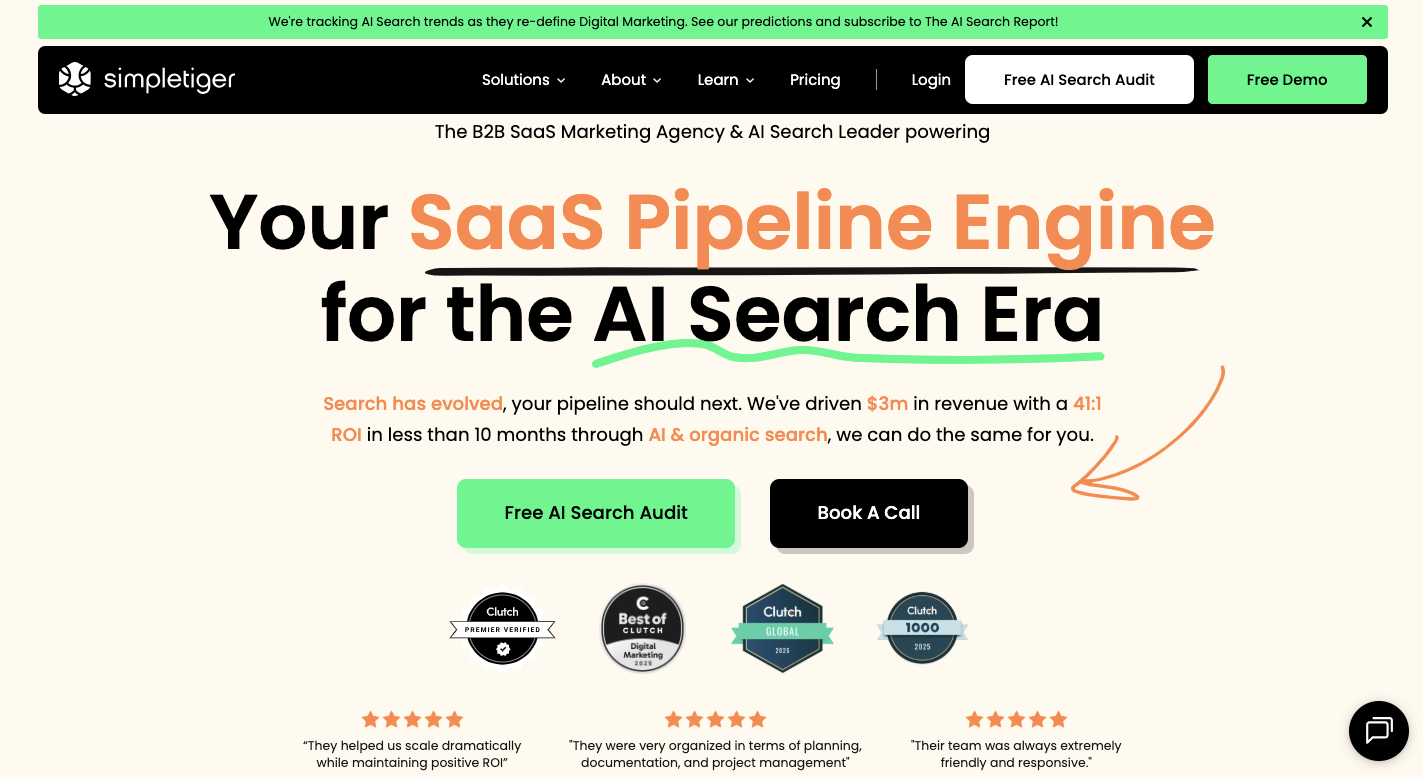
SimpleTiger is an agency that works only with B2B SaaS and AI businesses, and its SEO for AI companies targets high-intent searches from buyers who are ready to sign up.
Organic rankings remain the core of the work, with answer engine optimization added on top so your brand can also appear in recommendations from ChatGPT and Gemini.
The first step is keyword research, along with a close look at your ideal customers and how competitors perform in search. The team then handles technical SEO and optimizes the commercial pages where visitors convert, so the site is ready to rank before new content goes live.
Content puts buyer intent ahead of keyword volume, with use case pages and integration guides that people read when they evaluate a product. Each piece is written to climb Google search results and earn citations in AI-generated answers.
Content production and backlink work stay in-house. The team earns links through manual outreach and placements on authoritative publications, which builds the domain authority your pages need to rank.
A live dashboard connects to your CRM and shows pipeline by channel, and a separate report tracks your share of voice in AI search.
3. Omniscient Digital
Omniscient Digital is an organic growth agency for B2B software brands, and its SEO work for AI companies aims to get a product recommended by search engines and AI platforms alike, then turn that visibility into pipeline.
Before the team picks a single keyword or prompt, it talks to your sales and customer success staff and reviews recorded sales calls. That research shapes a growth plan ranked by buyer demand and by how close each topic sits to revenue, so the first pages answer what real buyers ask about.
The program then covers owned content and digital PR, with answer engine optimization and programmatic SEO available for teams that need them.
A unified dashboard tracks pipeline and conversions next to AI share of voice and citation share, which shows whether AI search visibility turns into real deals. Weekly check-ins and quarterly business reviews keep the plan current as your product changes.
4. iPullRank
iPullRank is an agency for enterprise and mid-market brands that pairs technical SEO and content strategy with AI search work.
Within SEO for AI companies, that mix suits larger AI platforms with big, complex sites, where crawl problems can hold back Google rankings and AI visibility at the same time.
The agency builds its method on two ideas. Relevance engineering looks at how AI models identify and select information and then structures your content to improve its chances of being retrieved and cited by AI systems.
Resonance design focuses on content that real people remember and act on.
Technical SEO is a core service, with audits that fix crawl issues and prepare the site for organic and AI search alike. On the content side, the team builds strategies around audience needs, and its GEO programs add technical changes and measurement for visibility in large language models.
Teams that want a full plan can start with an AI search strategy program, which includes content audits and a keyword portfolio along with a roadmap and new metrics. Companies unsure where to begin can start with the agency’s quick AI search readiness assessment.
5. Siege Media
Siege Media is a content-led agency that now runs full-service generative engine optimization for startups and enterprise brands, with a separate track for SaaS companies.
Siege Media still builds everything on content that ranks in Google and earns links naturally, and the same content now feeds its GEO work.
Strategy comes first. With BlueprintIQ, the agency’s AI-assisted tool for real-time content strategy, plus a review of prompt and citation data that shows the ranking gaps and missed AI mentions your competitors already capture.
Content creation sits at the center of the work, with writers and designers in-house to produce guides and research reports. A system called DataFlywheel then refreshes existing pages with new data, so they stay accurate and competitive in search results over time.
To build authority, Siege Media runs digital PR campaigns and affiliate partnerships. It also offers Reddit work for brands that want a presence in the community discussions where many buyers research products.
6. NoGood
NoGood is a growth agency that builds a dedicated squad of senior specialists for each client, and AI is one of the verticals it focuses on alongside SaaS and B2B. Its SEO for AI companies runs next to paid ads and conversion work, so organic search does not sit in a separate silo.
On the organic side, the SEO team creates content for specific industry niches that captures high-intent traffic from Google.
Its answer engine optimization work then targets visibility in ChatGPT and Google AI Overviews, supported by digital PR that builds the third-party citations AI models look for when they recommend brands.
The squad runs structured experiments from the first weeks and shifts tactics based on what the data shows. NoGood also uses Goodie AI, an answer engine optimization platform, to track how often your brand appears in AI answers.
Results go into an executive dashboard, and each client gets an AI agent to check data and performance in real time. Reports focus on pipeline and acquisition cost rather than traffic alone.
7. Flow Agency
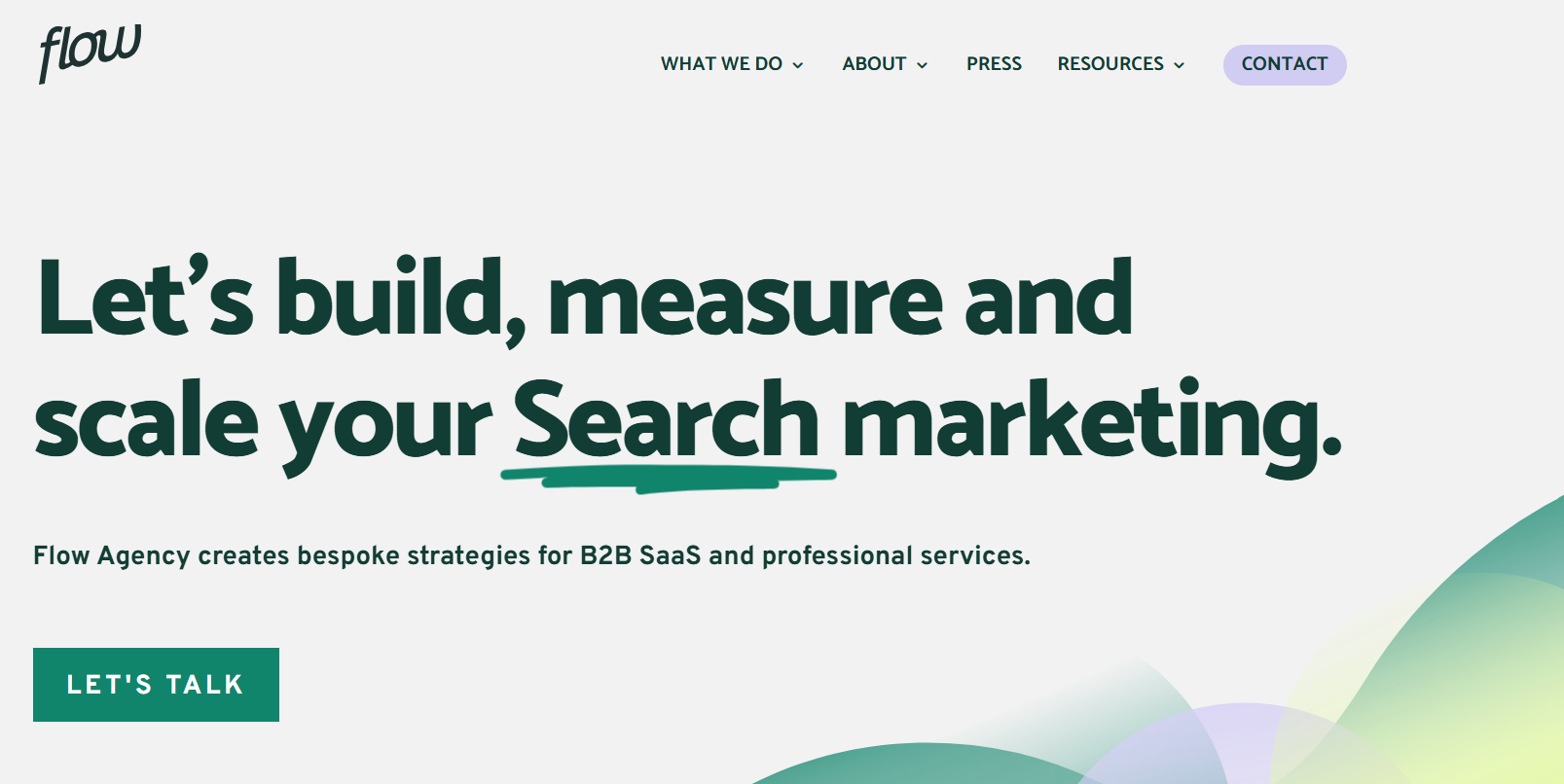
Flow Agency is a boutique B2B agency for SaaS startups and professional services firms, and every plan it builds is custom rather than a fixed package.
Its take on SEO for AI companies brings organic and paid search under one team, so both channels work toward the same pipeline goals.
The B2B SEO service covers the full base, from technical SEO and site infrastructure to content calendars and briefs. Backlinks come through a mix of outreach and digital PR that also earns brand mentions, and the agency can add video SEO for brands with video content.
For AI search, Flow Agency runs GEO and LLM optimization that aims for early visibility in ChatGPT Search and Gemini. It also offers LLM advertising so AI startups have another paid channel to explore alongside Google campaigns.
8. Position Digital
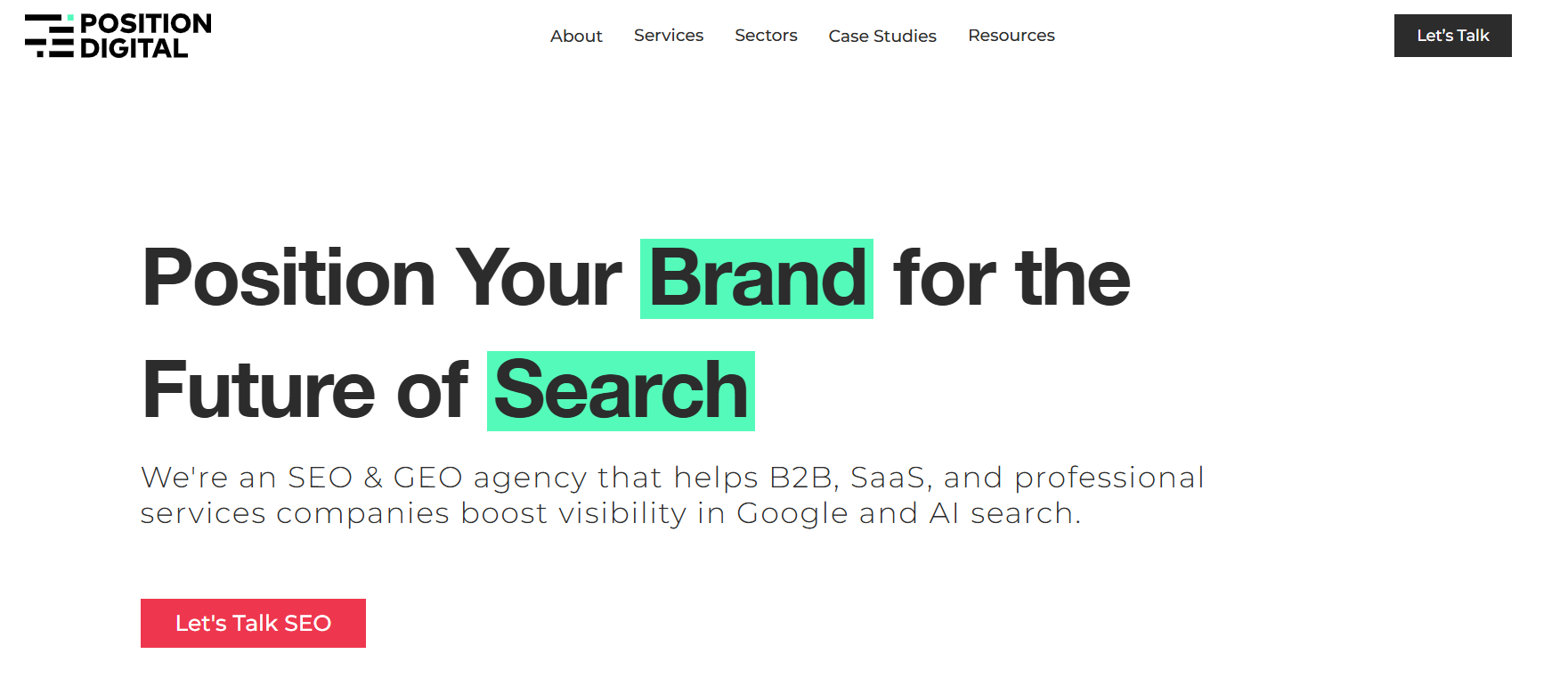
Position Digital is an SEO and GEO agency for B2B and SaaS companies, with a dedicated service line for startups and scale-ups.
It starts with an SEO audit and a strategy, then adds a GEO audit that shows how well your site performs in AI search and what needs fixing.
The technical team handles complex projects such as site migrations and site architecture, with a focus on crawlability for search engines and AI systems. SEO copywriters create pages around your ideal customer profile that are built to rank in Google and improve AI visibility.
For authority, the agency pairs link building with digital PR campaigns that earn brand mentions across the web. It also works to get products featured in relevant “best X” roundups, helping brands reach buyers through pages that already attract search traffic.
AI visibility tracking and AI brand audits show how often models mention your brand and how they describe your product. The agency also publishes free tools, such as an AI Citation Extractor that lists the sources cited in AI-generated answers.
9. Omnius
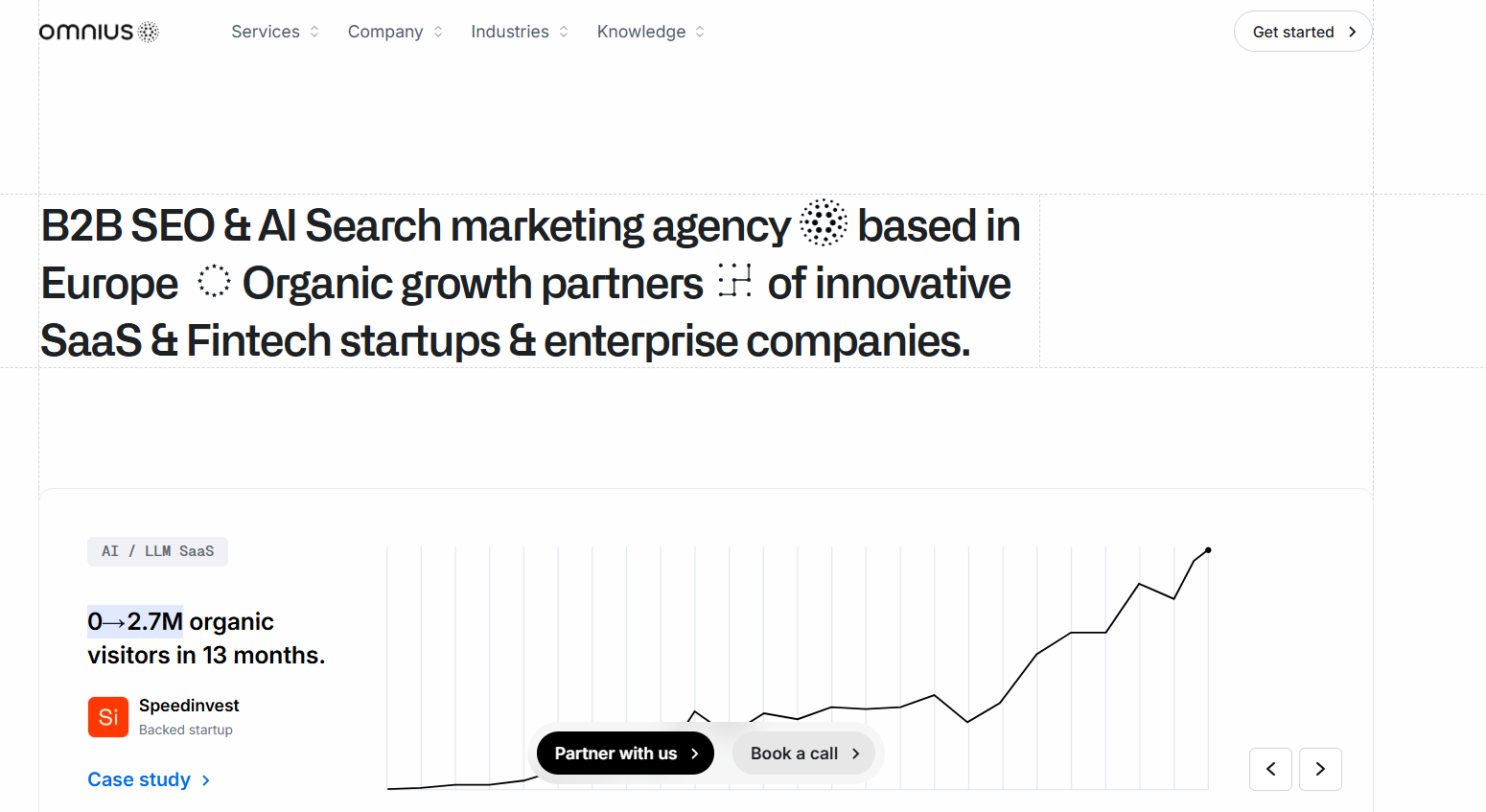
Omnius runs SEO and GEO programs for B2B software brands, and AI companies are one of the few markets it chooses to serve.
Omnius researches your product and competitors, then prioritizes keywords based on buyer intent rather than search volume alone.
The SEO service covers technical SEO, site architecture, content production, and link building to support rankings in Google. Omnius also offers programmatic SEO, which helps AI companies build pages at scale for related searches, such as specific integrations and use cases.
GEO runs alongside traditional SEO. The team optimizes content for AI search, works on schema markup and llms.txt implementation, and monitors which pages AI tools cite when answering questions about your category.
Omnius also develops its own software, Atomic AGI, for tracking AI search visibility and auditing websites. It also offers in-house website development and conversion optimization, helping companies improve the pages visitors land on and the path from visit to sign-up.
10. Xponent21
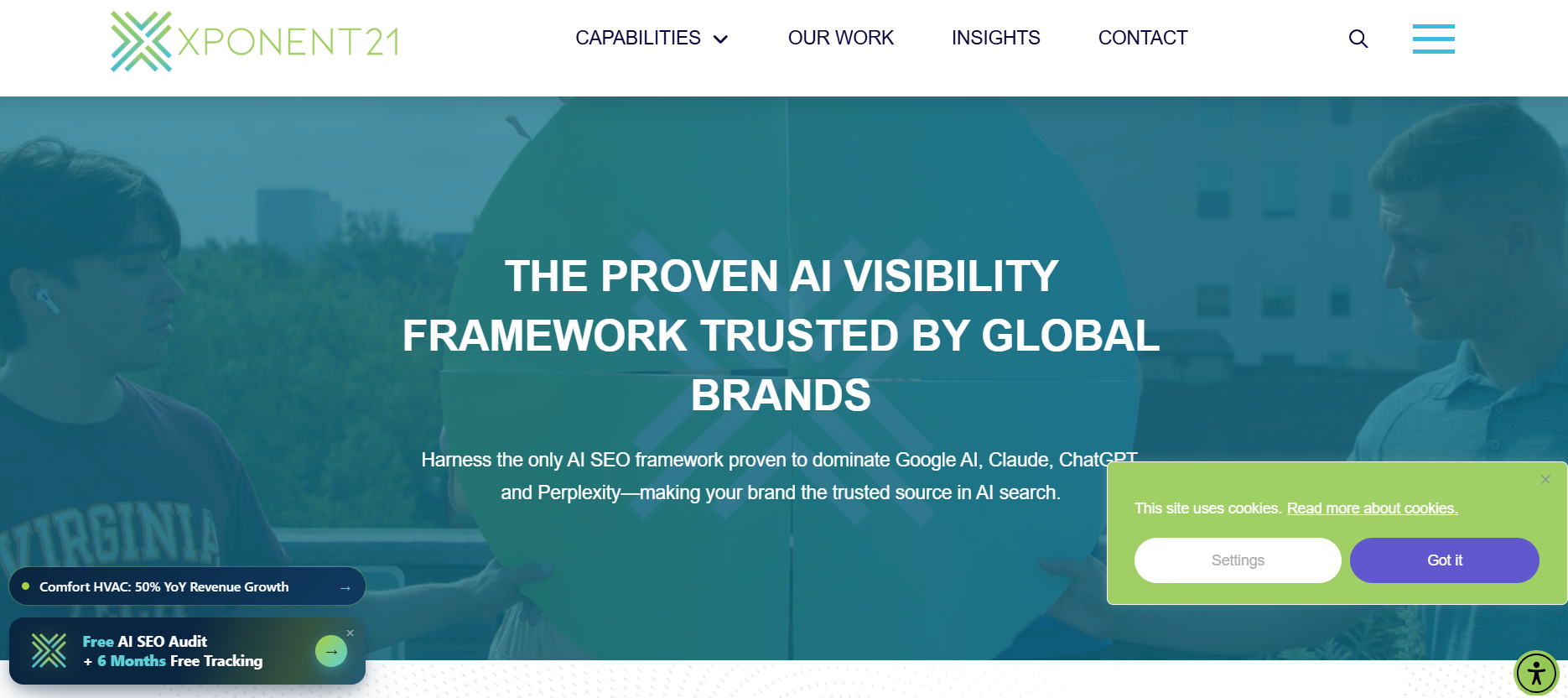
Xponent21 is an AEO and SEO agency that plans for visibility in Google as well as in AI platforms such as ChatGPT and Google AI Overviews.
The work begins with research into the questions your buyers care about most, which the agency calls Most Valuable Questions, and the content plan grows from there.
On-site work covers keyword placement in metadata and page content, along with clean code that loads fast and is easy to crawl. The team monitors page speed over time and tracks where your pages appear in search results and AI Overviews, so it can respond when rankings shift.
Xponent21 also looks beyond your own domain. Its team builds an authentic brand presence on Reddit and in other communities where your category gets discussed, aiming to strengthen the third-party presence that can influence AI recommendations.
For sites that have lost rankings, a recovery service handles technical audits and redirect mapping. The team also investigates the causes of ranking losses across traditional and AI search.
SEO Services AI Companies Should Expect From an Agency
A top-notch agency does more than publish blog posts and send a monthly traffic report. For an AI company, SEO needs to cover the basics of organic search while accounting for emerging product categories and buyers who use AI tools to research solutions.
The following services form the foundation of a solid SEO program.
Keyword Research for New AI Categories
Standard keyword research often starts with search volume, but buyers may not yet know the terms used to describe a new AI product category.
A strong agency looks at the problems your customers want to solve and the language they use, then builds a keyword list around their searches and intent.
That list should cover different stages of the buying process. Problem-focused and use-case keywords reach people still researching solutions, while comparison and alternatives keywords target buyers evaluating specific products.
The agency should also monitor emerging search terms as your category develops, since the language buyers use can change quickly.
Technical SEO for AI Products
AI products may run on JavaScript frameworks, keep their applications on separate subdomains, or host documentation elsewhere.
Depending on how these elements are configured, search engines may struggle to crawl and index pages that could attract potential customers. Technical SEO should be an early part of the agency's work.
The audit should start with JavaScript rendering and site speed, then move on to internal links and the structured data that describes your product and company. It should also review access for relevant AI crawlers, since robots.txt rules can prevent some crawlers from accessing your content.
After implementing fixes, the agency should use Google Search Console to monitor indexing and identify pages Google cannot access or include in search results.
Content for Every Stage of the Buyer Journey
Content for an AI company needs to serve buyers at different stages of their research.
Someone searching for a solution to a problem needs a useful explanation and reasons to trust your product. Someone comparing tools wants specific information about features and how the product handles their data.
A good agency plans high-quality content for each stage and connects related pages through internal links.
Product, use case, and comparison pages deserve as much attention as blog posts because they can reach buyers evaluating their options. Older content also needs regular updates as your product changes.
AI tools can speed up content production, but publishing generic drafts is unlikely to establish your expertise. Google's E-E-A-T framework emphasizes experience, expertise, authoritativeness, and trustworthiness.
Strong agencies work with your product team and subject matter experts to create accurate content that reflects first-hand knowledge of the product and its use cases.
Entity Work and AI Citations
AI tools use information from across the web to identify brands and describe their products. Entity work helps establish consistent information about your company, making it easier for search systems to associate your brand with the right product category.
In practice, this means the same company and product details on your website and on the review platforms and directories your buyers use, supported by structured data where appropriate.
Well-organized content that directly answers specific questions may also be easier for search systems to interpret and use in featured snippets or AI-generated answers.
A good agency tracks brand mentions in AI answers and checks which sources AI tools cite. These insights show how your brand compares with competitors and where you can improve its visibility.
Link Building and Digital PR for AI Brands
Backlinks remain an important part of SEO, and relevant third-party coverage can also help establish your brand's reputation. An agency should focus on earning links from relevant tech publications and partner websites rather than buying large numbers of links from unrelated sources.
Digital PR can build on that work, since original research and expert commentary from your founders can earn coverage and brand mentions. Listings on relevant review platforms and AI tool directories also put your product in front of buyers who compare options before they choose one.
These activities support brand visibility across search results and the wider web, although they cannot guarantee citations in AI-generated answers.
How to Choose an SEO Agency for Your AI Company
Most agencies now promise AI search visibility, so a few checks before you sign can save you months of wasted budget and separate agencies with relevant experience from those that simply use the right buzzwords.
First, ask for case studies from AI or SaaS clients and check what the results measure. Sign-ups, demos, and revenue tell you more than organic traffic alone, and an agency with software experience will also understand free trials and technical buyers.
Rankings alone no longer tell the full story either, so ask how the agency tracks brand mentions and citations in tools such as ChatGPT and Google AI Overviews, and how it compares your visibility with competitors. If the answer stays vague, ask what the agency actually measures.
You can also test the agency yourself. Ask ChatGPT or Perplexity which agencies it recommends for AI startups, then check the agency’s rankings for its own services on Google. These checks give you a starting point, but they shouldn’t replace case studies and client results.
Last, watch out for these red flags before you sign a contract:
- Guaranteed rankings or placement in AI answers
- Mass-produced AI content with no expert input
- Traffic reports with no sign-up or pipeline data
- Long contracts with no clear scope or exit terms
Grow Your AI Company’s Search Visibility With ABHMedia
ABHMedia is a B2B SaaS SEO agency that measures SEO for AI companies in demos and paid users instead of traffic alone.
The agency’s SEO strategy covers traditional search engines and AI-powered search engines together, so buyers can find your product on Google as well as in the AI summaries they read before they visit a website.
ABHMedia starts with your product and the people who buy it, then maps keywords to the natural language queries those buyers type when they look for a tool.
From there, the team handles technical fixes such as JavaScript SEO, along with content, programmatic SEO, AI search optimization, and five to 30 hand-picked backlinks per month for the average client.
Every page they publish comes from our writers and SEO specialists rather than a raw AI draft, so the content reflects real human expertise about your product and your buyers. Everything they create for your site stays yours.
Book a strategy demo and see how ABHMedia can bring your AI company 10 to 20+ new demos per week!
FAQs About SEO for AI Companies
What is the difference between traditional SEO and GEO?
Traditional SEO aims to rank your pages in the blue links on Google, while generative engine optimization (GEO) aims to get your brand mentioned in the AI-generated summaries that tools such as ChatGPT and Google AI Overviews show.
In many agency pitches, the term AI SEO refers to this same work, although some people also use it for SEO tasks done with artificial intelligence tools.
Both depend on clear content, solid technical health, and authority, so most AI companies need a plan that covers both traditional SEO and GEO.
How do AI companies get cited by answer engines?
No one controls which sources AI engines cite, and no format or markup guarantees a citation. Each AI system picks sources in its own way, and it draws on what others say about your brand across the web as well as on your own site.
Clear answers, structured data, and semantic SEO that covers a topic in depth make your pages easier to understand, which can improve your odds in AI-driven search. Mentions on review sites and industry publications add more signals about your brand.
Are featured snippets still worth it when search results show AI summaries?
Yes. Featured snippets can still attract attention in search results, and the habits that help pages earn them, such as short, direct answers under clear headings, can also make content easier for AI systems to interpret.
Can AI-generated content count as high-quality content?
It can, as long as people with real knowledge of the product shape and review it. Generative AI speeds up research and first drafts, and many teams leverage AI tools for data analysis on keyword lists and search trends.
Content quality still depends on first-hand experience and accurate product details, so AI-generated content needs a careful review by someone who knows the product before it goes live. A good AI content strategy uses AI for speed and people for expertise.
Should an AI startup build its SEO strategy in-house or hire an agency?
It depends on your team and stage. An in-house marketer with the right SEO tool can handle keyword research and on-page updates, and many AI SEO tools now track brand mentions in AI answers as well.
Technical SEO, link building, and GEO take more time, though, and a small team may not have the hours for all of them.
Some founders start with AI SEO services from an agency to build a solid foundation, then bring the work in-house once their SEO starts generating sign-ups. When you look at the top AI SEO agencies, ask for proof with AI or SaaS products rather than general promises.