Link Building for SaaS: Top 12 Strategies to Get Backlinks
,
October 23, 2026
Link building for SaaS means earning backlinks from websites your buyers already trust. The right links can help important pages rank higher, bring in referral traffic, and build authority around your software category.
But many SaaS companies run into the same problem. They publish good content, yet competitors still outrank them because those pages have stronger backlinks. A focused SEO strategy helps close that gap.
In this guide, we’ll cover which pages to prioritize and 12 link-building strategies that work for SaaS companies.
TL;DR
- Focus link building on product, comparison, integration, and other pages that can bring in qualified buyers.
- Use listicles, partner links, original research, guest posts, digital PR, and contextual placements to earn high-quality links.
- Quality beats quantity: relevance, real traffic, strong content, and natural context matter more than Domain Rating alone.
- Track organic visibility, referral traffic, keyword movement, demos, and conversions to see whether your backlinks actually support growth.
- ABHMedia gives SaaS teams a done-for-you link-building process, from prospect research and outreach to placement quality checks and performance reporting.
What Is SaaS Link Building?
SaaS link building is the process of earning external links from relevant websites to important pages on a software company’s site. These links can help your pages rank higher in organic search and bring more qualified visitors to your website.
But earning those links is not easy. Backlinko research found that 94% of published content gets no external links at all.
For most SaaS companies, the goal is not just to build domain authority. You want links pointing to revenue-driving content.
For example, a project management SaaS may want links to its “Asana alternatives” post, not just its homepage. That page targets people who are already comparing tools and may be closer to starting a trial or booking a demo.
Software buyers often compare several products, so the best links usually come from relevant websites, software review platforms, and other authoritative sites.
Why Does Link Building Matter for SaaS Companies?
Link building helps SaaS businesses compete for searches where strong content alone may not be enough to rank. Google still uses link analysis systems such as PageRank to understand how pages relate to each other and which pages may be useful for a search.
Improve Rankings for Competitive Keywords
Backlinks can strengthen pages targeting competitive keywords. This matters for SaaS because product and comparison pages often compete against established brands that have stronger backlink profiles.
Backlinko found that the #1 Google result had 3.8x more backlinks than pages ranking in positions #2 to #10.
A backlink does not guarantee higher rankings. Strong links can still support visibility in Google and AI search results.
That value can build over time as a page earns more relevant links. Strong SaaS assets can keep gaining visibility long after the first backlink goes live.
Links from trusted sources may also support visibility in AI-generated answers. According to Ahrefs, branded web mentions correlate with AI Overview visibility at 0.664, compared with 0.218 for backlinks.
Build Authority in Your SaaS Category
Links from relevant websites can build authority around your product category and place your brand where buyers already research software.
A link from a respected industry publication or software resource usually carries more value than several links from unrelated sites.
Drive Qualified Referral and Organic Traffic
A useful backlink can bring referral traffic and SEO value. For B2B SaaS, stronger organic visibility can attract better-fit visitors and reduce reliance on paid ads.
The goal is not just more traffic. Earn links from relevant websites that send potential buyers to pages tied to trials, demos, or revenue.
Which SaaS Pages Should You Build Backlinks To?
Don’t build backlinks wherever they are easiest to place. Use keyword research to find pages with ranking potential and business value. Make sure the meta title matches the search intent and that the page gives visitors a clear next step toward a trial, demo, or purchase.
Product, Feature, and Use-Case Pages
Product, feature, and use-case pages should get links when they target relevant keywords with clear buying intent. These pages often target money keywords tied closely to trials or demos.
Strong backlinks can help these commercial assets compete more effectively in search and attract more qualified traffic.
Commercial pages are harder to earn links to, so give other sites a clear reason to link, such as a useful comparison, original data, or a partnership.
Comparison and Alternative Pages
Comparison and alternative pages deserve links because they target people who are already evaluating software. A search like “Asana alternatives” or “ClickUp vs Monday” shows much stronger buying intent than a broad informational query.
That makes these pages valuable for both search engine optimization and conversions. If they rank well, they can attract prospects who are already comparing options and much closer to taking action.
Integration Pages
Integration pages can earn relevant links from technology partners. A listing in an integration marketplace or partner directory can also send referral traffic from users already looking for compatible software.
Research, Tools, and Other Linkable Assets
Original research, industry surveys, statistics, free tools, calculators, and templates often attract links more easily than commercial pages. Writers, journalists, and other SaaS companies have a clear reason to reference structured data or practical resources.
Use internal links from these assets to support important commercial pages. They also create a clearer path between related content.
This helps users and search engines understand how the site fits together.
12 Best Link-Building Strategies for SaaS
These 12 strategies show how SaaS companies can earn relevant backlinks from trusted websites and support the pages that matter most for organic growth:
1. Get Featured in SaaS Listicles and Software Roundups
Software listicles can bring backlinks and referral traffic. Look for pages such as “best CRM software,” “best tools for remote teams,” or “[competitor] alternatives,” then prioritize the ones that already rank in Google search and get real traffic.
These placements matter because B2B buyers increasingly research products on their own.
Gartner found that 61% of B2B buyers prefer a rep-free buying experience. That makes trusted comparison and roundup pages more important during product research.
2. Build Links Through Integration Partners
Integration partners can create strong link opportunities because both products support the same workflow. That connection gives the backlink clear context and makes it useful to the reader.
Partners can also create shared resources or integration content. These assets can bring referral traffic and help users understand how the products work together.
3. Publish Original Research and Industry Data
Your own research can support acquiring high-quality backlinks from sites that need reliable sources. Original findings also give the brand something useful to promote through digital PR and outreach.
The stronger the insight, the more reasons other sites have to reference your work. That can lead to relevant links while also building authority around your SaaS category.
4. Create Free Tools and Linkable Resources
Create content that solves a real customer problem instead of building assets only for backlinks. Free tools and templates can attract valuable backlinks when people find them useful enough to share or cite.
Use user feedback to decide what your audience actually needs. That helps you build resources people will use and gives other websites a clear reason to link back.
5. Run Digital PR Campaigns
Digital PR works best when your SaaS has something worth talking about. Original data, useful insights, or a timely industry finding can give relevant publications a reason to mention your brand.
That's why 89.6% of respondents ranked digital PR as the most effective link-building tactic in a BuzzStream survey.
The strongest campaigns focus on the story behind the data rather than a company announcement. Data-led PR can also earn editorial links that competitors cannot easily copy because the story comes from original findings.
6. Publish Guest Posts on Relevant Websites
Guest posts work best when the audience and topic match your SaaS market. A contextual link from an HR publication can be more useful than several placements on unrelated sites with a higher domain rating.
7. Reclaim Unlinked Brand Mentions
Unlinked brand mentions can reveal easy backlink opportunities. A website may already mention the brand but leave out the link.
Review those mentions and ask for a link to the most relevant page. This helps turn existing coverage into a useful backlink.
8. Replicate Your Competitors’ Best Backlinks
Competitor backlinks can show you which opportunities already work in your market. Find where competing SaaS companies earn links, identify why they earned them. Then filter out irrelevant sites and opportunities you cannot realistically replicate.
The goal is not to copy every backlink. Focus on opportunities that can create a real competitive advantage through stronger relevance, authority, or referral traffic.
9. Use Niche Edits and Contextual Placements Carefully
Niche edits add backlinks to articles that already rank or attract the right audience. They work best when the link fits the topic and gives readers a useful next step.
The focus should stay on relevance. Avoid sites that insert links into unrelated content or sell placements at scale.
10. Earn Links From Customers, Vendors, and Partners
Existing business relationships can create natural link opportunities because there is already trust between both sides. Case studies and partner resources can give companies a clear reason to link to each other.
For B2B SaaS, these opportunities often take less outreach than cold link-building. The existing relationship makes it easier to create a link that feels relevant and useful to the reader.
11. Reclaim Lost and Broken Backlinks
Lost backlinks can appear after page deletions, URL changes, or site migrations. A migration can create broken links across the entire site if redirects are missed.
This helps preserve the authority of those links already built and prevents useful backlinks from leading to dead pages.
Check your backlink tools and Google Search Console to see which pages receive external links. Google’s Links report also shows linking sites and anchor text.
This can help spot lost-link opportunities and pages that need attention.
12. Contribute Expert Insights, Podcasts, and Interviews
Expert contributions can earn links while building authority around your SaaS category. Founders and specialists can share useful insights through podcasts and interviews.
The best opportunities come from publications that already reach your target market. A founder of an email marketing SaaS, for example, will gain more from an email marketing podcast than from a broad entrepreneurship show.
How Do You Build a SaaS Link-Building Strategy?
A strong SaaS link-building strategy starts with the pages you want to rank, not with outreach. You first choose the right pages, compare their backlink profiles with competing pages, then use the link-acquisition tactic that fits each page best.
Step #1: Choose the Pages and Keywords You Want to Rank
Start with pages that have both ranking potential and business value. A keyword research tool can help compare search demand and ranking difficulty.
Search volume matters. But buyer intent and business value should carry more weight.
Your keyword strategy should connect search intent with revenue potential. Use keyword research and competitor pages for keyword ideas.
However, avoid creating several pages around the same keyword.
Before building links, check the meta title. Review internal links and technical SEO as well.
Step #2: Analyze the Backlink Gap
A backlink gap shows how your target page compares with the pages outranking it. Check which relevant websites link to competitors.
Then compare the quality and relevance of those links.
Domain rating can help, but link count alone should not drive the decision. Compare the domains linking to pages that already rank on the same page of Google results.
Step #3: Match Each Page With the Right Tactic
Different SaaS pages need different link-building tactics. A research report may work well with digital PR, while an integration page has a better chance of earning links through partner outreach.
The same logic applies to the rest of the site.
Product pages can benefit from software listicles or contextual links. Free tools work well with resource outreach. Detailed blog guides can support guest posting campaigns.
Step #4: Find and Qualify Link Prospects
Good prospects are websites that reach the same audience or cover closely related topics. Check:
- Organic traffic
- Recent content
- Topical relevance
- Editorial standards
- Whether real readers appear to use the site
Avoid irrelevant websites with inflated authority scores. Build high-quality social links that make sense for both search engines and potential customers.
Step #5: Send Personalized Outreach
Personalized outreach works better when the message clearly fits the site. Avoid asking for a link in general.
Instead, explain why the page fits their content. Show how it can help their readers.
Keep the message short and specific. Publishers should be able to understand the value of your suggestion without digging through a long pitch.
Automation can help with prospecting and follow-ups, but the outreach itself should still feel personal. Mass automated link-building usually underperforms because generic emails are easy to ignore.
Step #6: Track Links, Rankings, and Conversions
Link-building does not end when a backlink goes live. Track new links and target-page search rankings.
Also monitor organic traffic. Then check whether those pages generate leads or conversions.
This shows whether your strategy is building authority or simply increasing backlink counts. Keep the tactics that improve business results and drop the ones that do not.
What Makes a High-Quality SaaS Backlink?
A strong SaaS backlink comes from a relevant, credible page, fits naturally within the content, and gives readers a real reason to visit your website. The best links support both rankings and trust because they come from websites your audience already sees as useful.
Before you pursue a backlink, check a few things:
- Topical relevance: Does the site or page cover your market?
- Organic visibility: Does the page rank and get real traffic?
- Editorial quality: Does the site publish useful, original content?
- Context: Does your link make sense in the surrounding copy?
- Natural anchor: Does the wording look editorial instead of forced?
- Indexability: Can search engines crawl and index the page?
- Outbound-link quality: Does the site avoid linking to unrelated businesses just for money?
The same principle applies across the backlink profile. Anchor text should vary naturally instead of repeating the same commercial phrase. That variety helps maintain a natural link profile.
How Do You Measure SaaS Link-Building Results?
Measure SaaS link building by the business results it creates. More links matter only when they help target pages rank better and bring in qualified leads.
Start with the basics:
- Relevant referring domains: Are the new links coming from websites your audience actually trusts?
- Keyword rankings: Are your target pages moving up for important searches?
- Organic clicks and impressions: Use Google Search Console to see whether those pages are getting more visibility.
- Referral traffic: Are people clicking the links and visiting your site?
- Qualified leads: Are those visitors turning into real sales opportunities?
- Trials and demos: Are your product pages creating more intent?
- Pipeline and revenue: Is organic search contributing to actual growth?
If monthly reporting shows more links but search rankings stay flat, review the links and the target pages. Check whether the search intent matches and whether the competition is too strong.
Track leads and revenue as well. These results show whether the SEO investment is paying off.
Should You Build SaaS Links In-House or Hire an Agency?
In-house outreach works best when your team already has SEO experience, content support, and time for prospecting. Hiring a specialist makes more sense when execution is the bottleneck, especially if you also need digital PR services.
When comparing providers, look for:
- SaaS niche expertise: They should understand B2B SaaS and your market.
- Strong placements: The sites should make sense for your audience.
- Transparent sourcing: You should know how opportunities are found.
- Page-level planning: Efforts should support the pages that matter most.
- Clear monthly reporting: Reports should show movement in visibility, traffic, and conversions.
- Safe methods: Avoid private blog networks (PBNs), spam networks, and low-quality placements.
The right SaaS link-building services should support your wider SEO goals and help turn stronger visibility into qualified leads.
Build High-Quality SaaS Backlinks With ABHMedia
SaaS link-building requires more than outreach and backlinks. Strong results depend on choosing the right pages and finding the right prospects.
Content quality and placement checks matter too. Performance tracking then shows whether those efforts bring in qualified leads.
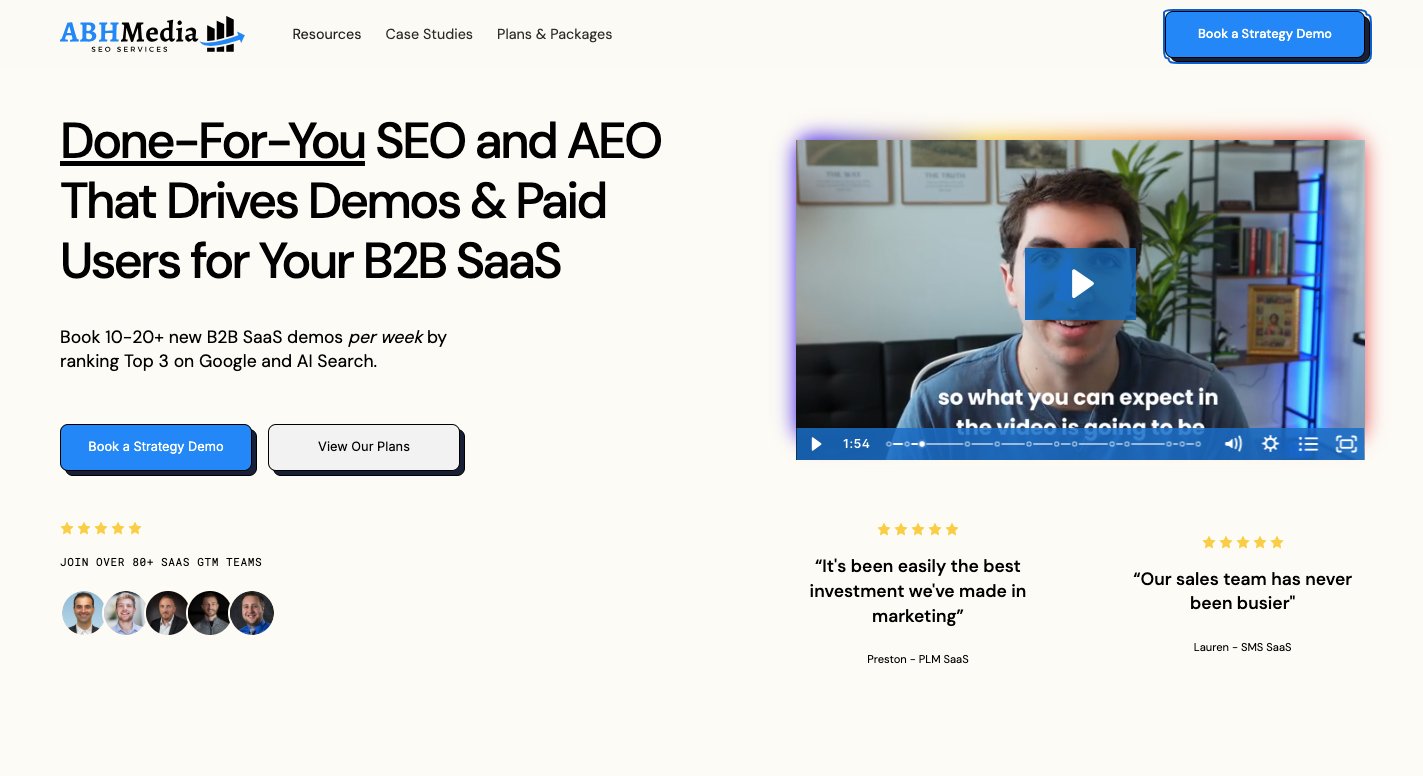
ABHMedia provides done-for-you SEO services built specifically for B2B SaaS companies.
Each campaign starts with a strategy session to understand the software and its ICP. The team also reviews target keywords and business goals.
From there, ABHMedia builds a link-building plan around high-value pages and search terms that can support pipeline growth.
SEO services include:
- Backlink gap analysis
- Prospect research and outreach
- Guest posting and contextual placements
- Digital PR and linkable asset support
- Target-page optimization
- Technical SEO
- Content creation
- Monthly analytics and conversion reporting
ABHMedia builds links around pages that improve organic visibility, attract qualified traffic, and support demos, trials, and revenue.
FAQs About Link Building for SaaS
What's the best link-building strategy for SaaS?
The best strategy depends on the page you want to grow. Listicles and partnerships work well for commercial pages, while original research and digital PR can attract editorial links.
How do you scale link building for SaaS?
Build a repeatable process for prospecting and outreach. Use linkable assets and partner opportunities to grow without relying only on cold emails.
How many backlinks does a SaaS website need?
There is no fixed number. Compare your target page with the pages already ranking and focus on link quality and relevance.
How long does SaaS link building take to work?
The timeline depends on your site strength and keyword competition. Easier pages may move sooner. But harder terms usually need consistent work.
Is link-building still important for SaaS SEO?
Yes. Link-building works best as part of a wider SaaS SEO strategy supported by strong content and technical SEO.