8 Best B2B Inbound Marketing Company Options in 2026
,
November 2, 2026
More content and more traffic won't bring in demos if the people reaching your website aren't ready to buy. Good inbound marketing starts with understanding what B2B buyers search for, then creating content that helps them compare options and move closer to a purchase.
According to 6sense's Buyer Experience Report, 94% of buying groups rank their preferred options before contacting sales, and their top choice wins about 80% of deals.
Most B2B companies know this, but few have time to plan content, handle SEO, and track which pages actually drive sales. That's where an inbound marketing company can help. The challenge is finding one that fits your product, sales cycle, and growth goals.
This article reviews eight B2B inbound marketing companies, what each one does best, and what to look for before choosing an agency.
TL;DR
These are the eight best B2B inbound marketing company options in 2026:
- ABHMedia: Best for done-for-you inbound for B2B SaaS
- Omniscient Digital: Best for B2B SaaS content strategy
- Siege Media: Best for visual content and digital PR
- Powered by Search: Best for B2B SaaS demand generation
- Grow and Convert: Best for pain point SEO content
- Directive Consulting: Best for paid and organic pipeline growth
- Growfusely: Best for SaaS content and link building
- Single Grain: Best for multi-channel growth marketing
Who Needs a B2B Inbound Marketing Company?
Not every business needs outside help with inbound marketing. An agency makes the most sense when your team knows inbound can work, but lacks the time, skills, or results to run it well.
Here are common signs that your business needs a B2B inbound marketing company:
- You sell a product with a long sales cycle: B2B buyers often take weeks or months to compare options. You need content that stays in front of them at every stage, from the first search to the final demo.
- Your deals involve multiple decision makers: One deal can include a team lead, an IT manager, and someone from finance. Each person has different questions, and your content needs to answer all of them.
- Your blog gets traffic but few demos: Visitors read your posts but rarely sign up or book a call. This usually means the content targets the wrong keywords or the pages lack a clear next step.
- Your marketing team has no time for SEO: Your team may already handle product launches, events, and sales support. Inbound marketing needs steady work each week, and it falls behind when nobody owns it.
- Most of your leads come from paid ads: If you rely on Google Ads or LinkedIn Ads, your cost per lead can rise when competitors raise their bids. Inbound content still brings leads after it goes live, and you don't pay for each click.
If one or more of these sound familiar, an inbound agency can take over the strategy and the weekly work, so your team can focus on sales and product.
8 Best B2B Inbound Marketing Companies for 2026
Each agency below brings in buyers through search and content, but they differ in how they plan the work, which channels they use, and how they report results. Here are the top eight options to look at in 2026:
1. ABHMedia: Best for Done-for-You Inbound for B2B SaaS
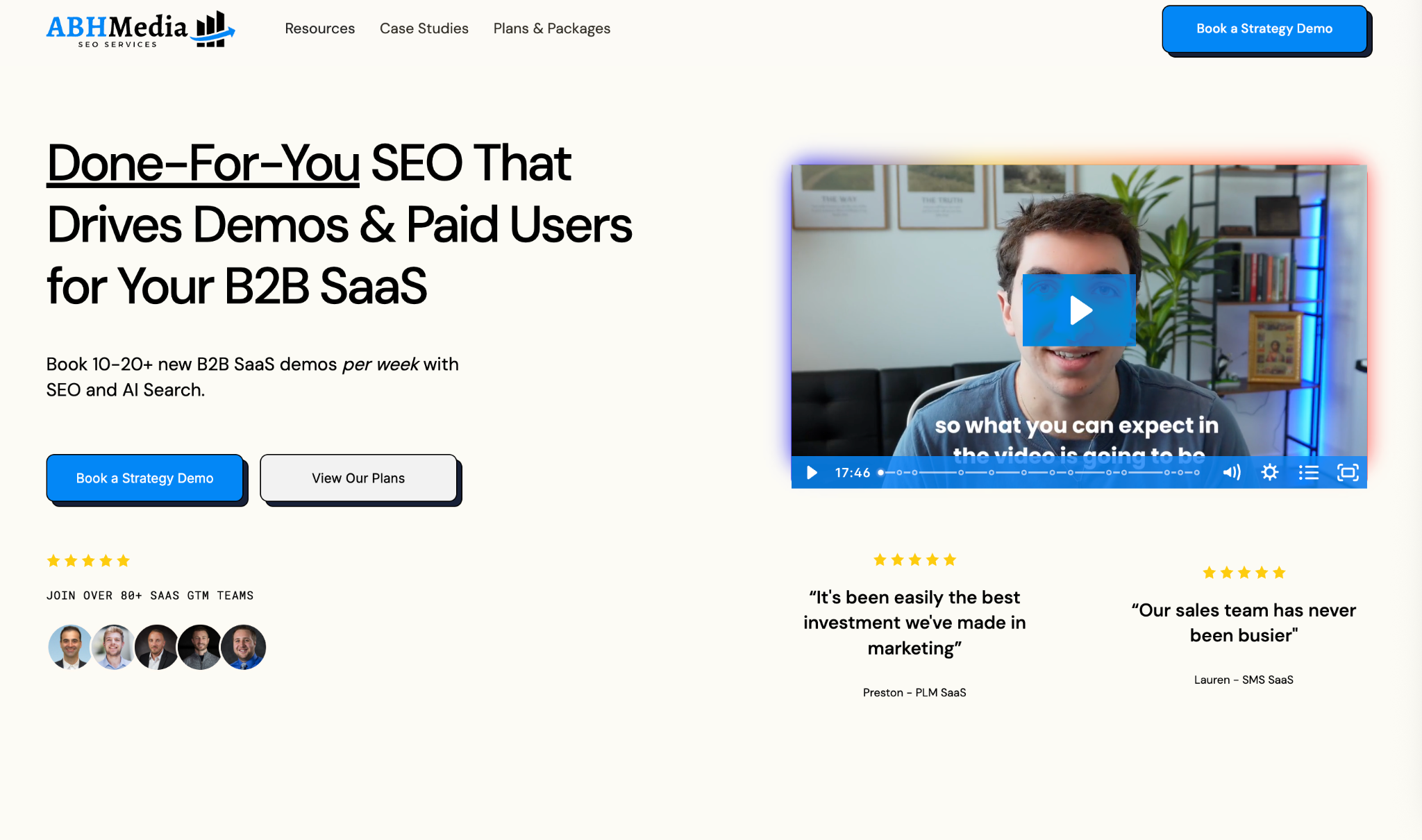
ABHMedia is a B2B SaaS SEO agency that measures its campaigns by pipeline, so traffic only counts when it turns into demos and paid users.
Before any content goes live, the team meets with yours to learn how the product works and who signs off on the purchase. That call also sets your growth targets for search, so the plan starts from your numbers rather than a standard package.
Most of the keywords the agency picks come from buyers who already compare tools or look for an alternative, since those people are much closer to a demo.
ABHMedia also sends 5–30 hand-picked backlinks to those pages each month, depending on your plan, and the reports show the conversions they bring next to rankings and traffic.
Everything they create for your site stays yours.
Key Services
- Inbound strategy: ABHMedia targets the searches SaaS buyers run when they compare tools or look for an alternative to the one they use now.
- Blog content: Each article follows what already ranks for its keyword, so the length and format depend on the search and not on a set word count.
- Technical fixes: The agency audits your site for technical problems, such as pages that search engines can’t crawl or that load too slowly, and then sends the fixes your main pages need.
- Backlinks: You get 5–30 hand-picked links per month, based on your plan, and the agency points them at the pages closest to page one.
- AI search visibility: ABHMedia optimizes content for search and AI platforms such as ChatGPT, Perplexity, and Google AI Overviews.
- Primary pages: On the Mid-Size plan, they create new commercial pages each month and handle their UI/UX design.
- Programmatic SEO: Mid-Size clients get programmatic SEO, and enterprise clients also get large content clusters for big search markets.
- Conversion rate optimization: Enterprise plans include conversion rate optimization (CRO), so more organic visitors move from a landing page to a demo or signup.
- Reports: You get a monthly report on conversions and traffic, plus a live dashboard you can check at any time.
2. Omniscient Digital: Best for B2B SaaS Content Strategy
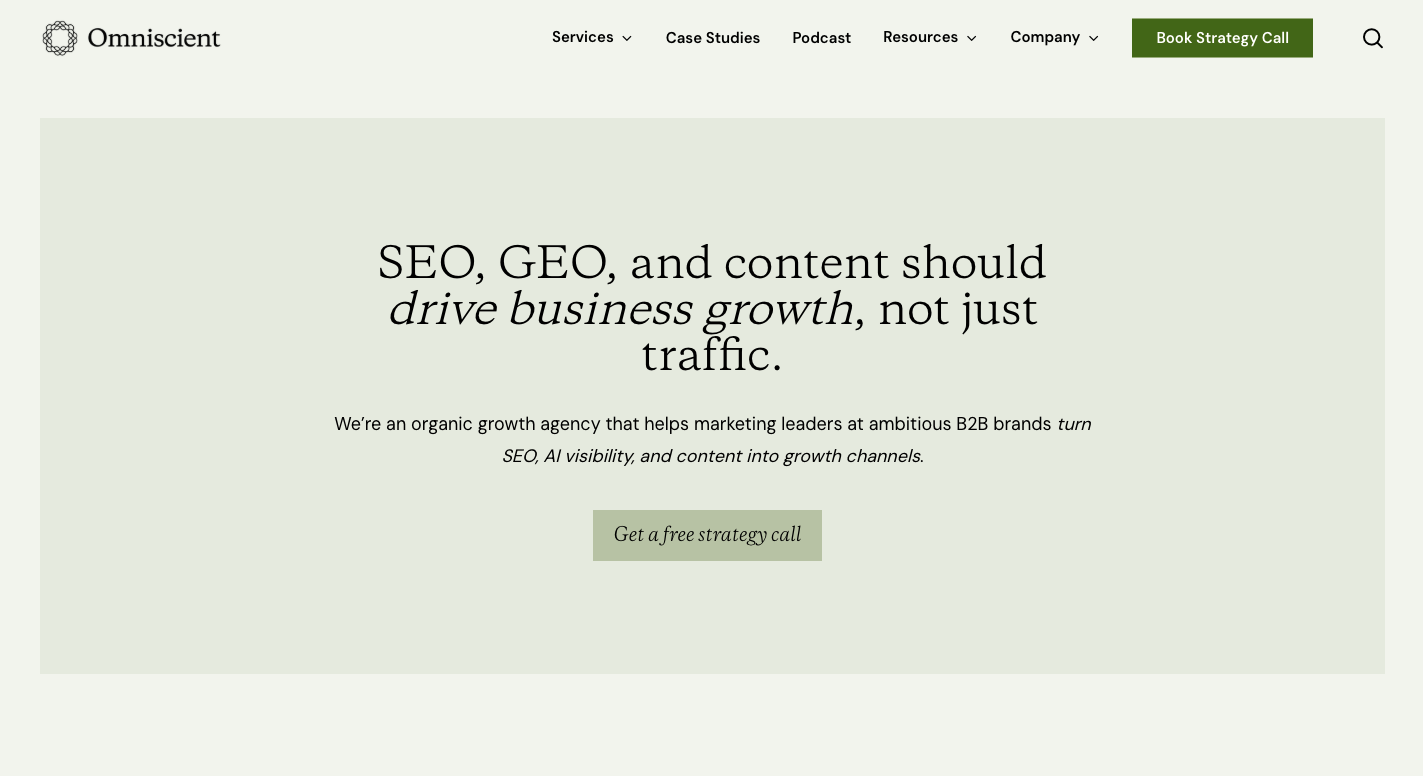
Omniscient Digital is an organic growth agency for B2B software companies. Its team builds SEO and AI search programs designed to bring in qualified pipeline rather than page views.
Omniscient works from a content plan rather than a fixed number of posts each month. Before anything gets written, the team looks at buyer intent and at the gaps between your content and what competitors publish, and that research sets what to create next and in what order.
Omniscient also writes the pages closest to revenue, such as landing and feature pages, and tracks how often a brand appears in AI answers. Companies that need paid media or video will have to find a separate partner, since the agency focuses on organic growth.
Key Services
- SEO strategy: Keyword research and topic models turn buyer intent into a content roadmap with clear priorities.
- Content production: Writers produce long-form guides and thought leadership in the client’s own voice.
- Money pages: The team also writes landing and product copy aimed at high-intent searches.
- Generative engine optimization (GEO): Omniscient tracks target prompts in AI tools and works to raise brand mentions in AI answers.
- Technical SEO: It checks site structure and internal links and fixes whatever keeps search engines from indexing your content.
- Link building and digital PR: Outreach and PR campaigns earn links and brand mentions on trusted sites.
- Analytics: Reports tie organic results to pipeline and revenue.
3. Siege Media: Best for Visual Content and Digital PR
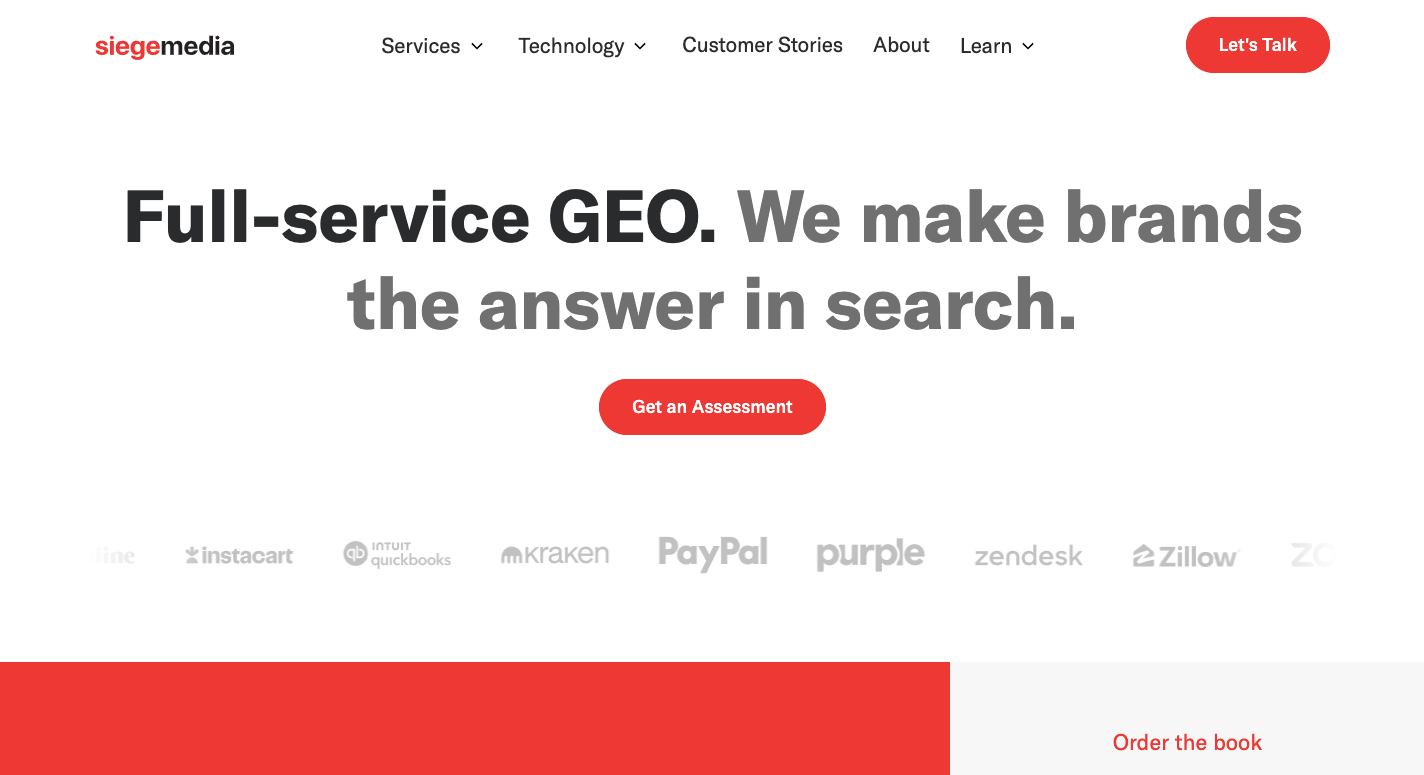
Siege Media builds inbound programs around content that both buyers and publishers find useful.
Its clients include software brands, and its team produces guides, original research, calculators, and visual assets that attract qualified visitors from Google and AI search.
Topic choice at Siege is not based on search volume alone. The team scores each idea with its Keyword Opposition to Benefit (KOB) method, which weighs how hard a keyword is to rank for against what it can bring to the business, so the effort goes to topics with a real chance to produce leads.
The agency also stays away from cheap link schemes. Its in-house designers create charts and infographics from client research, and its digital PR team takes those assets to journalists and industry publications that are likely to cite them.
Siege Media does not focus on pay-per-click (PPC), though, so companies that need paid search will have to find another partner.
Key Services
- Generative engine optimization (GEO) programs: The team plans content and PR campaigns with one goal, which is to get the brand named in AI answers.
- Content marketing: Writers and editors produce guides, articles, and resource pages around topics chosen through KOB analysis.
- Digital PR: The PR team turns original research and data studies into stories for journalists and industry sites.
- Design and visual assets: In-house designers create the visuals for each article and PR campaign, from simple charts to full infographics.
- Interactive tools: Calculators and similar tools answer specific questions and can attract links over time.
- Content refreshes: Older pages get updates when facts change, or rankings start to slip.
4. Powered by Search: Best for B2B SaaS Demand Generation
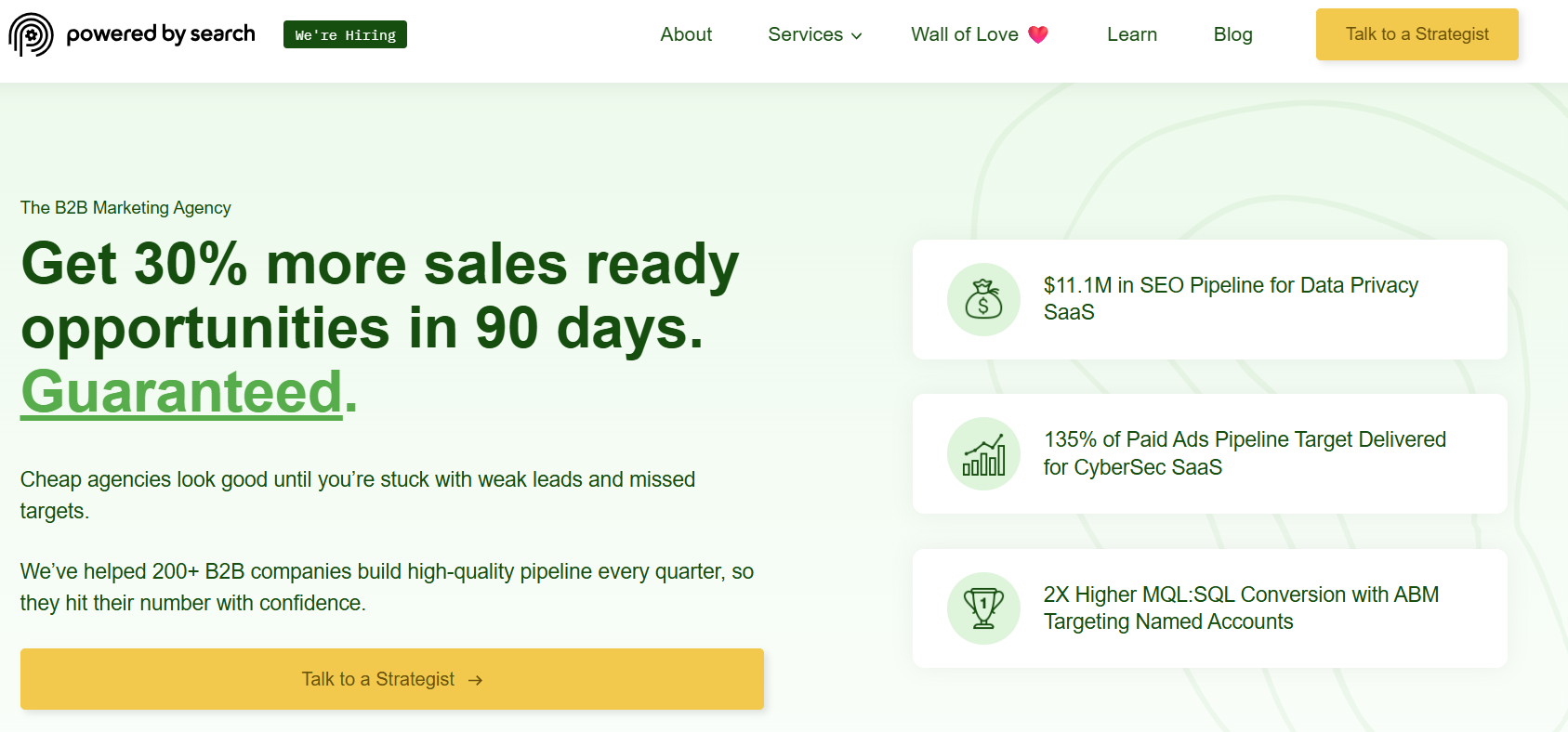
Powered by Search is a marketing agency that works with B2B SaaS companies. Its clients mostly sell high-value software with long sales cycles and multiple decision-makers.
The agency runs a full-funnel program under its Predictable Growth methodology, which brings together demand generation strategy, SEO, content, paid media, and revenue operations.
Each channel has its own lead consultant, but all of them work from the same marketing strategy and report on the same pipeline metrics.
Powered by Search handles both inbound and performance marketing for its clients. Its team has also worked with HubSpot since 2013, so it can connect campaign performance in the CRM to deals and revenue.
Key Services
- Demand generation strategy: Before any campaign goes live, the team defines the target audience and the messages for it, then chooses the channel mix.
- SEO and AI search visibility: Technical SEO and content strategy aim to lift Google rankings, while digital PR goes after more brand mentions in AI answers.
- Paid media: Specialists run search and social campaigns for SaaS buyers on Google and LinkedIn, along with retargeting.
- Account-based marketing: Ads and content go to named accounts that match the client's ideal customer profile.
- Content marketing: Writers create content for each stage of a long B2B sales cycle, from early research to the demo request.
- Web design and CRO: The team builds and tests landing pages and site pages to improve lead conversion.
- HubSpot and RevOps: Powered by Search sets up HubSpot tracking and reporting that connects leads to pipeline and closed deals.
5. Grow and Convert: Best for Pain Point SEO Content
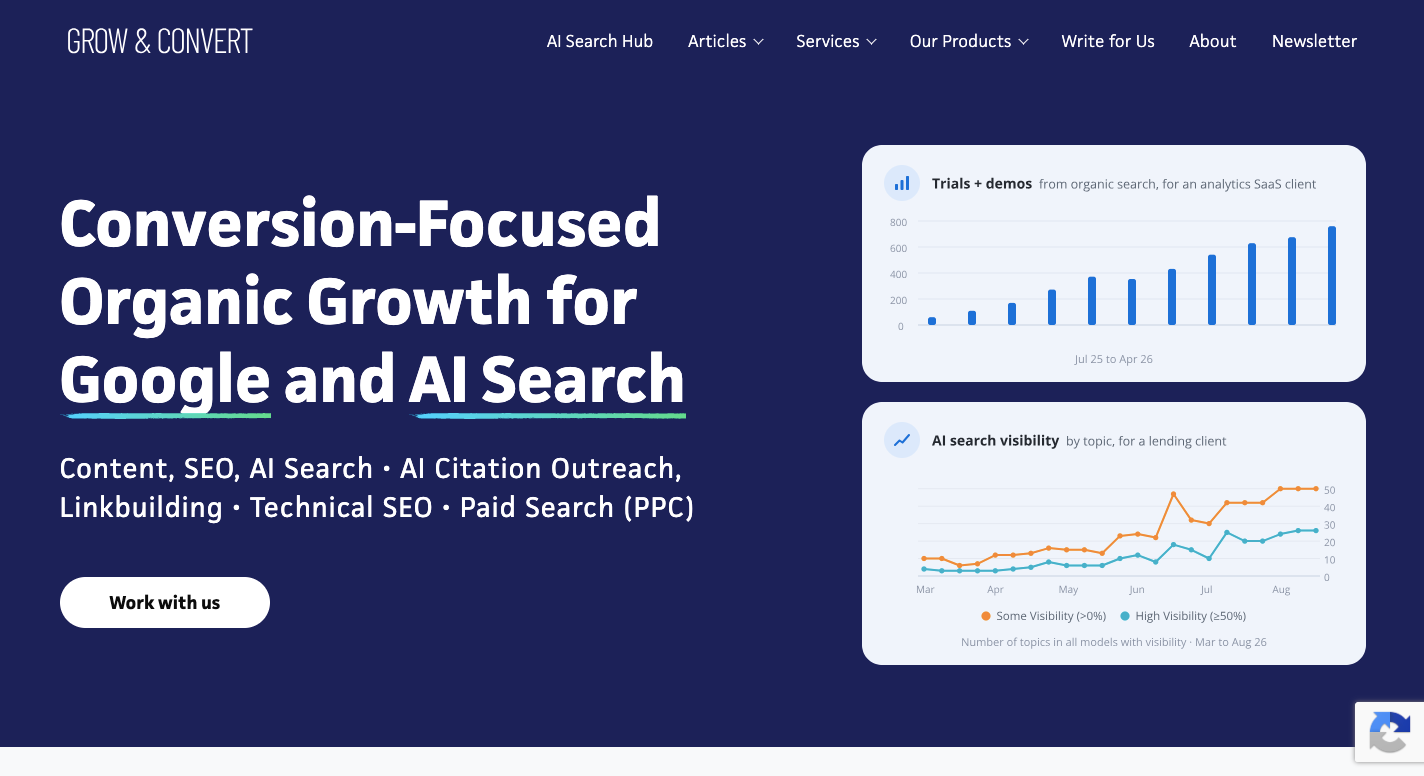
Grow and Convert works across content marketing and SEO, and it now runs GEO projects as well. Its main focus is content that generates leads rather than content that only increases traffic.
Its Pain Point SEO process starts at the bottom of the funnel, with searches from people who already know what they need, such as product category and comparison terms or queries for an alternative to a current tool.
These are the searches people make when they already have a problem and want a tool to solve it, so the content reaches buyers instead of casual readers.
Clients work directly with strategists, with no account manager in between. Grow and Convert also applies its Prioritized GEO framework to the same content, so the articles that bring in leads from Google can also show up in AI search.
Key Services
- Customer research: Strategists study the client's best customers and their problems before they pick keywords.
- Bottom-of-funnel content: Writers then create articles for buyers who already weigh their options, so most posts compare products or point readers to alternatives.
- Prioritized GEO: The team uses its keyword research to decide which topics and pages have the best chance to appear in ChatGPT and other AI tools.
- Technical SEO: Specialists fix technical issues that hold important pages back, without long audits that slow down content production.
- Link building: Outreach earns relevant links for the articles that need more authority to rank.
- Conversion tracking: Reports link each article to the demo requests and trial signups it brings in, as well as to the deals it influenced.
6. Directive Consulting: Best for Paid and Organic Pipeline Growth
Directive Consulting works with B2B software and tech brands, with a strong focus on campaigns tied to pipeline and revenue.
The agency measures its work by sales-qualified leads (SQLs) and new customers rather than marketing-qualified leads (MQLs) or form fills.
Its Customer Generation method runs paid media and SEO as one program, with content and design built in, so both channels chase the same pipeline goals.
Directive also has a marketing operations team that manages client data and technology, which connects campaign performance to pipeline and revenue. Earlier-stage companies can start with a separate startup package before they move to a full Customer Generation program.
Key Services
- Paid media: Paid search and paid social campaigns reach high-intent buyers, mostly on Google and LinkedIn.
- Content marketing and SEO: Writers and SEO specialists create content aimed at organic traffic, qualified leads, and pipeline.
- Conversion optimization and performance design: Designers test landing pages and site layouts to improve conversion rates.
- Video: The creative team produces video assets for ads and campaigns.
- Marketing operations: Specialists also look after the marketing data and tech stack that campaign reports depend on.
- Startup package: A smaller version of Customer Generation for early-stage B2B software companies.
7. Growfusely: Best for SaaS Content and Link Building
SaaS brands that want organic growth work with Growfusely, a content marketing agency that pairs its content with links and digital PR.
The team plans content in pillar and cluster groups, where one main page covers a broad topic and several related articles link back to it. This structure keeps related topics connected throughout the site and gives readers a path from broader questions to more specific product-related content.
Thought leadership takes up a large share of its content work for SaaS audiences. Growfusely also promotes that content through link building and digital PR, so clients get writing and outreach from the same team.
Key Services
- SEO content strategy: The team maps topics into pillar and cluster groups around what the target audience searches for.
- Content writing: Its writers also handle blog posts and whitepapers, as well as the copy on SaaS product websites.
- Link building: Outreach campaigns earn backlinks from relevant sites to raise the authority of important pages.
- Digital PR: Growfusely pitches stories and data to publications to earn brand mentions and links.
- Technical SEO: Specialists fix site issues so search engines can crawl and index each page.
- Creative services: Designers produce visuals and graphics that support articles and campaigns.
8. Single Grain: Best for Multi-Channel Growth Marketing
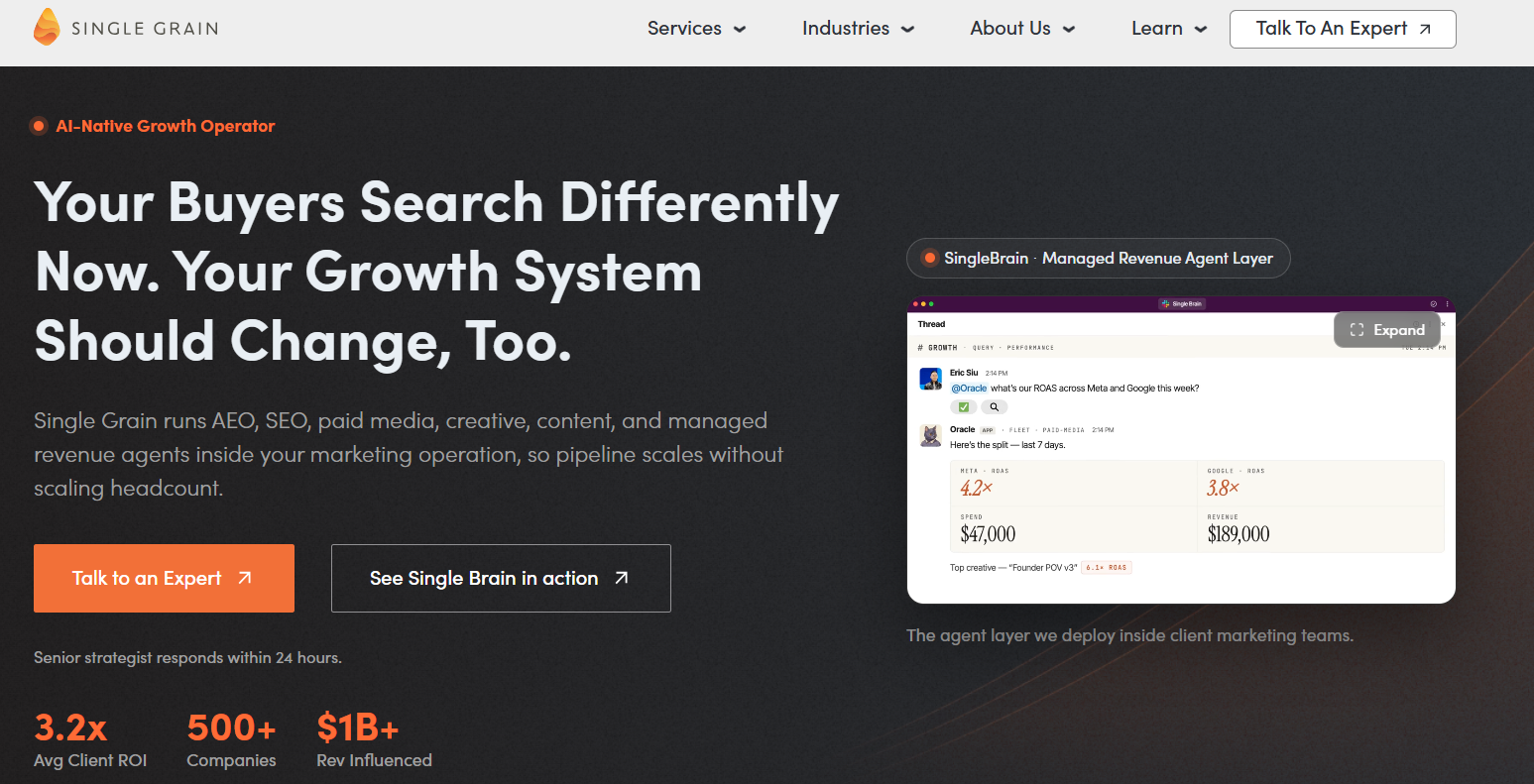
Single Grain is a full-service digital marketing agency. Unlike most agencies on this list, Single Grain does not limit itself to SEO and content.
Besides organic search, its team runs paid campaigns and conversion work, so companies can cover several channels with one partner.
Companies that want inbound and paid work under one roof can get both from Single Grain. The agency also serves B2C and ecommerce brands, so its work is not limited to B2B SaaS.
Key Services
- SEO and content marketing: Writers and SEO specialists create blog content and landing pages that bring in organic traffic and leads.
- AI search optimization: Its AEO and GEO work aims to get brands into AI answers from tools such as ChatGPT and Perplexity.
- Paid media: Specialists run ad campaigns on Google, LinkedIn, and Facebook.
- Conversion rate optimization: Single Grain tests landing pages and site flows to turn more visitors into leads.
- Programmatic SEO: The agency builds large sets of pages for repeat search patterns.
- Video and social media: The creative team produces video content and manages social channels for brand awareness.
How to Choose the Right B2B Inbound Marketing Company
The right B2B inbound marketing company has experience with your type of buyers, a clear plan tied to your business goals, and a way to prove how its work affects the pipeline. Use the checks below before you sign with any marketing agency.
Look for Experience With Your Buyers and Industry
A marketing agency that already knows your market needs less time to learn your product and your target audience. For SaaS companies, this experience matters because long sales cycles and multiple decision-makers call for content that answers different questions at each stage.
Ask which clients in your industry the agency has worked with and what kind of buyers those clients sell to. If most of its clients are local businesses or ecommerce brands, its process may not adapt well to a B2B sale, no matter how much expertise it has in other areas.
Ask for a Sample Marketing Strategy or Roadmap
A good agency should show you how it would handle your account before you pay anything. Ask for a sample plan with the first keywords and pages it would target, and find out how much of its time would go to content versus SEO and backlinks.
Look at where the plan starts. Pages for buyers close to purchase usually bring leads sooner than broad awareness content, while a plan built only around search volume can leave your pipeline flat for months.
Check That They Work With Your Tech Stack
Inbound work only shows its value when the agency can follow a lead from the first touch to a closed deal. Before you sign, check that the team has experience with your tech stack, such as HubSpot or Salesforce, and with the analytics technology you already use.
If the agency also handles web design or landing pages, ask whether it can connect new forms to your CRM. Without that link, leads from new pages may never reach your sales team.
Ask About Their Data-Driven Approach to Pipeline
A data-driven approach goes beyond traffic and rankings. Ask which metrics the agency reports each month, and look for demo requests, sales-qualified leads, pipeline generation, and revenue on that list.
You should also ask how the agency uses data analytics to decide what to change. When campaign performance drops, pay attention to the team's ability to explain why and what it plans to do next in line with your sales targets.
Review Case Studies for Real Numbers
Case studies show whether an agency can deliver lead-generation results, not just traffic. The strongest ones tie their numbers to demos or revenue and say how long it took to get there.
Also check whether the results come from customers at your stage. A program that worked for a large enterprise brand may not scale down to a startup budget, and the reverse is also true.
Watch For Red Flags
Some warning signs show up early in the sales process:
- Guaranteed rankings: No agency controls Google, so a promise of the top spot is a reason to walk away.
- Vanity metrics only: Reports with traffic and impressions but no leads or pipeline hide whether the work brings in revenue.
- Generic samples: Sample articles that could fit any company show little research into your product and audience.
- Vague scope: A proposal without clear deliverables, such as the number of pages or links per month, leaves you with no way to hold the agency to account.
- Buzzwords instead of a plan: Talking about AI and innovation is fine, but the proposal should still explain what the team will do in the first 90 days.
- Services you don't need: Some agencies bundle many services into one package, with paid ads, account-based campaigns, and creative strategy sold next to SEO. If your goal is inbound leads, ask which parts of that package actually serve that goal.
Grow Your B2B Pipeline With ABHMedia
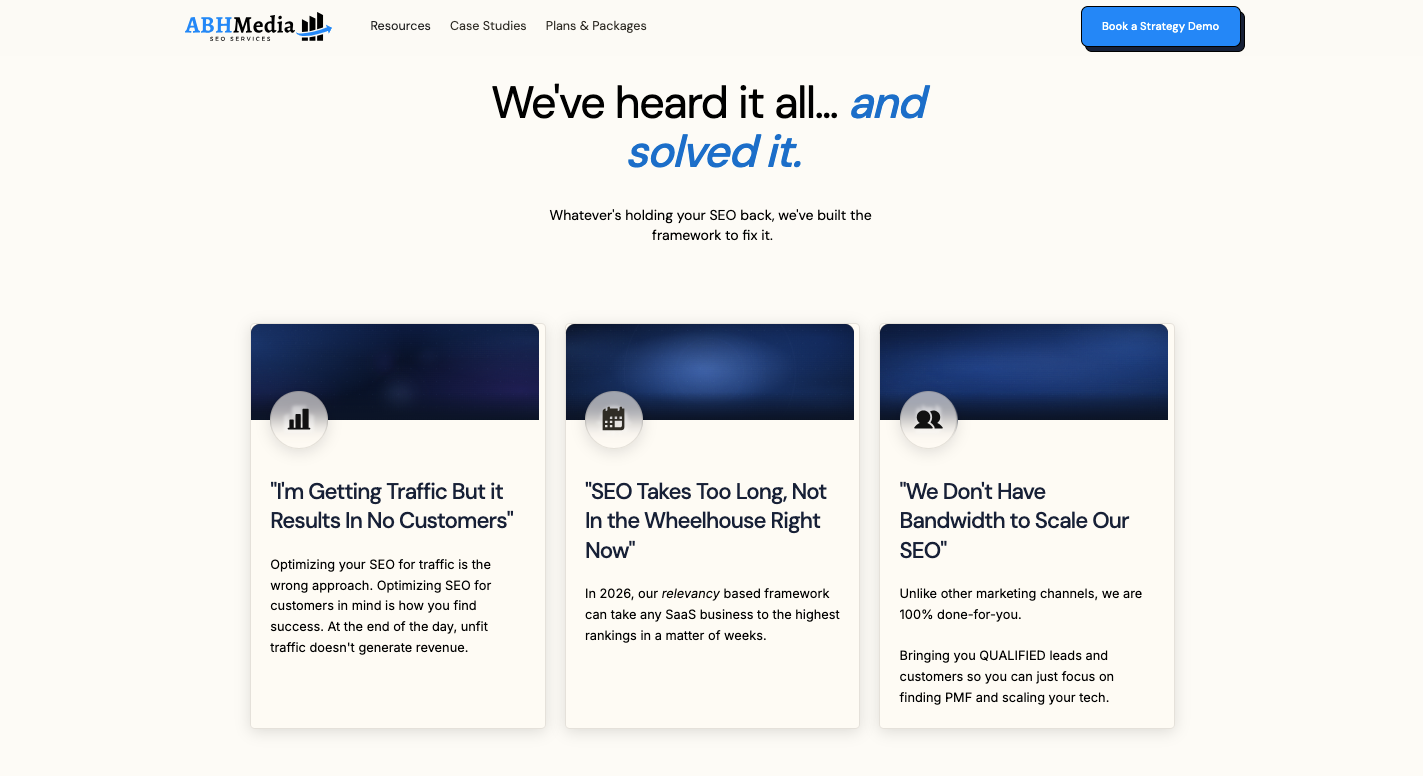
ABHMedia runs the full inbound program for B2B SaaS companies, from the first strategy call to the monthly report. The team learns how your product works and who your ideal customers are, then targets the searches those buyers make when they look for a tool like yours.
Every plan comes with content and technical fixes, plus 5–30 hand-picked backlinks per month, while larger plans also add programmatic SEO. ABHMedia judges its work by the pipeline it creates, which means demos and paid users count for far more than traffic.
Most clients see a clear change within two to four months, though the exact timeline depends on the site and the plan.
Since one team handles the whole program, you can scale inbound without new hires, and everything they publish for your site stays yours.
FAQs About the Best B2B Inbound Marketing Company
What is inbound marketing in B2B marketing?
Inbound marketing in B2B is a way to attract business buyers through SEO, content, and email instead of cold calls and bought lists. Buyers find your brand while they research a problem, so they arrive with real interest in what you sell.
In a 2026 Gartner survey, 67% of B2B buyers said they prefer to buy without a sales rep.
What is a B2B marketing company?
A B2B marketing company is a marketing agency that promotes products and services sold to other businesses. Some agencies only handle inbound or paid media, but others run most of a client’s marketing channels under one contract.
Is inbound marketing still worth it with AI search?
Yes. Pages that rank well on Google also tend to show up in answers from ChatGPT and Perplexity. A good inbound article can bring you leads from both places.
How long does inbound marketing take to show results?
Most inbound marketing efforts show clear results within three to six months, though the exact timeline depends on your site and how strong the competition is. Pages that target buyers close to a purchase often bring leads sooner than broad educational content.
How do you know if a B2B marketing agency is legit?
A legit agency can name its clients, back its claims with real numbers, and you can usually find reviews of its work on sites like Clutch or G2. It should also give you a clear scope of work and never promise guaranteed rankings.