


How to Choose the Right SaaS SEO Agency in 2026
,
May 25, 2026
If you’re looking for a SaaS SEO agency, you already know SEO is a great marketing channel. The harder question is whether your SaaS SEO strategy is reaching the right buyers at the right stage of their journey.
SaaS buyers don’t wait for a sales call to compare their options. They’re already searching for solutions, reading use cases, checking alternatives, and deciding who to trust before they ever contact your team.
A good SaaS SEO agency should help you show up in those moments.
So if you’re at this stage of your business and looking for a reliable partner, this guide will walk you through what to look for when choosing a SaaS SEO agency in 2026.
Want to make SEO your most profitable acquisition channel? Book a strategy demo with ABHMedia.
TL;DR
- A SaaS SEO agency should help your company show up when buyers are already searching, comparing options, and deciding which product to trust.
- The right partner should help with buyer-intent keywords, content, technical SEO, authority building, and reporting tied to real business outcomes.
- Hiring an agency can make more sense than building in-house if your team does not have the time or specialist support to run SEO properly.
- ABHMedia is built for B2B SaaS companies that want SEO to drive demos, trial signups, paid users, and pipeline, rather than chasing traffic that does not translate into business opportunities.
What Should a SaaS SEO Agency Help You Do?
Before you compare options, it helps to know what kind of support you should expect, especially if you’re choosing a partner for B2B SaaS growth.
Some SEO teams focus mostly on content strategy. Other agencies may offer audits, technical fixes, or link building as part of a broader growth plan.
The important thing is knowing which parts matter most, so you can tell the difference between SaaS companies that offer basic services and a partner that can build around your product, market, target audience, and buyers.
Below are the main areas the right partner should help with.
Find the Search Terms Your Buyers Use
A strong SaaS SEO partner shouldn’t start with the biggest keywords in your market, but rather with how your buyers search.
This includes things like the problems they want to solve, the features they care about, and the questions they ask before choosing a product.
The goal is not to build a long keyword list just because vanity metrics look impressive. It’s to find search terms with real buying intent, other than traffic potential.
These searches indicate someone is exploring options or deciding which product is worth a closer look.
HubSpot’s report supports this shift, finding that 96% of prospects now research companies and products before speaking with a sales representative.
If an agency only targets broad educational keywords, they miss the searches that happen closer to a buying decision. Those missed searches can turn into missed opportunities for demos or sales conversations.
The right SaaS SEO team should focus on high-intent lead generation rather than traffic volume. That matters even more in B2B SaaS when the sales cycle is longer, and buyers need more time before they’re ready to talk.
Turn Keyword Research Into a Clear SEO Strategy
Keyword research is only useful when it turns into a plan your team can actually follow.
A strong SaaS SEO partner should be able to take the search terms they find and turn them into clear decisions, such as:
- Which pages need to be created
- Which existing pages should be updated
- Which keywords should be prioritized first
- Which topics can wait
- Which pages need stronger internal links
- Which pages need clearer messaging or structure
This is where research turns into an SEO roadmap. Instead of handing you a spreadsheet full of keywords, the agency should explain how each opportunity fits into your product, positioning, growth goals, and SaaS business model.
The strategy should also show what needs to happen first.
Some pages may need to be built from scratch. Some may already exist but need better structure, stronger product context, updated copy, or clearer calls to action. Your chosen partner should help you see which path makes the most sense.
The end result should be a roadmap that tells your team what to create, what to improve, and what to ignore for now.
Create Content That Supports the Way SaaS Buyers Make Decisions
Buyers rarely choose a product after reading one blog post. As mentioned earlier, most prospects research their options before they ever speak with sales.
They compare vendors, read reviews, look at pricing pages, and come back only when they feel like a solution matches what they need.
That’s why the right agency should help you build a SaaS content marketing strategy that supports the full decision process.
Your content strategy should make it easier for buyers to understand the problem, compare their options, and see where your product fits. It should also help them trust that your team understands their needs.
Keep in mind that not every piece of content needs to turn a page into a pitch. It needs to answer the questions buyers already have, including the ones that now show up through AI search, answer engine optimization, and generative engine optimization.
Fix Technical Issues That Hold Back SaaS Growth
Strong content can still underperform if search engines cannot crawl, index, or understand your site properly.
For SaaS sites, these issues are not always obvious from the outside. A page may look fine to your team, but still have technical problems that limit its search visibility and user experience.
A reliable agency should know how to run technical SEO audits and fix areas like:
- Crawlability
- Indexation
- Site architecture
- Internal linking
- Page speed
- Duplicate content
- Canonical tags
- Redirects
- Schema
- JavaScript SEO, when relevant
Google explains that crawling and indexing are core technical SEO processes used to find and show content in search. If technical issues block those steps, your pages may struggle to appear where they should.
They also explained that crawlable links help it discover pages and understand relationships between content, which makes internal linking an important part as well.
Although technical SEO isn’t the most visible part of the work, it often decides whether your content can perform at its full potential. It also works closely with web design and on-page optimization because both affect how easily buyers can move through your site.
Build Authority Around Your Pages
Creating the right pages is only part of the work. Your site also needs enough authority for those pages to compete, especially when you’re targeting valuable searches in a crowded software category.
A capable partner should help you build that authority in ways that support your most important pages, beyond your homepage or blog.
That can include:
- Earning relevant backlinks
- Improving internal links to high-value pages
- Creating expert-led content
- Publishing original data or research
- Getting mentioned on trusted industry sites
- Strengthening comparison, alternative, and use case pages
More than just collecting clicks, the goal is to help both search engines and buyers see that your site is a credible resource in your industry.
Connect SEO Performance to Real Business Outcomes
Another thing to note is that the right SEO partner should make search performance easy to understand.
Search rankings and blog traffic still matter, but they should not be the only numbers in the report. Your team also needs to see whether organic search is creating activity that can support sales, product growth, or pipeline.
Remember, organic traffic only matters when it supports the outcome you’re trying to reach. Ranking on page one is useful, but it means less if those visits are not turning into the results you’re after.
SaaS SEO Agency vs. In-House SEO: Which Is Better?
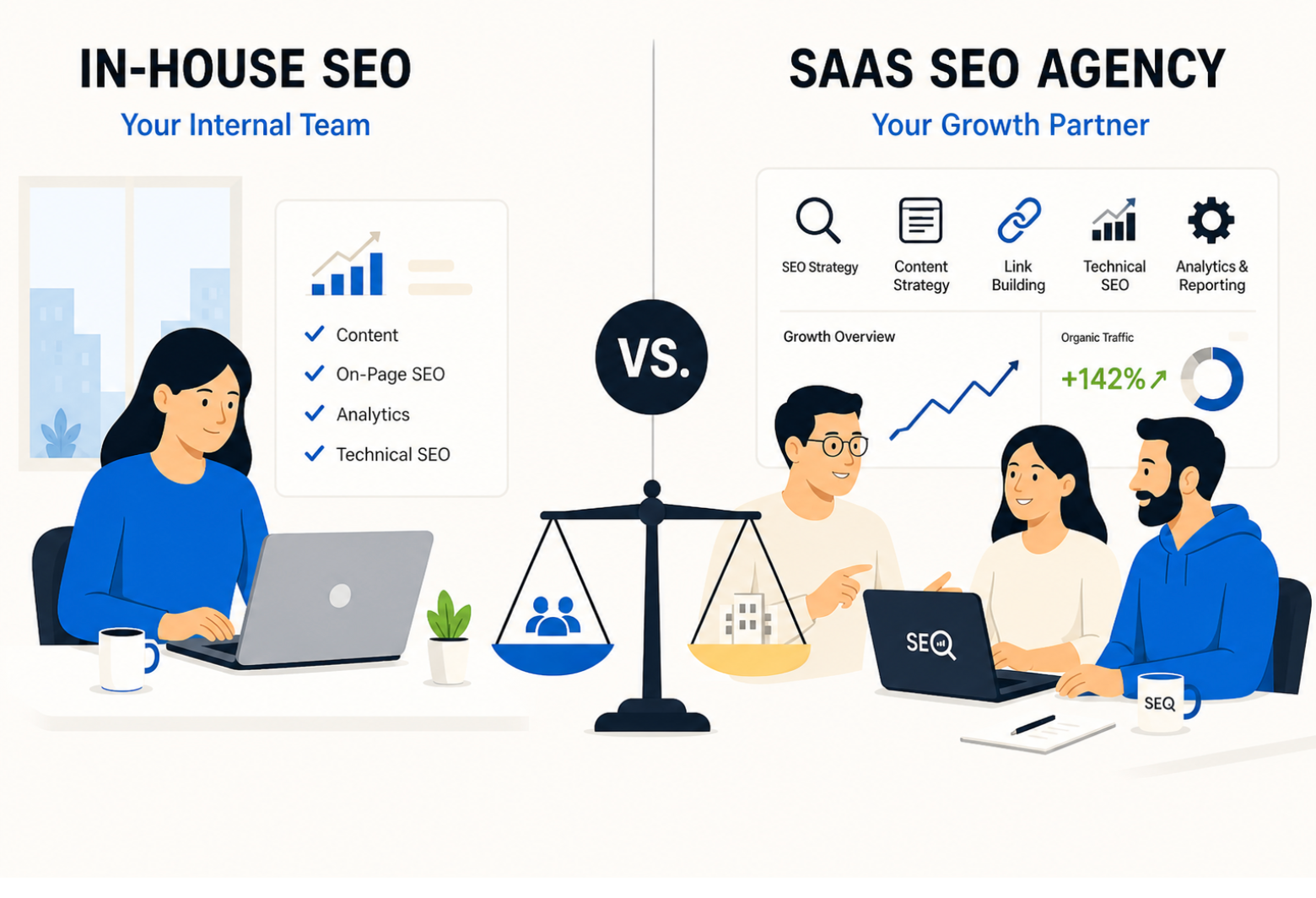
Building SaaS SEO in-house can make sense for some companies.
If you already have experienced SEO lead, writers, editors, developers, and a clear reporting system in place, an in-house team can work well. It gives you close control over the long-term strategy and keeps product knowledge inside the company.
The challenge, though, is that for many SaaS companies, that setup takes time to build.
SEO management is rarely handled well by one person alone. A strong program usually needs keyword research, content planning, deep technical SEO, link building, and ongoing updates.
Hiring for each of those SEO tasks can be expensive. It can also slow things down before the work even starts.
A SaaS SEO agency gives you access to that support much faster. This can be helpful when your in-house marketing team is already managing product launches, paid media, and sales requests.
Instead of building the full system from scratch, you can work with a SaaS-focused team that already has a proven process for finding the right keywords, prioritizing the right pages, fixing technical issues, creating content, and measuring progress.
That doesn't mean your internal team becomes less important. Your team still brings the product knowledge, customer insight, sales context, and positioning. The agency uses that input to shape a stronger SEO strategy and turn it into consistent execution.
How to Evaluate SaaS SEO Proposals and Pitches
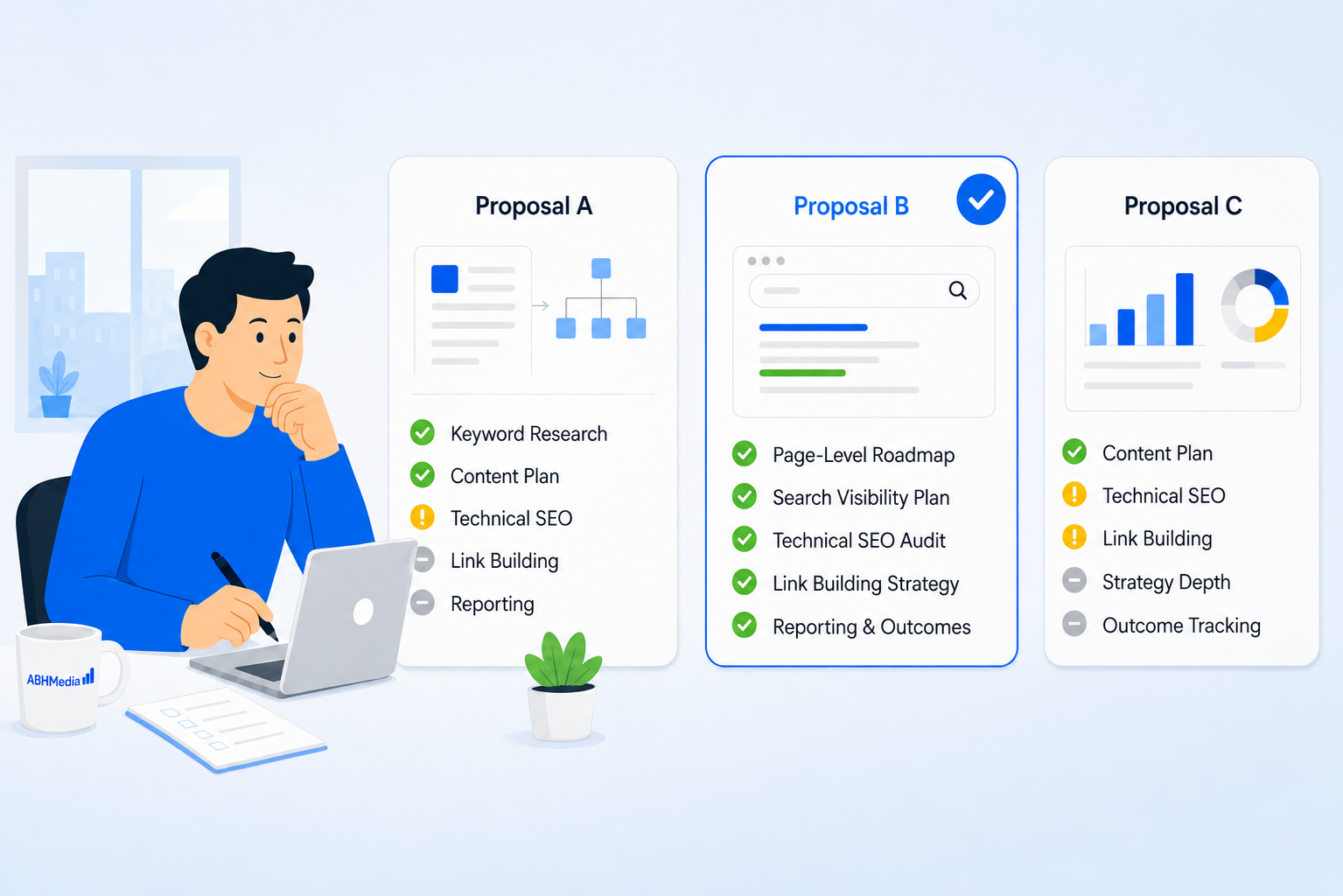
An SEO proposal or pitch tells you more than what an agency plans to do. It also shows you how they think.
That matters because many B2B buyers already form opinions before the formal buying process begins. Forrester found that 68% of B2B buyers already have a front-runner vendor in mind at the start of the purchase process, and that front-runner wins 80% of the time.
So when you review a pitch, don’t only ask, “Do they offer the services we need?”
Ask, “Does this proposal prove they understand our product, target audience, and growth goals?”
Here’s what a useful SaaS SEO proposal should show.
A Plan for Search Visibility Beyond Classic Rankings
A modern proposal should account for how search behavior is changing. Buyers may still use Google, but they may also find answers through Google AI overviews, AI search, LLMs, and review sites.
Still, the pitch shouldn’t be filled with AI jargon. The agency should explain how they’ll make your brand easier to find, understand, and trust in the places buyers use to research solutions.
Google says the same technical SEO fundamentals still apply to AI Overviews and AI Mode, including crawlability, internal links, page experience, and visible page content.
The point is not to chase every new search trend, but to make sure the agency is not building your strategy around traditional SEO ranking habits that ignore how discovery is changing.
Evidence From the Actual Search Results
A good SEO pitch should also show what is already happening in the search results for your highest-value queries, instead of relying only on keyword volume or generic assumptions.
The agency should be able to show which competitors appear most often, what types of pages are ranking, what search intent Google seems to reward, and where your site is already visible.
They should also point out whether the results are dominated by product pages, educational content, comparison articles, review sites, Reddit threads, YouTube videos, directories, or AI Overviews.
This matters because the search result tells you what kind of page the market may need. If the top results for a keyword are comparison pages and review sites, writing a basic educational blog post probably won’t be the right move.
If the results are full of product pages, your existing feature or use case page may only need to be improved instead of creating a new one.
A Page-Level Roadmap Instead of a Keyword Dump
This connects back to the earlier point we mentioned about keyword research. If an agency understands the strategy, the proposal will show how search terms become pages, updates, and priorities.
A keyword list may tell you what people search, but a page-level roadmap shows whether the agency understands what each search needs. The proposal should connect important topics to specific page types, such as product pages, use case pages, comparison pages, or product-led blog posts.
This is where weak proposals usually start to show. If every keyword becomes a blog post, the agency may be using one content format for every search intent.
A buyer searching for “best CRM for agencies” likely needs a different experience from someone searching “what is CRM software.” The first person is comparing options, while the second person is still learning the category.
A clearer proposal should show which pages need to be created and which existing pages need to be improved.
Priorities Based on Impact, Effort, and Timing
A proposal should not make every task sound equally important. That usually creates a roadmap that looks full but becomes hard to act on.
Look for a pitch that explains priorities based on impact, effort, and timing. Some work may be urgent because it blocks visibility, like indexation problems or weak internal links to important pages.
There are also tasks that depend on prior work, such as fixing indexation before scaling new content or improving page structure before building more internal links.
This helps you judge whether the agency understands sequencing. A proposal that starts with 30 new blog posts may sound productive, but it may not make sense if your current product pages are unclear or your highest-value pages are not indexed properly.
The proposal should make the first 90 days feel clear by outlining the early milestones, expected deliverables, and points where your team’s input is needed.
A Clear View of What Your Team Needs to Provide
Another thing to keep an eye out for is how a SaaS SEO proposal makes the collaboration clear before the contract starts. The agency may handle strategy, research, content, technical recommendations, and reporting, but your internal team still holds the product knowledge.
That means the pitch should explain what they need from you. This may include product positioning, sales insights, analytics access, and subject matter expert interviews.
This may sound operational, but it often decides whether the work moves smoothly or gets stuck for weeks.
It’s also a quality signal. If an agency says they can create high-quality product-led content without speaking to anyone on your team, that should make you pause.
Proof That Matches Your Situation
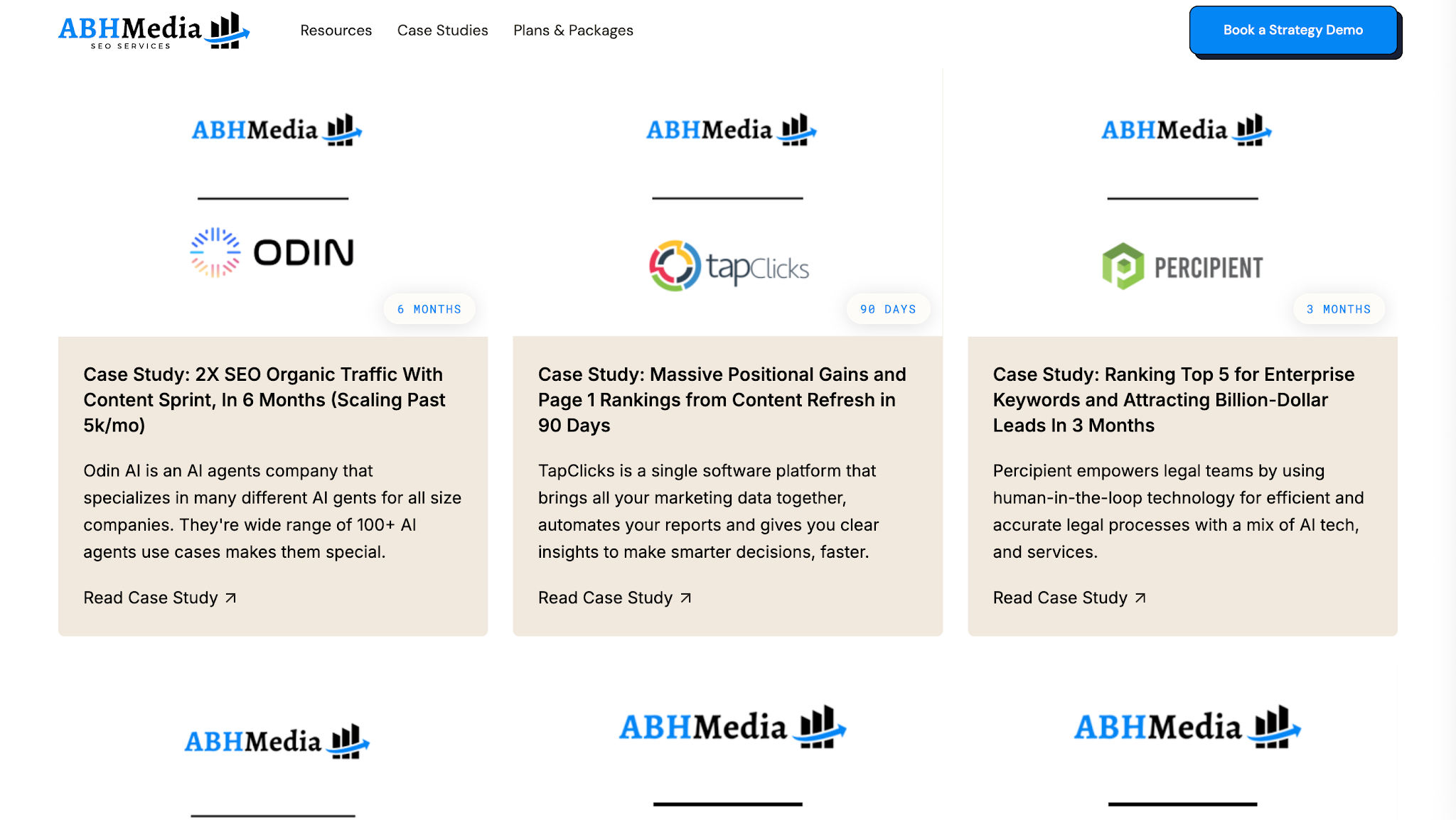
Case studies are more useful when they match the problem you are trying to solve. A proposal that only says “we grew traffic by 300%” does not tell you enough.
You want to know what kind of traffic grew, what pages were involved, and whether the work supported outcomes for SaaS brands, like demos or qualified leads. A case study from SaaS clients with a similar sales motion, category, or growth challenge is usually more helpful than a large number from a completely different business model.
The proposal should help you understand the thinking behind the result. What did they identify? What did they prioritize? What changed because of their work?
If the answer is only “traffic went up,” you may not have enough evidence to judge whether they can help your company.
Measurement Beyond Traffic
A proposal should define how success will be measured before the work starts. Rankings and traffic still matter, but they should not be the only numbers used to judge progress.
The pitch should explain which metrics or SEO KPIs connect to the outcomes your team cares about. That may include demo requests, trial signups, product page visits, assisted conversions, or sales-qualified leads.
If search visibility on AI platforms is part of the plan, the agency should also explain how they’ll monitor that without making inflated claims.
Google also notes that appearances in AI Overviews and AI Mode are included in their Search Console’s overall performance reporting under the Web search type. Tools like Google Analytics can also help teams track conversions and on-site behavior.
This is important because measurement shapes the work. If the agency only reports on traffic, they may keep prioritizing pages that bring more visitors but do not help buyers move closer to a decision.
Revenue-Focused SEO Framework With ABHMedia
There are many B2B SaaS SEO agency options to choose from, as you’ll see in our full and updated list of the best SEO agencies for SaaS.
Ultimately, the right fit depends on what your team needs most. That may be technical support, conversion optimization, or a clearer way to turn organic search into a pipeline.
At ABHMedia, we help B2B SaaS companies make that shift. Our work is laser-focused on turning organic search into real business outcomes, including demos, trial signups, qualified leads, paid users, and sales opportunities.
Instead of treating SEO as a traffic play, we help you leverage it to help the right prospects find your solutions and take the next step.
FAQs About SaaS SEO Agency
How long does SaaS SEO take to show results?
SEO success usually takes a few months, but the timeline depends on your site’s current authority, technical health, competition, and content quality.
Early wins can come from updating existing pages, fixing indexation issues, or improving internal links. Bigger gains usually take longer because rankings, qualified traffic, and authority build over time.
A realistic goal is steady progress in visibility, traffic quality, product page visits, and eventually demos, trials, leads, or pipeline.
What are the biggest red flags when hiring an SEO agency?
Be careful with agencies that promise fast rankings, guaranteed results, or instant traffic growth. SEO depends on search competition and buyer demand, so no agency can honestly guarantee exact outcomes.
Other red flags include vague reporting, weak case studies, and a pitch that jumps straight into blog production before learning your sales process.
Should early-stage SaaS companies hire an SEO agency?
If your positioning is still changing every few weeks, it may be better to clarify your messaging and customer profile first. Otherwise, the agency may build pages around a direction that keeps shifting.
If you already know who you sell to and what problems you want to solve and focus on, an agency can help you build the right SEO foundation earlier.
What are the key benefits of hiring an SEO agency for a SaaS company?
The main benefit is getting SaaS SEO services, strategy, and execution without building a full in-house team right away.
Top SaaS SEO agencies can help your team decide what to prioritize first and determine where organic search can support your pipeline. This is especially useful if your internal team already has product launches, campaigns, and sales requests competing for time.
Is SaaS SEO different from traditional SEO services?
Yes. SaaS SEO still uses the same core principles as traditional SEO. The difference is how those principles are applied.
More than building authority, a SaaS strategy has to support longer buying journeys, product education, comparison searches, demo or trial paths, and revenue-focused reporting.






.png)