SEO vs. SEM: 6 Differences Every Team Should Know
,
November 19, 2026
Many businesses spend money on search without a clear idea of which channel actually brings them customers. Some pay for Google Ads when their buyers trust organic results more, while others wait months for SEO to work when they need leads this quarter.
SEO and SEM both put your website in front of people who use search engines, but they get there in different ways. SEO earns your pages a spot in the organic search results, while SEM mostly refers to paid search ads that appear above or below those results.
In this article, you’ll learn how SEO and SEM differ in cost and speed, and how to decide where your budget should go first.
TL;DR
- SEO earns your website a place in the organic search results, and SEM usually means paid search ads that put your site at the top of the page for a fee on each click.
- SEO can take several months to show results, but a page that ranks can bring traffic for years, and paid ads stop the moment your budget runs out.
- Companies with a limited budget and some patience usually get more from SEO, and paid search is the faster option when you need leads for a launch or want to compete for keywords that are hard to rank for.
- Many businesses run both, because ads bring leads right away and their data shows which keywords deserve organic pages first.
- ABHMedia builds done-for-you SEO programs for B2B SaaS companies that want demos and paid users from organic search instead of a growing ad bill.
What Is SEO?
Search engine optimization (SEO) is the work you do on your website and around it so that Google and other search engines rank your pages higher in the organic search results. Nobody pays for these positions.
A page earns its spot when search engines decide it gives the best answer to a query, and every visit it brings after that comes without a cost per click.
Higher rankings raise your website’s visibility for the search queries your buyers type, and they keep bringing organic traffic as long as the page stays relevant.
Those rankings also carry over to AI search, since ChatGPT and Google AI Overviews often pull their answers from pages that already rank well. Most of the work behind them falls into four areas.
Keyword Research
Keyword research shows you which terms people use when they look for a product or an answer, and what they expect to find when they search for them. Search intent is the part many teams overlook.
A person who types “what is a CRM” wants an explanation, while someone who searches “best CRM for real estate agents” is close to a purchase and needs a very different page.
Once you know the intent behind your target keywords, you can create content that answers each one and decide which pages to publish first.
On-Page SEO

On-page SEO covers everything on the page itself that tells search engines what it’s about. Title tags and the meta description shape how your result looks on Google, while headings, internal links, and overall content quality decide whether the page deserves to rank.
The goal is a page that answers the query better than the results already on page one, with the main keyword placed naturally in the title and the first paragraph.
Off-Page SEO
Off-page SEO covers the signals that come from outside your website. Backlinks from relevant, trusted sites are the strongest of them, since Google treats each one as a sign that other people find your content useful.
Brand mentions and reviews add to that trust, and a local business can also build it through its Google Business Profile.
Technical SEO
Technical SEO deals with the parts of your site that visitors rarely notice but search engines depend on. It covers site speed, mobile friendliness, crawlability, indexation, site structure, and broken links that lead to dead pages.
When these basics work, search engines understand your pages faster and can show them to the right people.
What Is SEM?
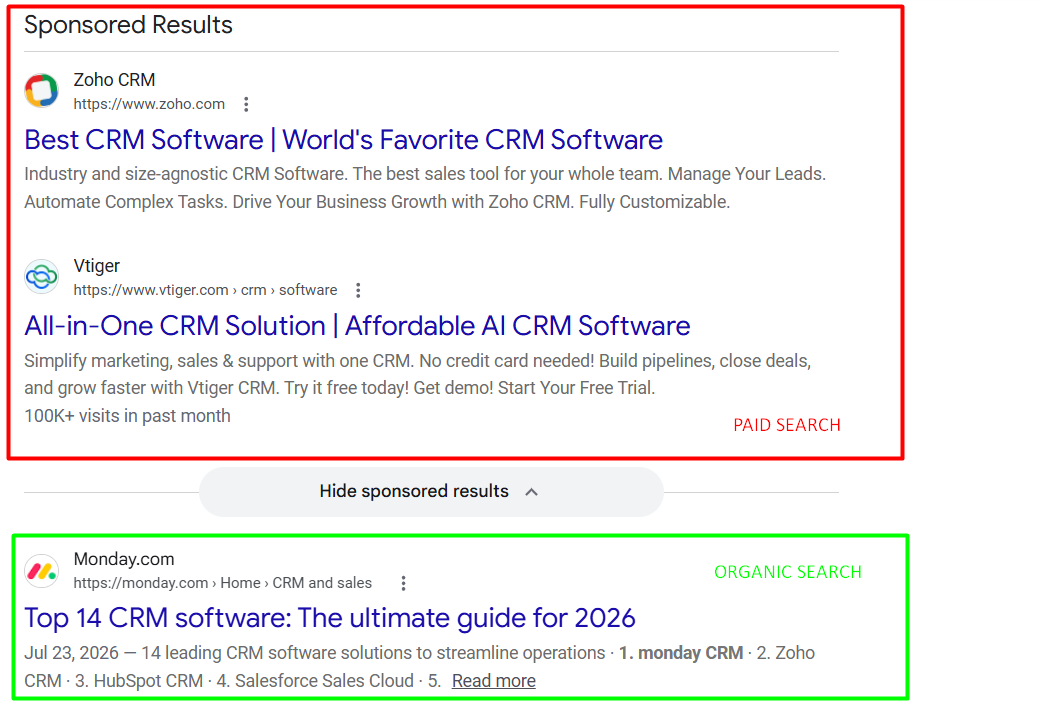
Search engine marketing (SEM) is the broader practice of putting your website in front of people on search engines.
By the strict definition, SEM includes SEO along with paid search, but many marketers use the term only for paid search advertising, and this article follows that common meaning.
With paid search, you don’t wait for Google to rank your page. You choose the search terms you want to appear for and write an ad with a budget behind it, and the ad can show up at the top or bottom of the search engine results page with a “Sponsored” label.
Most of these ads run on a pay-per-click (PPC) model, so marketers pay only when someone clicks.
How Paid Search Works
Google Ads is the largest platform for paid ads, while Microsoft Advertising (formerly Bing Ads) shows ads on Bing and its partner sites.
Every search on Google starts a fresh ad auction behind the scenes, and its outcome sets which advertisers get a spot on the page and where each one lands.
The highest bid doesn’t win by default. Google weighs your bid together with your Quality Score, which looks at expected click-through rate, ad relevance, and the landing page experience, so a relevant ad can rank above a competitor that bids more and still pay less per click.
Keywords and Targeting
PPC campaigns start with a list of keywords and match types that decide which searches can trigger your ad. Negative keywords do the opposite and block searches you don’t want to pay for, for example “free” or “jobs” for a company that sells paid software.
You can also narrow your target audience by location, device, language, time of day, and lists of people who already visited your site. That level of control is one of the main reasons businesses run paid search next to SEO.
Search Ads and Ad Copy
A standard Google search ad has up to 15 headlines and 4 descriptions, and Google tests different combinations to see which ones get more clicks. Good ad copy names the problem in a few words and tells the searcher what to do next, whether that means a free trial or a demo call.
Ad assets, once called extensions, add sitelinks, callouts, phone numbers, or prices under the ad and give it more space on the page.
Landing Pages and Conversion Tracking
The click is only half the job. Each ad sends visitors to a landing page that should match the promise in the ad and give them one clear next step.
Conversion tracking then shows which keywords and ads lead to sign-ups, demos, or sales, so you can move budget away from terms that bring clicks but no customers.
SEO vs. SEM: 6 Key Differences
The difference between SEO and SEM comes down to how you pay for visibility and how long that visibility lasts. Here is a quick overview of the main differences before we look at each one in detail.
Cost
SEO isn’t free, even though nobody pays for the clicks. You still pay for the people who write and fix the pages and for the tools they use, or for an agency that handles all of it.
A Backlinko survey puts the average monthly SEO retainer at $1,000 to $2,500, although SEO services pricing can go much higher for large sites and competitive markets. The return comes later, because a page that ranks continues to bring organic traffic without a fee for each visit.
Semrush, for example, estimated that the traffic to its own article on on-page SEO would cost about $14,800 per month if it bought the same clicks through ads.
Paid search works the other way around, since the setup costs little but every click costs money, and prices climb as more competitors bid on the same keywords. Competitive industries pay far more per click than others, so the same budget can buy very different amounts of traffic.
Time to Results
A paid campaign can start to bring visitors within hours of approval. Organic search moves much slower, since search engines need time to crawl new pages and your site needs time to earn links and trust.
Ahrefs research shows that the average page in Google’s top 10 is more than two years old.
Paid search still needs time before it turns a profit, since the first weeks usually go to tests of bids and ad copy, and it can take a few months before the cost of each lead settles at a level the business can accept.
How Long Results Last
Paid ads stop the moment the budget runs out or the campaign ends, and your visibility in paid search drops to zero. A page that ranks keeps its position much longer, though it still needs updates as competitors publish new content and Google changes its algorithm.
This is why many marketers treat SEO as a long-term strategy that builds an asset, while SEM works more as a tap you open and close.
Clicks and Conversions
Organic results attract most of the clicks on a typical results page, and those visitors tend to convert better too.
A First Page Sage analysis puts the average conversion rate at 2.4% for SEO and 1.3% for SEM, with an average customer acquisition cost of $485 through organic search and $802 through paid search.
Paid ads still perform well when the search shows clear purchase intent. A buyer who types “buy project management software” or a competitor’s brand name is ready to act, and a sharp ad with a direct call to action can win that click before any organic result does.
Audience Control
Paid search lets you choose who sees your ad. You can show it only in certain countries, on mobile devices, during business hours, or to people who visited your pricing page last month.
SEO has no such filters. Anyone who types the query can find your page, so your control comes down to the keywords you pick and the content you publish for them.
Testing and Data
Paid campaigns return data fast. You can run two headlines for a week, see which one brings more demo requests, and then use the winner in your title tags and landing page copy.
SEO feedback takes longer, since a change to a page can take weeks to show in the rankings. The data it builds over time, from Google Search Console queries to conversion paths, gives you a clearer picture of what your audience searches for year after year.
When Companies Should Prioritize SEO
SEO is the better first choice when you can wait a few months for results and want a source of leads that doesn’t depend on a monthly ad budget.
It works especially well for companies with a limited marketing budget, since each page that ranks keeps its traffic without a new cost per click.
It also pays off when your buyers research before they buy. People who compare tools or ask ChatGPT for a recommendation often skip the ads and click the organic results, so strong rankings put your brand in front of them at each step.
A local business can get the same benefit through local SEO, with a Google Business Profile and location pages that bring high-quality traffic from nearby customers.
When Companies Should Prioritize SEM
Paid search is the better choice when you need visitors right away. A product launch or a seasonal promotion has a short window, and PPC ads can put your brand at the top of the results on the same day the campaign goes live.
SEM also works well for keywords where organic results are hard to win, for example, when large competitors and review sites fill the first page.
Another good reason to start with paid ads is to test which keywords and messages bring sales before you commit months of SEO efforts to them.
How to Use SEO and SEM Together
A search strategy that combines SEO with paid ads gives you fast results now and a steady source of traffic later. Here are a few ways the two channels can support each other:
- Use paid data to plan content: Conversion data from your ads shows which keywords bring demos or sales, and those terms should get organic pages first.
- Appear twice on the same page: An ad and an organic result for the same query give searchers two chances to click on your brand and push competitors further down.
- Bring readers back with remarketing: Blog posts attract early-stage visitors, and remarketing ads can reach them again once they are ready to buy.
- Move budget away from terms you already rank for: When a page reaches the top three organic positions for a keyword, you can lower your bids on it and spend that money on terms where you don’t rank yet.
- Improve landing pages for both channels: Fast, relevant pages rank better in organic search and also raise your Quality Score, which can lower what you pay for each click.
Turn Organic Search Into Demos With ABHMedia
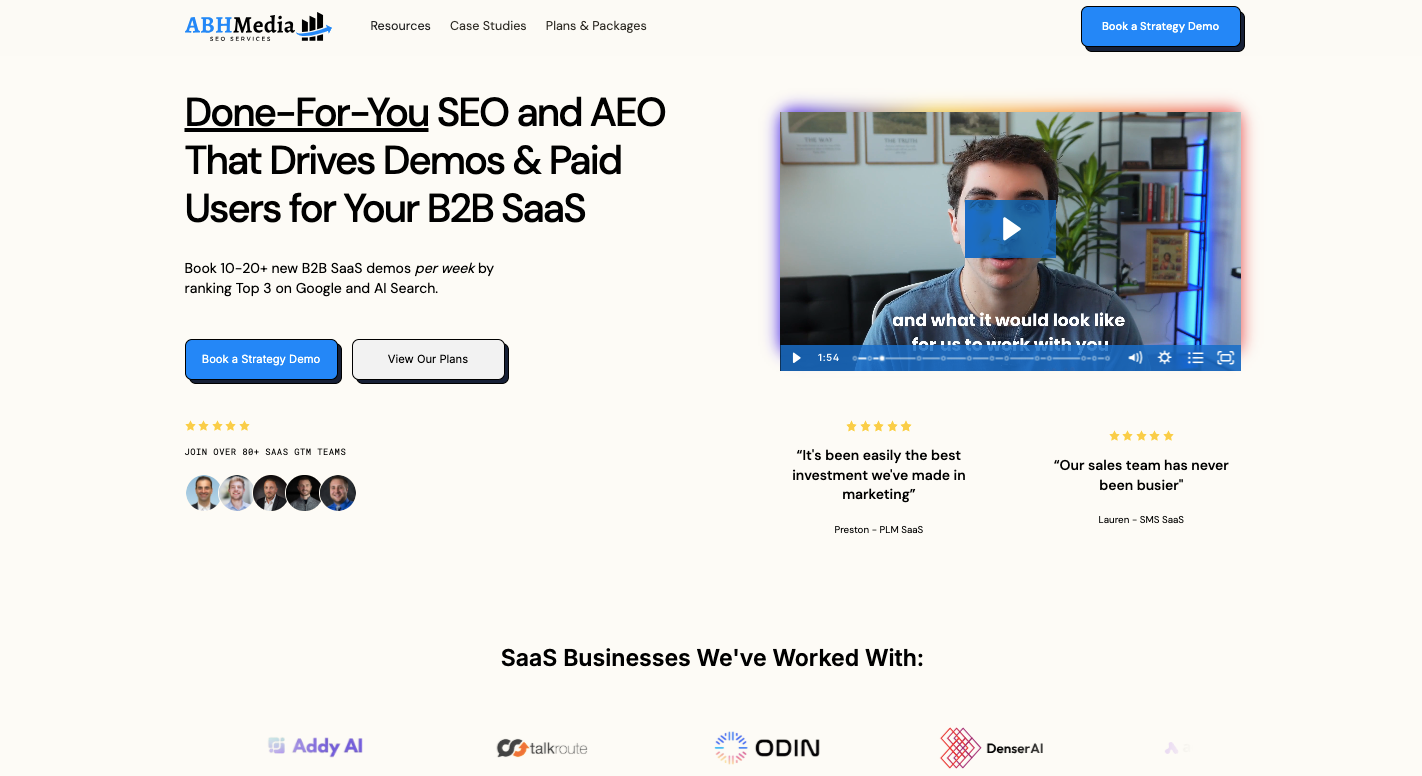
ABHMedia is a done-for-you SEO agency for B2B SaaS companies that would rather build a demo pipeline from organic search than pay for every click.
Clients such as Activepieces, Briefpoint, TextUs, and Odin AI work with the team to rank on Google and to appear in the answers that ChatGPT and Perplexity give to software buyers.
Start With Buyer-Intent Keywords
Every campaign begins with a strategy session about your product and the customers you want to reach through search.
ABHMedia then plans content around commercial and transactional searches, for example comparison and alternative queries, because those visitors are much closer to a demo than casual readers.
If you already run paid search, your conversion data can point to the terms worth targeting first.
Let One Team Handle the Full Program
ABHMedia covers the work from the first audit to the monthly report, so you don’t need to hire your own writers or outreach staff.
Depending on the plan, the services include:
- Technical SEO audits and fixes
- SEO content and page rewrites
- Backlinks picked by hand for pages close to page one
- Programmatic SEO
- Conversion rate optimization
- Conversion tracking and analytics reports
Clients keep full ownership of every page and asset ABHMedia creates.
FAQs About SEO vs. SEM
Is SEM the same as PPC?
No. SEM marketing is the wider practice of search marketing, and by the full definition, it encompasses SEO as well as paid search marketing.
PPC is the pricing model behind most paid advertisements on Google and Bing, so it describes how you pay for SEM campaigns rather than the whole channel.
Is Google Ads SEO or SEM?
Google Ads is part of SEM. It is a form of paid advertising where you bid on keywords and pay for each click.
SEO stands for search engine optimization, and unlike Google Ads, SEO focuses on the organic optimization of your own website so it can earn a higher website ranking without paying for the spot.
Which is better for a small budget, SEO or SEM?
Organic SEO usually gives a small budget more value over time, since a page that ranks continues to bring web traffic after the work is done. SEM can boost visibility much faster, but the traffic stops as soon as you stop paying for the ads.
Should you use both SEO and SEM?
Many companies get the best results when they include both SEO and SEM in their digital marketing strategies. A sound SEM strategy brings leads while your SEO strategies build up, and the keyword data from your ads can guide keyword optimization on your organic pages.