SEO for AI Search Platforms: 8 Best Agencies in 2026
,
November 24, 2026
SEO for AI search platforms helps your business appear in AI-generated answers, brand mentions, and citations. But ranking well on Google doesn't mean ChatGPT or Perplexity will recommend your software.
To improve AI search visibility, you need helpful content, strong technical SEO, and mentions from trusted websites. These can help your brand appear in Google AI Overviews, Gemini, and other AI search engines.
This article will compare eight AI SEO agencies. You'll learn what each agency offers and how to choose the right one for your business.
TL;DR
These are the top eight picks for SEO for AI search platforms in 2026:
- ABHMedia
- Onely
- Kalicube
- Blue Array
- iPullRank
- Minuttia
- Intero Digital
- Avenue Z
What Is SEO for AI Search Platforms?
SEO for AI search platforms helps websites appear in AI-generated answers, citations, and brand recommendations from AI search engines.
Traditional search engines usually show ranked links. ChatGPT and Perplexity use artificial intelligence to answer conversational queries and cite sources. Google AI Overviews also provides summaries with links to supporting pages.
Generative engine optimization (GEO) helps make content useful for these answers. Answer engine optimization (AEO) focuses on clear responses to user questions. Both build on traditional SEO rather than replace it.
A McKinsey survey of 1,927 US consumers found that about 50% actively use AI-powered search. This shows why brands need visibility beyond traditional search results.
Google's guidance shows that helpful content and crawl access still matter. For example, a SaaS company mentioned in an AI software comparison could reach more potential buyers.
AI SEO agencies help businesses improve their visibility through technical SEO, content updates, and trusted brand mentions.
8 Best Agencies for SEO for AI Search Platforms in 2026
SEO for AI search platforms requires technical improvements, useful content, and trusted brand information. These eight agencies offer different AI SEO services, from website audits to generative engine optimization (GEO):
1. ABHMedia: Best for B2B SaaS SEO and Qualified Leads
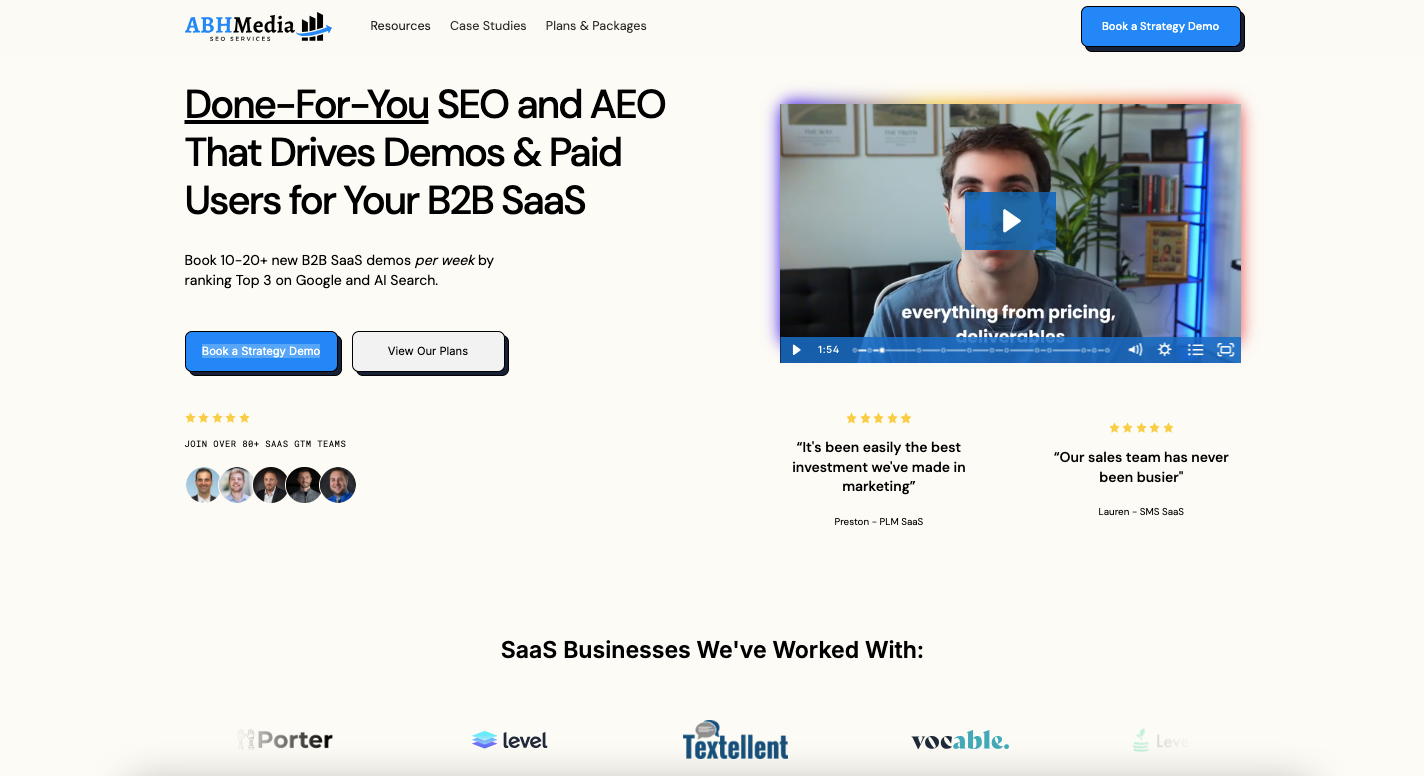
ABHMedia is a B2B SaaS SEO agency that helps software companies attract qualified leads through search engines. It combines traditional SEO with strategies that improve visibility on AI search platforms.
The focus is on getting more trials, demos, and revenue instead of just website traffic.
ABHMedia starts with a strategy session to learn about your software, ideal customers, and business goals. It then finds buyer-intent keywords that match what potential customers are searching for.
This helps SaaS companies reach buyers who are comparing software and looking for solutions.
The agency also creates content that answers buyer questions and helps businesses appear in AI-generated answers. Its services include technical SEO and content optimization to support long-term search growth.
ABHMedia's Followup CRM case study reports a 257% increase in direct AI citations. The campaign also generated $32,000 in closed organic deals within 75 days.
ABHMedia is a good fit for B2B SaaS companies that want ongoing SEO support to attract qualified buyers and grow revenue.
Key Services:
- B2B SaaS SEO strategy: Develop search plans based on ideal customer profiles, buyer intent, and revenue goals.
- Technical SEO: Conduct website audits to fix crawlability, indexing, site structure, and page performance issues.
- AI search optimization: Improve content structure, entity information, and direct answers to support visibility in AI search engines.
- Keyword research: Find high-intent keywords related to software comparisons, product use cases, and buying decisions.
- Content creation and optimization: Create SEO-focused articles, update existing pages, and improve content for relevant search queries.
- Bottom-of-funnel SEO: Optimize commercial pages that target buyers researching software solutions and alternatives.
- Link building: Acquire relevant backlinks to support domain authority, search rankings, and organic visibility.
- Programmatic SEO: Build landing pages for integrations, industries, comparisons, and other relevant software searches.
- Conversion tracking and reporting: Monitor organic traffic, qualified leads, trial signups, demo bookings, and revenue.
2. Onely: Technical SEO and AI Search Access
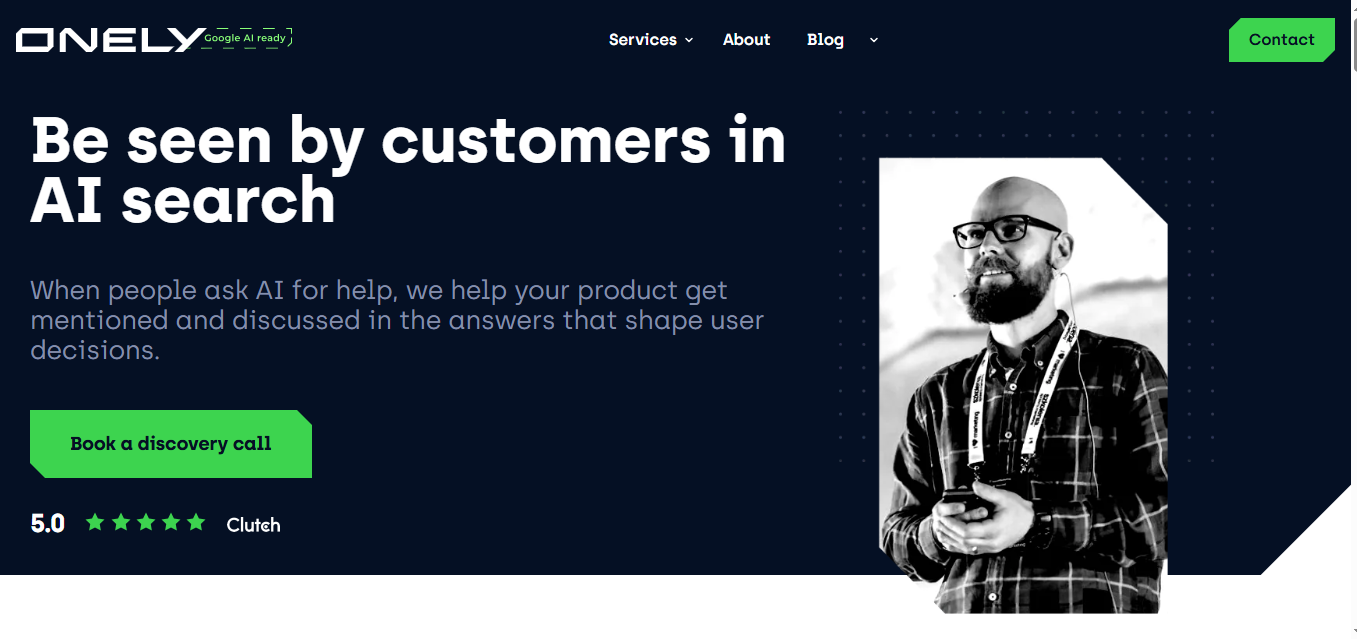
Onely is an AI search agency with a technical SEO background. It focuses on enterprises that sell in several countries. Its work focuses on website accessibility and technical issues that may affect AI search visibility.
The agency reviews how traditional search engines and AI crawlers access website content.
Its technical SEO services include JavaScript rendering, crawlability, indexing, and structured data. These checks help website owners identify information that search systems may struggle to retrieve.
Onely also reviews content structure and page elements that affect how search engines process information.
The agency provides AI search testing and monitoring as part of its GEO offering. Its services also include technical recommendations and training for in-house SEO teams.
Onely's GEO services place more attention on technical accessibility than broader digital marketing.
Its specialist approach is more relevant to companies with complex website structures. Businesses needing ongoing content production or conversion-focused SaaS campaigns may require additional services.
Key Services:
- Technical site audits: Identify crawlability, indexing, and website structure issues.
- JavaScript SEO: Check whether search engines and AI crawlers can access JavaScript-rendered content.
- Structured data optimization: Implement schema markup and improve how search systems understand website information.
- Content and product page optimization: Improve page titles, descriptions, and content structure for AI search optimization.
- Content consolidation: Combine overlapping pages to improve topic coverage and reduce keyword cannibalization.
- AI search testing: Test website changes and review their impact on AI-generated answers.
- AI visibility monitoring: Track brand mentions and competitor visibility on AI search platforms.
- Team training: Provide internal guidance and SEO practices for ongoing GEO work.
3. Kalicube: Brand Authority and Entity SEO
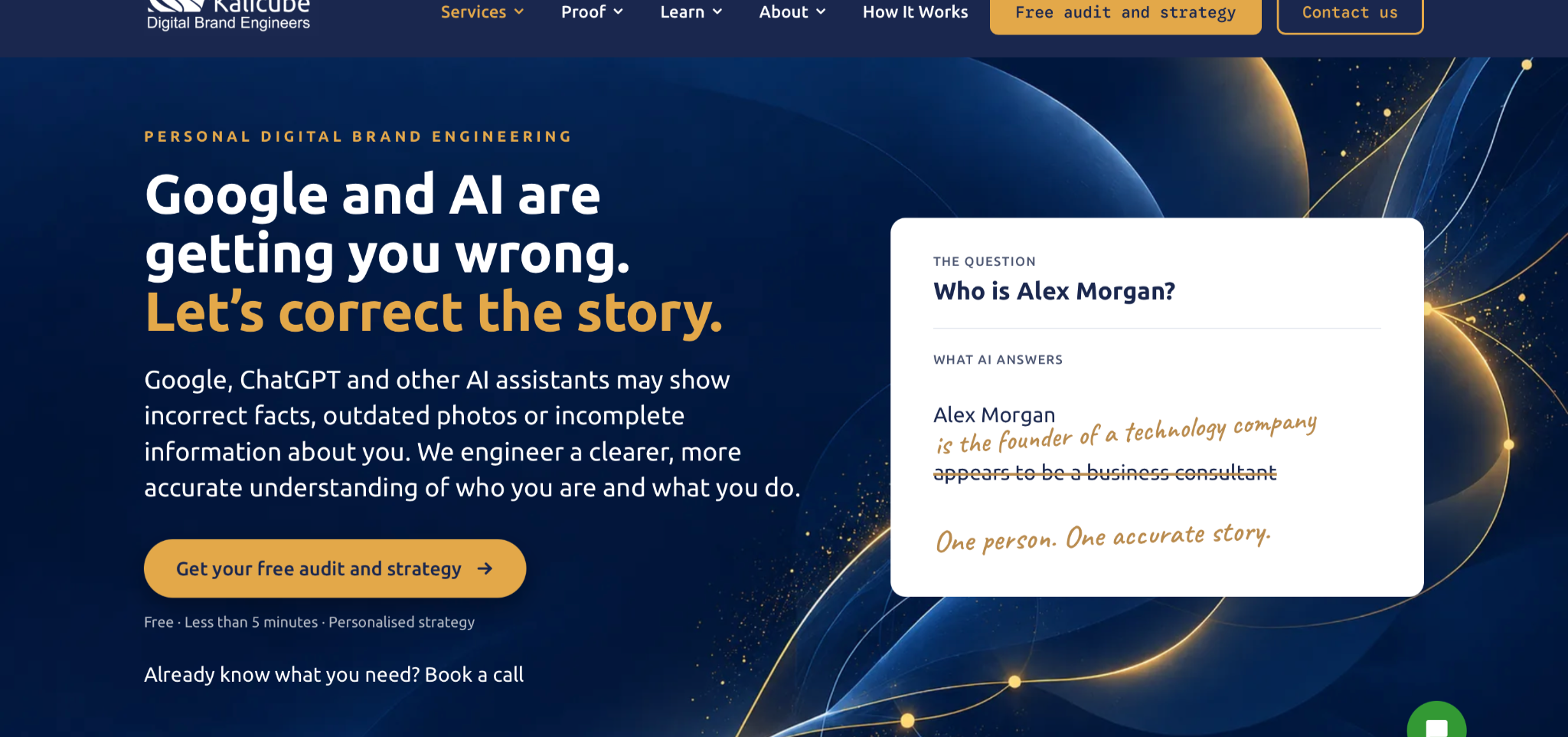
Kalicube focuses on how search engines and AI models identify businesses and understand their brand information. Its services center on entity SEO, digital brand identity, and online credibility.
This work supports consistent brand representation in Google Search and AI-generated responses.
The agency uses the Kalicube Process, which follows three stages: understandability, credibility, and deliverability.
It examines whether search systems recognize a business and connect it to accurate information. The process also involves reviewing website details and trusted external sources.
Kalicube's work may suit companies facing brand recognition issue or inaccurate AI answers. However, its entity-focused approach is not a direct replacement for technical site audits or regular SaaS content production.
Key Services:
- Entity SEO: Improve how search engines and AI models identify and understand a business.
- Brand SERP optimization: Review search results for branded queries and improve the information shown.
- Knowledge graph optimization: Support accurate business information in Google's Knowledge Graph.
- Knowledge panel management: Review and improve the information displayed in Google Knowledge Panels.
- Structured data: Connect brand details and related entities through schema markup.
- Online reputation management: Monitor brand information and address inconsistent details on relevant websites.
- Brand authority building: Strengthen credibility through trusted sources and consistent external mentions.
- Brand monitoring and reporting: Track changes in branded search results and provide prioritized recommendations.
4. Blue Array: AI Citation Tracking and GEO Strategy
Blue Array offers AI search optimization services alongside traditional SEO and digital PR. Its GEO work includes analyzing brand mentions and citations in AI-generated answers. The agency also reviews how competing businesses appear on AI search platforms.
Its research examines content retrieval and search behavior. This includes concepts such as query fan-out and retrieval-augmented generation (RAG). These methods help explain how AI systems can gather information before generating responses to user queries.
Blue Array combines this research with technical SEO and content reviews. Its services also include checking website information and identifying areas where search visibility needs improvement.
Blue Array's GEO offering places particular attention on citation analysis and AI visibility measurement.
This approach may suit businesses with existing SEO programs that need additional AI search research. Companies seeking a dedicated B2B SaaS acquisition strategy should confirm whether buyer-intent content and conversion tracking are part of the agreement.
Key Services:
- AI citation analysis: Examine brand citations and sources referenced in AI-generated answers.
- AI visibility monitoring: Track mentions and brand presence on supported AI search engines.
- Competitor benchmarking: Compare brand visibility and mentions with competing businesses.
- Sentiment analysis: Review how AI models describe a brand and its products.
- GEO content optimization: Improve content structure and accessibility for AI retrieval and query fan-out.
- Technical SEO: Review website structure and technical issues affecting content access.
- Multi-model monitoring: Examine brand visibility and citations on different AI platforms.
- GEO reporting: Provide reports on AI search performance, citation gaps, and brand visibility changes.
5. iPullRank: Enterprise AI Search and Content Retrieval
iPullRank is an SEO agency that focuses on technical search problems and information retrieval. Its Relevance Engineering approach examines how search engines and AI models identify useful website content.
This includes semantic search, content relevance, and query understanding.
The agency studies how AI systems retrieve information before generating answers. Its work includes query fan-out and retrieval-augmented generation. These concepts are relevant when search platforms process complex conversational queries.
iPullRank also reviews content structure and technical SEO. Its approach focuses on how information is organized and whether pages provide clear answers to specific search queries.
The agency may suit larger businesses with complex websites and technical requirements. Smaller SaaS companies primarily seeking content creation and lead generation may find its technical scope broader than necessary.
Key Services:
- Technical SEO audits: Review crawlability, indexing, JavaScript SEO, and complex website structures.
- Relevance engineering: Improve how search engines and AI models identify and retrieve relevant information.
- AI search visibility audits: Analyze brand presence, retrieval paths, and content performance in AI-generated answers.
- Content engineering: Use search data and natural language processing to improve content structure and relevance.
- Query fan-out analysis: Examine related questions that AI models may use when answering search queries.
- Content strategy: Plan and improve content based on search intent, audience needs, and business goals.
- Competitor analysis: Compare AI search visibility and content coverage with competing brands.
- AI search reporting: Monitor citation frequency, AI referral traffic, and other visibility metrics.
6. Minuttia: AI Search Content Strategy
Minuttia is a content-focused SEO agency that works with SaaS and technology businesses. Its services include content research, SEO planning, and generative engine optimization. The agency focuses on improving how website content performs in traditional and AI-driven search engines.
Its content process begins with keyword research and user intent analysis. The team reviews existing pages and identifies relevant topics that need better coverage. These findings guide content updates and new article development.
Minuttia also considers how AI search systems process written information. Its approach includes clear semantic headings, direct answers, and original research.
Regular updates also matter, because AI engines tend to favor fresher information. The agency also uses verifiable statistics and expert quotes to make pages more citable in AI-generated responses, and measures content performance and visibility there.
Minuttia's SEO services focus heavily on content planning and production.
The agency may suit SaaS companies that need ongoing editorial work and content updates. Businesses with major technical SEO problems should check whether its service scope includes the required development support.
Key Services:
- Google and AI search strategy: Develop search plans based on user intent, content gaps, and business goals.
- Content research: Identify relevant keywords and questions that match buyer search behavior.
- GEO content strategy: Plan content for traditional search and AI-generated answers.
- Human content creation: Produce technical articles and other content based on research and subject expertise.
- AI-assisted content creation: Support content workflows with AI tools while maintaining human review.
- Content optimization: Improve existing pages with direct answers, semantic headings, and original information.
- Digital PR: Support brand awareness through relevant media coverage and external mentions.
- Reddit marketing: Build relevant brand presence through human-led participation in Reddit discussions.
- AI visibility analytics: Review how AI systems access, interpret, and reference website content.
7. Intero Digital: Full-Service AI Search Optimization
Intero Digital offers AI search optimization through its Intero GRO framework. The agency combines generative engine optimization with traditional SEO and other marketing services. Its work covers website content, technical performance, and online brand information.
The agency begins with search visibility research and technical analysis. It then reviews content structure and information related to a company's products or services. Its process also includes entity optimization and digital PR.
Intero Digital monitors how brands appear in AI search results. Its reporting covers visibility in platforms such as ChatGPT and Google AI Overviews. The agency also examines referral traffic and other search performance measures.
Intero Digital's services cover several marketing areas beyond SEO.
The agency may suit businesses seeking combined search and marketing support. Companies looking specifically for SaaS SEO should review which services are included and how much attention goes to buyer-intent search.
Key Services:
- GEO audits: Analyze AI visibility, competitor mentions, and website issues affecting search access.
- Technical SEO: Improve crawlability, indexing, semantic HTML, and content accessibility.
- Entity optimization: Strengthen brand information through structured data and relevant external sources.
- Conversational content optimization: Improve direct answers and question-based content for AI search engines.
- Content strategy: Develop topic clusters, internal linking plans, and content based on user intent.
- Digital PR: Build relevant brand mentions and citations through third-party publications.
- Structured data optimization: Review schema markup and connections between brand entities.
- AI visibility reporting: Monitor AI citations, brand mentions, referral traffic, and changes in search visibility.
- Content authority: Improve author information, original research, and other signals that support credibility.
8. Avenue Z: Digital PR and AI Brand Mentions
Avenue Z offers answer engine optimization (AEO) services alongside digital PR and brand communications. Its approach focuses on how businesses appear in AI-generated answers and third-party sources. The agency combines content work with efforts to improve online brand visibility.
Its services include media relations and content planning. Avenue Z also reviews technical SEO issues that may affect website accessibility. This connects website information with external sources that AI search systems may reference.
The agency tracks brand mentions and citations in AI search results. Its research also considers online publications and other sources that influence brand awareness. These activities form part of its broader communications work.
Avenue Z's services place significant attention on media coverage and brand communications.
The agency may suit businesses seeking stronger external brand visibility. Companies that mainly need product-page SEO, technical improvements, or SaaS conversion tracking should check whether those tasks receive enough attention.
Key Services:
- Digital PR: Work on relevant online media coverage and brand mentions.
- Answer engine optimization: Improve content around conversational search queries.
- Technical SEO: Review crawlability and website structure.
- Content strategy: Create and update information related to user intent.
- AI visibility monitoring: Review brand mentions and citations in AI-generated responses.
- Structured data optimization: Improve metadata and schema markup for clearer product and brand information.
- Media outreach: Build relationships with relevant publications and industry sources.
- AI visibility audits: Identify missing brand mentions and opportunities for improved AI search presence.
Which AI Search Platforms Should an SEO Agency Focus On?
SEO for AI search platforms should focus on where your buyers ask questions. Agencies match platform-specific AI search capabilities to those buying habits and needs.
McKinsey estimates that brands unprepared for AI search could lose 20–50% of their traditional search traffic. This makes AI search visibility more important for businesses that depend on organic traffic.
Google AI Overviews and AI Mode
Google AI Overviews and AI Mode rely on Google Search, so agencies should first check crawlability and indexing. An AI overview is the summary-style answer shown in search results.
Helpful content matters more than special markup, which Google says is not required for these AI features. Search Console now reports AI feature impressions, which helps teams track Google AI search optimization progress.
ChatGPT Search and Perplexity
ChatGPT Search and Perplexity both use web search to retrieve current sources to support more accurate responses and surface citations. But they differ in how they surface and cite them, as well as in their crawler rules.
For ChatGPT, SEO agencies should allow OAI-SearchBot when they want their pages considered for search answers. For Perplexity, SEO companies should also check its crawler guidance and test which sources appear for relevant buyer search prompts.
Gemini and Other AI Answer Tools
Gemini can answer conversational queries and sometimes link to sources, though not every response includes citations. Some AI tools aim to give context-aware answers, so agencies should test prompts with specific constraints and follow-up detail.
For Gemini, SEO agencies should test buyer prompts such as requests for CRM software with specific integrations. They can compare brand mentions and check whether the linked product information is accurate.
Then use follow-up questions for deeper analysis when initial Gemini responses lack enough detail.
How to Choose the Right SEO Agency for AI Search Platforms
Choose an AI SEO agency based on the specific problem limiting your visibility in AI search results.
Check Its Experience With Your AI Search Goals
Match the agency's strengths to your SEO goals before requesting a quote. Technical SEO teams address crawling and indexing problems. Content-focused AI SEO agencies research buyer questions, while GEO agencies work on brand authority and AI visibility.
For B2B SaaS, check whether the team understands software comparisons in ChatGPT and Google AI Overviews.
Its generative engine optimization services should support user intent and answer engine optimization (AEO). Choose expertise that fits your needs rather than the longest service list.
Ask How the Agency Measures AI Search Results
Traditional SEO measures rankings, organic traffic, and clicks. AI visibility tracking also looks at brand mentions, citation frequency, and how often AI search engines recommend your business.
Request tracked prompts, cited pages, and measurement dates from the agency. AI visibility tracking should separate brand mentions from AI citations in AI-generated responses. Ask for case studies showing what changed and how results were measured.
For example, Semrush uses a database of over 317 million AI prompts and responses to study brand visibility, citations, and competitor performance.
Next, review referral traffic and demo requests through conversion tracking.
Google's 2026 Search Console reports measure impressions in AI search features but not every platform's impact. Good AI search optimization reporting should connect visibility data to business outcomes.
Review the Work, Team, and Reporting Before Hiring
Before comparing GEO agency pricing, confirm who performs each task. Ask whether SEO professionals handle technical site audits and who makes the fixes. Identify the content teams responsible for page updates and buyer-focused content.
Review deliverables, deadlines, and monthly reporting. Custom pricing may cover research but leave implementation to your staff.
Compare the work included before comparing fees, especially if your business needs ongoing AI SEO services rather than a one-time audit.
Turn AI Search Visibility Into SaaS Demos With ABHMedia
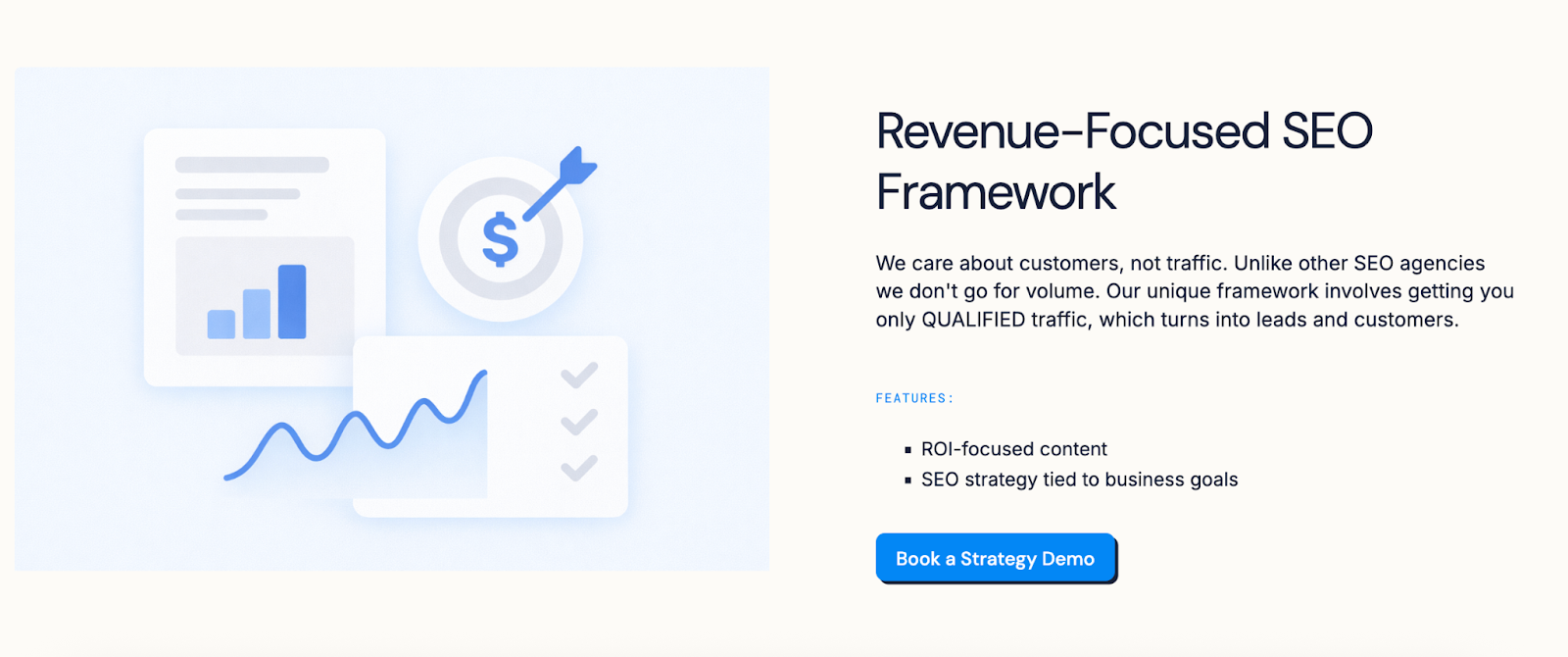
Google rankings alone don't tell you whether SaaS buyers can find your product. Buyers also ask ChatGPT and other AI search platforms to compare software before booking a demo.
That creates more SEO work than most teams can manage alongside product marketing. You need technical fixes, useful content, and links supporting pages that match buyer intent.
ABHMedia provides done-for-you B2B SaaS SEO for traditional search and AI search platforms. Each campaign starts with a strategy session covering your software, ideal customers, and growth goals.
The team then plans buyer-intent keywords and handles technical SEO audits, content creation, page optimization, targeted link building, and programmatic SEO when relevant.
Monthly reports connect search visibility with qualified leads, trial sign-ups, and demo bookings rather than traffic alone.
FAQs About SEO for AI Search Platforms
How do we use AI in SEO?
AI helps SEO professionals with keyword research, content planning, competitor analysis, and technical audits. Tools can identify search trends, suggest relevant topics, and improve existing content.
However, human review is still important. SEO teams should check AI-generated content for accuracy, originality, and search intent before publishing.
Is Grok 3 really the best AI?
Not necessarily. Grok 3 is an AI model developed by xAI for reasoning, research, and answering questions. However, the best AI depends on the task and how well the model performs.
For SEO, businesses should compare accuracy, research quality, content support, and available features rather than choosing one model based on popularity.
What is the 80/20 rule in SEO?
The 80/20 rule in SEO suggests that roughly 80% of results may come from 20% of your efforts. It is a planning principle, not a fixed Google ranking rule.
Businesses can apply it by focusing on high-intent keywords, valuable pages, technical issues, and content updates that bring the most qualified traffic.
What is GEO?
Generative engine optimization (GEO) is the process of improving website content to increase its chances of appearing in AI-generated answers. It focuses on visibility in platforms such as ChatGPT, Perplexity, Gemini, and Google AI Overviews.
GEO builds on traditional SEO through clear content, technical improvements, original research, and trusted brand mentions. However, it cannot guarantee AI citations.